The Death of Third Spaces: How Virtual Worlds Lost Their Soul to the Feed

Before the Algorithm Ate Everything

Remember when logging into a virtual world felt like slipping through a crack in reality? I’m talking about the early 2000s, when MMORPGs weren’t optimized user experiences but genuine alternate dimensions. EverQuest towns buzzed with idle chatter. Second Life had entire economies built on digital real estate speculation and furry nightclubs. These weren’t games exactly, they were places.
The Death of Third Spaces: How Virtual Worlds Lost Their Soul to the Feed

The magic wasn’t in the graphics or the gameplay loops. It lived in the weird culture that sprouted up without anyone planning it. Players made their own hangouts, their own rituals, their own insane drama. Guilds formed around actual friendship, not spreadsheets calculating optimal damage rotations. You’d end up in some tavern at 2am, arguing about lore with complete strangers who somehow felt more real than your neighbors, building something that mattered more than most physical spaces.

That organic weirdness died the moment engagement metrics took over. Now we get beautiful, empty worlds designed to keep you scrolling instead of connecting with actual humans.
Illustration for The Death of Third Spaces: How Virtual Worlds Lost Their Soul to the Feed

The Gentrification of Digital Space

Fortnite killed the virtual town square. Not through malice, just through brutal efficiency. Why build persistent spaces when you can drop 100 players into a constantly refreshing battleground? Why grow long-term community when you can manufacture viral moments? Epic Games built the McDonald’s of virtual worlds. Convenient, profitable, completely soulless.

It’s the same thing that happened to city nightlife. Those grimy venues that took decades to develop real character get bulldozed for chain restaurants that deliver identical experiences everywhere. World of Warcraft used to have servers with actual personalities. Tichondrius had a reputation. Mal’Ganis had its own culture. Then cross-realm technology nuked all those differences because queue times mattered more than community identity.

Efficiency became culture’s worst enemy. Player housing got streamlined into Instagram-ready decoration menus. Spontaneous roleplay got buried under achievement systems that turned every human interaction into a points game. All the beautiful messiness that made virtual worlds feel alive got patched out like bugs.

When Discord Replaced the Cantina

Voice chat killed text-based community the way Spotify killed record stores. More convenient? Sure. But we lost something essential in the process. Text chat had a different rhythm, more thoughtful, more inclusive, more permanent. You could scroll up and catch context. Conversations could stretch for hours without demanding constant attention.

Discord servers promise community but deliver private bubbles that fragment everything. Instead of one persistent world where different people naturally cross paths, we get thousands of isolated channels where the same 20 people echo each other endlessly. The beautiful accident of encountering genuine difference just disappeared.

Voice chat also accidentally excluded tons of players. Not everyone can or wants to talk out loud. Text-based worlds were weirdly more accessible, making space for introverts, non-native speakers, anyone who processes language differently. That inclusivity wasn’t intentional, but it was real and it mattered.

Most “communities” now are just fan clubs for content creators with better marketing. The democratic potential of virtual space, where anyone could build reputation through creativity instead of conventional social capital, got traded away for parasocial relationships with streamers.

The Metaverse Mirage

Facebook’s metaverse isn’t the return of virtual worlds. It’s their complete corporate takeover. Horizon Worlds looks like a virtual world but functions like a shopping mall. Every interaction gets monitored, every space gets monetized, every creative impulse gets funneled through approved channels.

The original promise was actually radical: spaces beyond geographic and economic constraints where new forms of culture could evolve. Instead we got theme parks designed by committee, optimized for advertiser-friendly content. The rough edges that allowed genuine subcultures to grow got sanded away for brand safety.

Even the language got hijacked. “Metaverse” used to describe something genuinely transgressive. Neal Stephenson’s Snow Crash wasn’t depicting a utopia but a dystopian corporate hellscape. Now that same word sells VR headsets and NFT land parcels to venture capitalists who never spent a single night in a MUD.

What We Buried in the Code

Losing authentic virtual worlds means more than just entertainment industry consolidation. These spaces were laboratories for post-geographic culture, places where identity could actually be fluid, where economic systems could be reimagined, where new art and expression could evolve without institutional gatekeepers.

We lost spaces where some teenager in rural Montana could build real friendships with a graduate student in Berlin and a retiree in Tokyo, bonding over shared investment in a digital space that belonged equally to all of them. We lost economies where creativity and social contribution mattered more than accumulated capital. We lost the possibility that technology might enable more human connection instead of more efficient extraction.

The current gaming landscape of battle passes, microtransactions, algorithmic matchmaking represents the complete victory of engagement optimization over community building. Every system is designed to keep you playing, not to help you connect. The medium that once promised to transcend physical limitations now reproduces all the worst aspects of late-stage capitalism in virtual form.

Some spaces still resist this logic. Veloren and other open-source projects carry the torch. Smaller communities on platforms like VRChat occasionally capture glimpses of what we lost. But these feel like historical reenactments rather than living culture, precious and fragile instead of robust and generative.

What virtual worlds taught us about human connection in digital space didn’t disappear because the technology became obsolete. It got intentionally destroyed because it wasn’t profitable enough. That’s the real tragedy here. Not losing any particular game or platform, but the systematic elimination of digital spaces designed for culture instead of consumption. The question isn’t whether we can build better virtual worlds. It’s whether we even remember why we wanted them in the first place.


Why Your Favorite Underground Artist Already Sold Out (And That’s Not The Problem)

The Mythology of Pure Art

We need to talk about our obsession with artistic purity. Every weekend, I watch the same ritual play out across basement venues and converted warehouses. Someone discovers a band with 847 monthly Spotify listeners, declares them “the real deal,” then watches in horror as that number climbs past 10,000. Suddenly, the music hasn’t changed, but everything else has.

Why Your Favorite Underground Artist Already Sold Out (And That's Not The Problem)
Why Your Favorite Underground Artist Already Sold Out (And That’s Not The Problem)

This obsession with the untouched, the undiscovered, the “authentic” underground artist says more about us as fans than it does about the quality of art itself. We’ve built this weird mythology where financial success equals creative death. Where visibility means compromise. Where staying underground is somehow more noble than actually reaching people.

Here’s the thing that makes everyone uncomfortable: Most of your favorite “pure” underground artists are already thinking about money, promotion, and reaching larger audiences. They have rent to pay and equipment to repair. The difference isn’t their intentions. It’s that they can’t execute those intentions at scale yet.

Illustration for Why Your Favorite Underground Artist Already Sold Out (And That's Not The Problem)
Illustration for Why Your Favorite Underground Artist Already Sold Out (And That’s Not The Problem)

The Economics Nobody Wants to Discuss

Let me tell you what actually happens when an underground artist starts gaining traction. Last month, I watched a promising experimental hip-hop producer go from playing DIY venues to getting management representation. The narrative wrote itself in real time across music forums: “sellout,” “lost their edge,” “industry plant.” But here’s what actually changed.

Before representation, this artist spent 60% of their time on administrative bullshit. Booking shows, begging venues that paid in exposure and free drinks, managing social media, handling distribution. Their actual creative output was maybe three hours a week. Now, with professional support, they’re creating daily and reaching audiences who genuinely connect with their work.

The dirty secret of underground scenes is that they often preserve artificial scarcity, not artistic integrity. When an artist can’t afford proper recording equipment, we romanticize their lo-fi sound. When they can only play local venues, we celebrate their “commitment to community.” We’ve confused limitation with authenticity so completely that we actively resist artist growth.

This goes way beyond individual artists. The warehouse venues we worship often exploit this mythology. They pay artists in “exposure” and “scene credibility” while charging admission, selling drinks, and building their own brands on the backs of underpaid performers. Yet we protect these spaces as bastions of authenticity while critiquing artists who want fair compensation.

Platform Capitalism and the Illusion of Independence

Here’s where it gets really uncomfortable: there is no “outside” of capitalism to retreat to. That basement show you went to last weekend? Someone paid rent on that space. Those records the band sold at their merch table? Manufactured by companies, distributed through supply chains, purchased with money extracted from various forms of labor.

The platforms we use to discover underground music are all capitalist enterprises. Bandcamp, even with its artist-friendly reputation, takes a cut of every sale. Instagram, where we post those 2am warehouse photos, harvests data for advertising revenue. Even the most grassroots music blogs rely on web hosting services, domain registrars, and internet infrastructure owned by massive corporations.

The real question isn’t whether underground artists participate in capitalism. It’s whether they have any agency within that participation. When we shame artists for seeking sustainability, we’re basically advocating for their continued economic exploitation while feeling good about our own cultural superiority.

This gets especially messy when you look at who gets to stay “underground” long-term. Artists with family wealth, day jobs in tech, or partners who subsidize their creative pursuits can maintain the appearance of non-commercial purity much longer than those who need their art to pay for basic survival. Our authenticity standards accidentally favor class privilege.

The Gatekeeping Problem

Scene gatekeeping operates through coded language that sounds like aesthetic criticism but functions as social control. “They’ve gotten too polished.” Translation: they can afford better production. “Their new stuff lacks the rawness of their early work.” Translation: they’ve developed professionally. “I liked them before they started caring about their image.” Translation: I preferred when they couldn’t afford marketing.

This gatekeeping hits artists from marginalized communities particularly hard, people who already face extra barriers to music industry access. When a young Black artist from a working-class background finally gets industry attention, the immediate response from many scene veterans is suspicion rather than celebration. We scrutinize their come-up for signs of inauthenticity while giving trust fund kids unlimited underground credibility.

The most frustrating aspect of this gatekeeping is how it disguises itself as cultural protection. We convince ourselves we’re defending artistic integrity when we’re actually defending our own positions as tastemakers and early adopters. The underground becomes less about supporting emerging artists and more about maintaining our status as people who “discovered” them first.

Toward a More Honest Underground

What if we approached underground scenes with the same analytical rigor we apply to mainstream music criticism? What if we acknowledged that supporting artists means wanting them to thrive financially, not just artistically? What if we stopped treating commercial success as creative failure and started examining the actual changes in an artist’s work?

The most exciting underground scenes I’ve witnessed operate with this honesty. They celebrate artist growth, support career development, and stay critically engaged with the work itself rather than external markers of authenticity. They recognize that sustainable scenes require sustainable artists.

This doesn’t mean abandoning critical thinking or accepting all commercial music as equally valid. It means developing smarter criteria for evaluation. Does the artist’s work remain challenging, innovative, or personally meaningful to them? Are they maintaining creative control over their output? Do they continue to engage with their community, even as that community potentially expands?

The uncomfortable truth about underground music is that most of it deserves to be heard by more people. When we create artificial barriers to artist development, we’re not protecting culture. We’re limiting it. The real question isn’t whether an artist will eventually “sell out.” It’s whether they’ll have the resources and freedom to keep making interesting work as they grow.

What’s your take on the balance between artistic authenticity and career sustainability? I’m curious how other people navigate supporting underground artists while acknowledging the realities of creative labor in capitalist systems.

The City’s Second Act: How Post-Pandemic Urban Culture Found New Ground

The Great Downtown Exodus

The glass towers that once defined American downtown cores now stand as monuments to a vanished rhythm. Remote work has fundamentally altered the equation of urban life, with office occupancy rates in major city centers dropping by 30 to 50 percent from pre-2020 levels. This isn’t temporary adjustment. It’s permanent reconfiguration.

The City's Second Act: How Post-Pandemic Urban Culture Found New Ground
The City’s Second Act: How Post-Pandemic Urban Culture Found New Ground

The cultural effects go deeper than empty office buildings. When the daily migration of commuters disappeared, so did the ecosystem that depended on their presence. Food trucks, corner delis, after-work bars, and quick-service galleries all faced the same reality: their audience had logged off and stayed home.

But this evacuation created something unexpected. Cities suddenly had breathing room. Real estate prices in downtown cores began reflecting actual use rather than speculative hope. Creative communities found affordable spaces that had been priced out of reach for decades. What we got wasn’t the collapse of downtown culture, but its democratization.

Cultural Institutions Navigate the New Map

Mid-size cities took the heaviest cultural hits during the pandemic’s acute phase. Theaters, galleries, and music venues that operated on thin margins couldn’t weather extended closures. Unlike their counterparts in major metropolitan areas, these institutions lacked the donor base and endowment funds to survive indefinite uncertainty.

The closures reshaped entire urban arts ecosystems. Cities like Richmond, Austin, and Portland lost venues that had anchored their cultural districts for decades. The void created space for different kinds of cultural expression. Pop-up galleries emerged in vacant storefronts. Musicians organized house concerts and outdoor performances. Artists’ collectives took over abandoned commercial spaces on month-to-month leases.

This shift from institutional to grassroots culture reflects a broader change in how cities think about arts funding and support. The massive, permanent cultural institution is giving way to flexible, community-driven spaces that can adapt to changing circumstances. CityLab urban culture analysis shows this trend accelerating across dozens of American cities.

The Gentrification Acceleration

Creative communities’ migration to newly affordable downtown spaces triggered predictable tensions. Working-class neighborhoods that had been stable for decades suddenly found themselves in the crosshairs of rapid change. The same artists and freelancers displaced by rising rents in traditional cultural districts became the advance guard of displacement in previously overlooked areas.

The debate over gentrification got more intense because the pandemic had made everyone more aware of community and belonging. Residents who had weathered economic uncertainty together found their neighborhoods transformed by newcomers whose remote work flexibility allowed them to bid up housing costs while contributing little to local economic networks.

Cities started implementing policies to address this acceleration. Portland expanded its inclusionary zoning requirements. Austin created artist live-work space preservation programs. Cleveland launched community land trusts to maintain long-term affordable housing. The question wasn’t whether creative workers deserved housing, but how cities could accommodate them without erasing existing communities.

After Dark: Redesigning Urban Nights

The collapse of traditional nightlife opened space for reimagining how cities function after dark. Urban planners began viewing the night-time economy not as an afterthought but as a core component of city identity. This was a fundamental shift in municipal thinking.

Night-time economy policies emerged as cities recognized that vibrant evening culture drives tourism, supports local businesses, and creates the social spaces where community forms. Cities appointed “night mayors” to coordinate late-hours programming. They relaxed noise ordinances for outdoor events and extended public transit schedules to support evening activities.

The policies reflected deeper changes in urban living patterns. With more people working flexible hours, the traditional rush-hour rhythm gave way to distributed activity throughout the day and evening. Curbed urban design coverage highlighted how cities adapted zoning and permitting to support this new temporal geography.

Food halls replaced traditional bars as evening social anchors. Outdoor movie screenings and pop-up markets filled the role once played by club districts. The result was more inclusive night-time culture that welcomed families and non-drinkers alongside traditional nightlife audiences.

Third Places and the Infrastructure of Connection

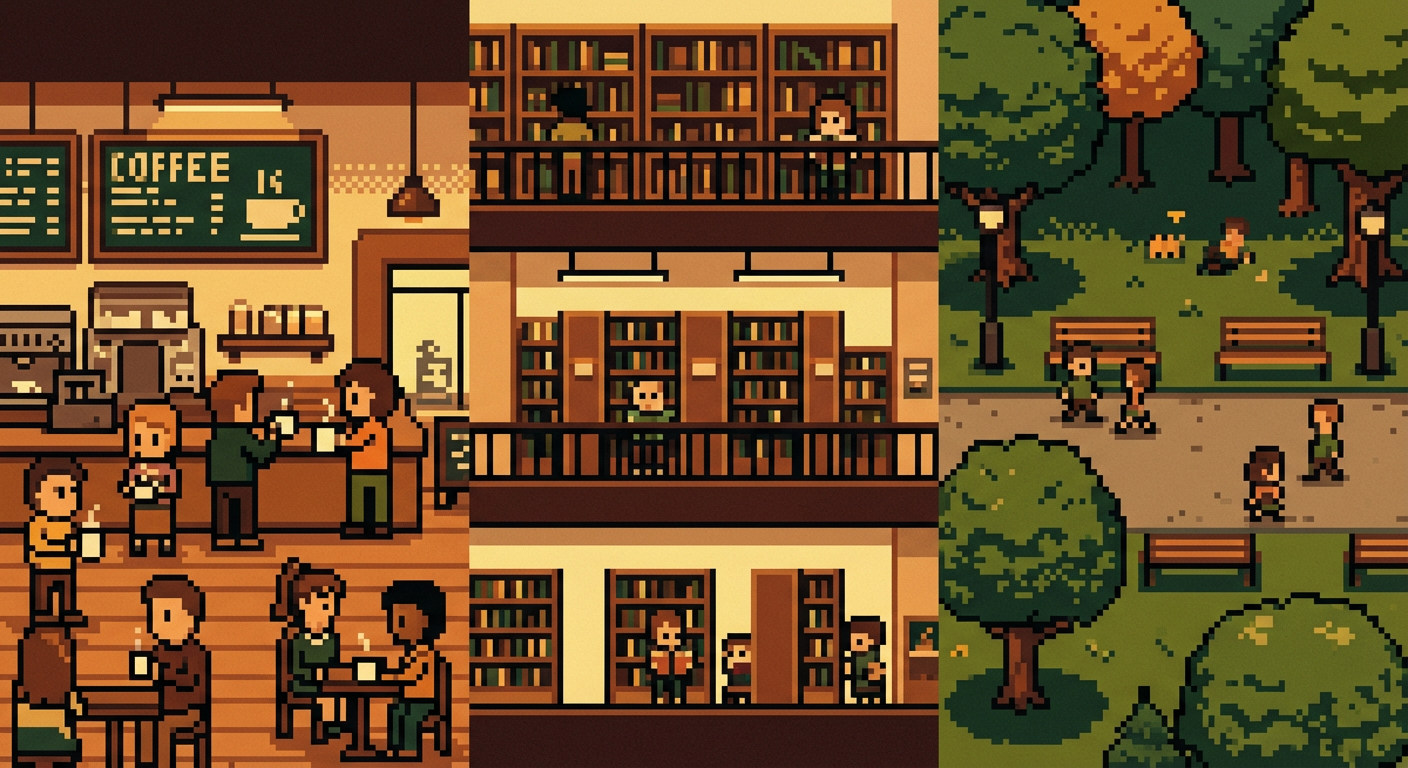
Coffee shops, libraries, and parks got unprecedented policy attention as cities recognized their role as essential urban infrastructure. These “third places” outside of home and work became central to maintaining social connections as traditional office interactions disappeared.

Libraries expanded their programming beyond books to include maker spaces, small business incubators, and community meeting rooms. Cities invested in park programming that encouraged regular use rather than occasional recreation. Coffee shops found themselves informal community centers, hosting everything from remote work sessions to neighborhood association meetings.

The policy focus on third places reflected growing understanding that urban culture depends on spaces where chance encounters happen. The planned interaction of an office or scheduled meeting lacks the spontaneity that generates new ideas and relationships. Cities started measuring success not just in economic indicators but in the frequency and quality of these casual connections.

Local media coverage proved important for documenting and supporting these cultural shifts. Yet over 200 American counties now lack any local news coverage, creating information deserts when communities need documentation of their changing character. Cities with strong local media found themselves better equipped to navigate cultural transitions and maintain community cohesion through periods of rapid change.

The cities that thrived culturally in the post-pandemic era shared common characteristics: flexible zoning that supported mixed-use development, policies that protected both newcomers and existing residents, and recognition that culture emerges from daily life rather than special events. They understood that urban culture isn’t something that happens to a city but something a city actively creates through the spaces it protects and the connections it makes possible.

The Great Urban Recalibration: How Cities Found New Identity After the World Stopped

The Downtown Exodus and What Stayed Behind

The financial district fell quiet. Not gradually, not seasonally, but all at once. By spring 2020, the glass towers that had anchored urban identity for decades stood largely empty. Remote work didn’t just change commuting patterns. It completely rewired the gravitational pull of city centers.

Office occupancy rates that once hovered near capacity now plateau at 60 to 70 percent in major metropolitan areas. The impact ripples through lunch counters, dry cleaners, and transit systems. But something unexpected emerged from this hollowing out. Cities discovered they were more than their central business districts.

The neighborhoods that had orbited downtown suddenly became destinations themselves. Local coffee shops replaced corporate cafeterias. Residential streets buzzed with foot traffic that previously rushed toward subway entrances. The city’s center of gravity didn’t disappear. It scattered and multiplied.

Cultural Institutions Learn to Survive Without Scale

Mid-tier cities faced a particularly brutal reckoning. Regional theaters, symphony halls, and art museums had built their models on consistent subscription bases and tourist traffic. When both vanished simultaneously, institutions that had anchored cultural identity for generations suddenly confronted existential questions.

The closures weren’t random. They revealed which cultural organizations had deep community roots and which had relied primarily on external validation. Smaller venues with flexible programming survived. Large institutions with fixed overhead costs struggled. The cultural landscape that emerged prioritized adaptability over prestige.

New models appeared almost immediately. Pop-up galleries in vacant storefronts. Outdoor concert series in parking lots. Virtual programming that reached audiences hundreds of miles away. These weren’t temporary solutions. They became permanent features of a more distributed cultural ecosystem.

Cities that had previously competed for major touring productions began celebrating local artists with renewed intensity. The CityLab urban culture analysis reveals that smaller cities often emerged stronger, having been forced to build cultural programming around local talent and community engagement rather than imported spectacle.

The Gentrification Paradox Gets Worse

Creative workers flooded residential neighborhoods as downtown office buildings emptied. The irony was sharp and immediate. Artists and freelancers who had been priced out of city centers suddenly found themselves with flexible schedules and reduced commuting needs. They moved to more affordable neighborhoods just as those areas became more valuable.

Working-class communities that had maintained their character through decades of urban change suddenly faced rapid transformation. The pandemic had scattered the creative class throughout the city, accelerating gentrification patterns that might have taken years to unfold.

The debates became more urgent because the changes happened faster. Community organizations that had fought displacement through gradual resistance strategies found themselves overwhelmed by the pace of demographic shift. Policy makers struggled to address gentrification when the traditional markers of neighborhood change appeared almost overnight.

Some cities responded with aggressive tenant protection measures. Others embraced the economic activity that new residents brought to struggling commercial districts. The tensions revealed fundamental questions about who has the right to shape neighborhood character and at what speed change should occur.

After Dark Programming Becomes Municipal Priority

Empty streets after sunset became a visible symbol of urban decline. Cities that had spent decades managing late-night noise complaints suddenly found themselves promoting evening activities with the urgency of economic development initiatives.

Night mayor positions spread across American cities, borrowing models from European municipalities that had long recognized evening economy as distinct policy territory. These appointed officials focused specifically on after-dark programming, balancing resident quality of life with commercial viability.

The approach required fundamental shifts in urban planning. Zoning codes written for nine-to-five cities needed updating for 24-hour economies. Transit systems expanded late-night service. Lighting design became a municipal priority rather than an afterthought.

Successful initiatives combined safety improvements with cultural programming. Food truck festivals in formerly vacant lots. Late-night library hours with community events. Outdoor movie screenings that drew families back to downtown areas. The cities that thrived understood that evening activity needed to feel welcoming rather than exclusively commercial.

Third Places Fill the Social Infrastructure Gap

Coffee shops became conference rooms. Library branches turned into coworking spaces. Parks hosted business meetings alongside playground supervision. The pandemic had eliminated traditional gathering spaces just as remote work increased the need for social interaction outside the home.

Municipal governments began viewing third places through an infrastructure lens. These weren’t amenities to be funded when budgets allowed. They were essential services that supported economic activity and community health. Curbed urban design coverage highlighted cities that invested heavily in park improvements and library expansions as economic development strategies.

The policy shift recognized that remote work required different kinds of public spaces. Traditional downtown plazas designed for lunch-hour crowds didn’t serve people who needed quiet spaces for video calls. Neighborhood parks needed wifi infrastructure. Library branches required more electrical outlets and flexible seating arrangements.

Communities with robust third place networks adapted more successfully to distributed work patterns. The social capital that built up in these spaces became economic capital as professional networks formed over shared tables and community events.

Information Deserts and Local Identity

Local news coverage collapsed just as cities needed to communicate rapid policy changes and community adaptations. More than 200 counties now lack any local news source, creating information gaps precisely when residents needed reliable updates about changing municipal services and community resources.

The absence of local media created unexpected consequences for urban identity formation. Without shared sources of neighborhood information, communities struggled to maintain coherent narratives about their own development and character. Social media filled some gaps but also amplified misinformation and reduced complex local issues to polarized debates.

Cities that maintained strong local journalism adapted more effectively to pandemic-era changes. Residents stayed informed about new policies, community resources, and local business adaptations. Areas without local coverage often saw slower uptake of support programs and less community coordination around shared challenges.

The relationship between information access and urban resilience became impossible to ignore. Cities began treating local journalism as infrastructure, providing direct funding for community reporting and public information campaigns. The recognition that informed residents make stronger communities drove policy decisions that would have seemed unthinkable in pre-pandemic municipal budgets.

Urban culture now operates from multiple centers rather than single focal points. The cities that recognize this distributed reality and build policies around it will define what metropolitan life becomes in the next decade. What happened revealed cities as adaptive organisms rather than fixed structures, and the communities embracing this flexibility continue writing the next chapter of urban identity.

The New Geography of Belonging: How Cities Are Rebuilding Their Cultural DNA

Empty Towers, Shifting Centers

The glass towers that once pulsed with morning commuters now stand half-empty, their lobbies echoing with a new kind of quiet. Remote work has completely changed how downtown areas work, leaving behind more than vacant office space. It has created a void in urban identity itself.

The New Geography of Belonging: How Cities Are Rebuilding Their Cultural DNA

Cities across America are wrestling with a basic question: what happens to urban culture when the daily migration to central business districts becomes optional? The answer is popping up in surprising places. Neighborhood coffee shops have turned into impromptu coworking hubs. Residential areas are developing their own rhythms of commerce and creativity. The rigid business district model is splitting apart into something more spread out and flexible.

This shift isn’t just about real estate. It’s about rethinking what makes a city feel alive. The concentration of workers, shoppers, and cultural consumers in downtown areas created a particular kind of energy. Now cities have to build that energy in new ways, spreading it across neighborhoods that used to be considered the outskirts.

The Arts Ecosystem Under Pressure

Mid-size cities face a particularly brutal challenge as cultural institutions close or cut back operations. Regional theaters, independent galleries, and community art centers that survived on a fragile mix of subscriptions, grants, and foot traffic find themselves squeezed between rising costs and shrinking audiences.

When these institutions close, they create cultural deserts that reach far beyond their immediate neighborhoods. A shuttered community theater doesn’t just eliminate shows. It removes a gathering place, a training ground for emerging artists, and a shared reference point for local identity. The ripple effects touch everything from property values to social connections.

But this crisis has also pushed innovation. Pop-up galleries take over vacant storefronts. Artists work directly with neighborhoods rather than waiting for institutional support. The formal arts establishment is being added to, and sometimes replaced by, more grassroots approaches to cultural production. These new models respond faster to community needs, even though they lack the stability and resources of traditional institutions.

The Creative Class Displacement Paradox

The arrival of artists, designers, and other creative professionals in working-class neighborhoods has always been complicated. These residents bring energy, innovation, and often better amenities. They also bring rising rents and the eventual displacement of longtime communities.

The pandemic has made these dynamics worse as remote workers hunt for affordable alternatives to expensive city centers. Neighborhoods that offered real character and reasonable rents suddenly face rapid demographic shifts. The very qualities that attracted new residents start to disappear under the pressure of their arrival.

Cities are trying new approaches to manage this tension. Some have inclusionary zoning policies that require affordable housing in gentrifying areas. Others support community land trusts that keep properties under local control. The goal is to capture the benefits of creative investment while protecting existing communities from displacement.

This challenge reveals a deeper question about urban identity. Should neighborhoods change rapidly to attract new investment and residents? Or should they focus on continuity and affordability for existing communities? The most successful cities find ways to balance both needs, creating space for innovation while keeping cultural roots intact.

Reclaiming the Night

Urban planners are paying more attention than ever to the night-time economy as a key piece of city identity. The pandemic’s impact on restaurants, bars, and entertainment venues showed how important these businesses are to urban energy. Cities from Austin to Portland are developing comprehensive strategies to support and regulate nightlife.

These policies go beyond simple economic development. They recognize that night-time culture shapes how residents and visitors experience a city’s personality. A thriving music scene, diverse restaurant options, and safe late-night transportation create the conditions for random encounters and cultural mixing that define urban life.

The challenge is managing competing interests. Residents want quiet nights. Business owners need customers. Musicians need venues. Young people need places to gather. CityLab urban culture coverage shows how cities are experimenting with sound rules, business districts with extended hours, and transportation policies that support night-time activity while respecting neighborhood character.

The Social Infrastructure Renaissance

The concept of “third places” has gained new urgency in post-pandemic urban planning. These spaces, neither home nor work, provide the neutral ground where urban culture develops. Libraries, parks, and coffee shops work as the social infrastructure that makes city life meaningful.

Investment in these spaces reflects a growing understanding of their role in urban health. Parks provide recreation and environmental benefits, but they also create opportunities for casual interaction across demographic lines. Libraries offer more than books; they provide internet access, meeting spaces, and programming that brings communities together.

Coffee shops occupy a unique position in this ecosystem. They work as informal coworking spaces, meeting places, and cultural touchstones. Their success or failure often reflects broader neighborhood trends. Curbed urban design analysis shows how the design and programming of these spaces can either reinforce social divisions or break them down.

The challenge for cities is making sure that third places remain accessible and welcoming to diverse populations. Gentrification can transform neighborhood coffee shops into exclusive spaces that serve narrow demographics. Successful cities actively build inclusive third places that reflect and serve their full populations.

Information Deserts and Urban Identity

The collapse of local journalism creates a particular challenge for urban culture. When news outlets close, cities lose more than information sources. They lose shared narratives, common reference points, and ways for public conversation to happen. More than 200 counties across the United States now lack local news coverage entirely.

This information vacuum affects urban identity in serious ways. Without local reporting, residents lose touch with municipal politics, community events, and neighborhood changes. The shared stories that bind communities together become harder to create and maintain.

Cities are trying new models to fill this gap. Some fund nonprofit news organizations directly. Others support community media initiatives that combine journalism with cultural programming. The most innovative approaches recognize that local media works both as information and culture, helping cities maintain their sense of coherence and purpose.

The future of urban culture depends on cities’ ability to adapt their social infrastructure to new realities while keeping the authentic character that makes each place unique. This ongoing experiment in urban identity deserves our close attention and active participation as it plays out in neighborhoods across the country.

The Hollowed Cities: How Post-Pandemic Urbanism Reveals Who We Really Are

Empty Towers, Transformed Streets

The pandemic didn’t just change how we work. It exposed the fundamental fiction of downtown cores built around daily commuter rituals. Remote work has permanently slashed office occupancy rates in city centers, leaving gleaming towers half-empty and revealing the shallow foundations of urban identity we’d built around the nine-to-five grind.

The Hollowed Cities: How Post-Pandemic Urbanism Reveals Who We Really Are

What we’re seeing isn’t temporary disruption. It’s the unmasking of cities that prioritized corporate real estate over genuine community life. The sterile office districts that once defined metropolitan success now stand as monuments to a particular vision of urbanism that prioritized capital flows over cultural depth. When the workers stopped coming, what remained wasn’t city life but expensive infrastructure serving phantom populations.

This shift forces uncomfortable questions about what our cities actually are when stripped of their economic theater. Are we left with authentic urban culture, or does the emperor have no clothes?

Illustration for The Hollowed Cities: How Post-Pandemic Urbanism Reveals Who We Really Are

The Cultural Casualties We Don’t Discuss

While major metropolitan areas dominate urban planning discourse, mid-sized cities face a quieter crisis. Cultural institutions that anchored local identity have shuttered permanently, leaving creative communities adrift. Independent theaters, community art centers, and local music venues couldn’t weather extended closures, creating cultural voids that won’t be easily filled.

These losses represent more than entertainment options disappearing. They signal the fragility of cultural ecosystems that took decades to develop. When a city loses its historic theater or longstanding gallery, it doesn’t just lose programming. It loses gathering spaces where local identity gets negotiated and renewed. The ripple effects extend beyond artists to anyone who found community through shared cultural experiences.

Cities now confront the reality that cultural infrastructure requires intentional support, not just market-driven development. Yet many local governments lack both the resources and frameworks to rebuild what’s been lost. The result is cultural deserts in places that once had thriving arts scenes, leaving residents to seek meaning elsewhere or abandon their communities entirely.

Gentrification’s Pandemic Acceleration

The pandemic accelerated displacement patterns that were already reshaping urban neighborhoods. As remote work freed the creative class from geographic constraints, they scattered into previously affordable communities, driving up housing costs and completely altering local character. What’s particularly galling is how this process gets framed as urban revitalization rather than displacement.

Working-class communities that maintained cultural traditions and social networks suddenly find themselves priced out by newcomers who value “authentic” neighborhood character while accidentally destroying it. The incoming residents often have genuine appreciation for local culture, but their purchasing power transforms the economic landscape that sustained that culture.

This isn’t simply about housing costs. It’s about the erasure of informal social infrastructure that working communities depend on. Corner stores become artisanal coffee shops. Community centers get converted to co-working spaces. The changes might improve certain quality-of-life metrics, but they systematically dismantle the social fabric that made these neighborhoods appealing in the first place.

Urban planners and policymakers struggle with this dynamic because addressing it requires acknowledging that market-driven development often destroys the very qualities it claims to enhance. Curbed urban design coverage consistently highlights these tensions between development and preservation of community character.

Rethinking City Rhythms

Cities are finally recognizing that urban life extends beyond business hours. Night-time economy policies are emerging as serious urban planning considerations, acknowledging that after-dark activities shape city identity as much as daytime commerce. This represents a significant shift from viewing nightlife as something to be managed rather than nurtured.

The focus on night-time economics reveals how narrow our conception of productive urban activity has been. Cities that embrace diverse after-hours programming create opportunities for cultural expression and social connection that pure commercial districts can’t provide. Late-night food scenes, evening markets, and extended library hours all contribute to urban vitality in ways that traditional economic metrics miss.

At the same time, there’s renewed attention to third places beyond home and work. Coffee shops, libraries, and parks are gaining recognition as essential urban infrastructure rather than amenities. These spaces provide the social glue that makes cities more than collections of isolated individuals. Policy makers are beginning to understand that investing in these informal gathering spaces yields returns in community cohesion and mental health.

CityLab urban culture analysis consistently demonstrates how successful cities prioritize these seemingly mundane social spaces that enable daily community interaction.

The Information Vacuum

Perhaps most troubling is the collapse of local media coverage that once helped communities understand themselves. Over 200 counties across the United States now lack any local news coverage, creating information deserts that undermine civic engagement and community identity. Without local journalism, residents lose shared narratives about their places and common frames of reference for local challenges.

This media collapse coincides with urban transformation in ways that amplify displacement and cultural loss. When communities lack local news coverage, they can’t effectively organize around shared concerns or hold local officials accountable for development decisions. The result is urban change that happens to communities rather than with them.

Cities that maintain strong local media ecosystems show markedly different patterns of community engagement and cultural preservation. Local coverage creates feedback loops between residents and decision-makers that pure social media can’t replicate. Without professional local journalism, cities lose institutional memory and the capacity for informed public discourse about their own development.

The path forward requires honest reckoning with what we value in urban life beyond economic productivity. Cities that emerge from this transition successfully will be those that prioritize authentic community development over superficial revitalization, that support cultural infrastructure as seriously as physical infrastructure, and that create space for genuine civic engagement rather than performative consultation. The question isn’t whether cities will change, but whether that change helps existing communities or displaces them in service of abstract urban ideals.

The Empty Stages: How Cities Lost Their Cultural Heartbeat

The Silence After Last Call

Walk through downtown Portland on a Tuesday night. Count the darkened storefronts where venues once hummed. The Crystal Ballroom still stands, but half the clubs that fed its ecosystem vanished between 2020 and 2023. This isn’t just about entertainment. When cultural venues die, cities lose their capacity to generate the unexpected encounters that define urban life.

Mid-size cities got hit the hardest. Theaters that survived the Great Depression couldn’t weather eighteen months of closure. Gallery districts that took decades to establish crumbled in seasons. Cultural venues run on razor-thin margins and need years to build audiences. You can’t just flip a switch when restrictions lift and expect everything to bounce back.

Remote work made everything worse by emptying downtown cores for good. Office workers who used to grab drinks after presentations or catch lunch-hour exhibitions? They’re not there anymore. The foot traffic that kept cultural institutions alive disappeared, and honestly, it’s not coming back to pre-pandemic levels.

When the Creative Class Becomes the Displacement Engine

Here’s the brutal irony. Artists and cultural workers, themselves often priced out by rising rents, have become agents of further displacement. The neighborhoods that offered cheap studio space during the pandemic now attract developers marketing “authentic” creative communities to tech workers who want urban credibility.

Detroit’s Eastern Market district shows how this plays out. Muralists and maker spaces that moved in during the lean years now watch their success draw investment that prices out the very communities they wanted to serve. Cultural workers who survived venue closures face a second wave of economic pressure as their presence drives up property values.

Gentrification debates have gotten nastier because the pandemic reset everything. Empty commercial space gave experimental venues and artist collectives temporary opportunities. But as Curbed urban design coverage shows, these pop-up uses often just become marketing tools for developers rather than lasting cultural infrastructure.

Designing Night in the 24-Hour City

City planners are finally catching on to what urbanists have been saying for decades: night-time economies need real policy support. Venues that create after-dark culture can’t survive residential noise complaints and licensing bureaucracy without city backing.

Amsterdam has its Night Mayor program. London funds cultural programming through late-night levies. But American cities are way behind on comprehensive approaches to night-time economic development. Most still treat bars and clubs like necessary evils rather than essential urban infrastructure.

The pandemic showed how fast night-time culture can vanish and how slowly it rebuilds. Cities that invested in evening programming during recovery saw their downtowns bounce back faster. Those that relied on market forces alone watched their after-dark economies break apart into scattered venues that couldn’t sustain real cultural scenes.

The Democracy of Third Places

Libraries stayed open when concert halls closed. Coffee shops adapted faster than theaters. Parks hosted programming that museums couldn’t manage. The pandemic reminded cities which spaces actually serve all residents rather than cultural tourists and wealthy subscribers.

Policy wonks have started paying attention to these “third places” between home and work. Urban planning documents now include language about social infrastructure that would have seemed obvious to Jane Jacobs but radical to zoning boards five years ago. This matters because these spaces need different kinds of investment and protection than big cultural institutions.

Independent bookstores and neighborhood cafes create the daily interactions that keep urban culture alive between major events. They provide the social foundation that lets larger cultural institutions work. When cities lose these informal gathering places, they lose what makes bigger cultural programming possible.

Information Deserts in the Urban Landscape

Over 200 American counties now have zero local news coverage. Urban areas face a different crisis: cultural coverage vanishing from local media as arts writers get laid off and entertainment sections shrink to syndicated content.

Without cultural criticism and event coverage, cities lose the shared conversation that turns individual experiences into collective cultural memory. Small venues and experimental artists rebuilding urban culture after crisis need media attention to find audiences and build reputations. When that coverage disappears, cultural scenes turn inward and fragment.

Digital platforms promised to democratize cultural coverage, but algorithm-driven feeds favor established venues and mainstream events over emerging artists and experimental programming. Losing dedicated cultural journalism means cities can’t document or understand their own cultural development, as CityLab urban culture analysts have reported.

Building Memory, Not Just Recovery

Cities that thrive post-pandemic won’t just rebuild what existed before. They’ll recognize that urban culture needs intentional work across multiple scales, from neighborhood coffee shops to major institutions. The venues we lost won’t return, but the communities that supported them are still here.

Cities will develop new cultural scenes. That’s going to happen. The real question is whether those scenes will serve residents or tourists, emerging artists or established institutions, diverse communities or the same old demographics. The choices cities make about zoning, funding, and programming over the next five years will decide.

What cultural spaces defined your neighborhood before the pandemic? Which ones survived, and what took their place? Share your observations about how cultural infrastructure is changing in your city.