The Mythology of Pure Art
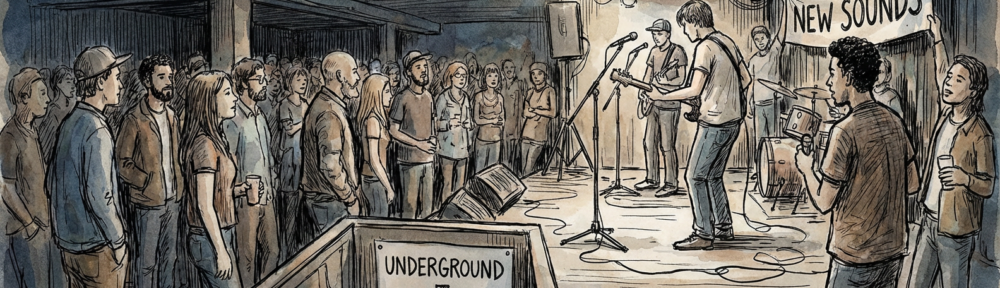
We need to talk about our obsession with artistic purity. Every weekend, I watch the same ritual play out across basement venues and converted warehouses. Someone discovers a band with 847 monthly Spotify listeners, declares them “the real deal,” then watches in horror as that number climbs past 10,000. Suddenly, the music hasn’t changed, but everything else has.

This obsession with the untouched, the undiscovered, the “authentic” underground artist says more about us as fans than it does about the quality of art itself. We’ve built this weird mythology where financial success equals creative death. Where visibility means compromise. Where staying underground is somehow more noble than actually reaching people.
Here’s the thing that makes everyone uncomfortable: Most of your favorite “pure” underground artists are already thinking about money, promotion, and reaching larger audiences. They have rent to pay and equipment to repair. The difference isn’t their intentions. It’s that they can’t execute those intentions at scale yet.

The Economics Nobody Wants to Discuss
Let me tell you what actually happens when an underground artist starts gaining traction. Last month, I watched a promising experimental hip-hop producer go from playing DIY venues to getting management representation. The narrative wrote itself in real time across music forums: “sellout,” “lost their edge,” “industry plant.” But here’s what actually changed.
Before representation, this artist spent 60% of their time on administrative bullshit. Booking shows, begging venues that paid in exposure and free drinks, managing social media, handling distribution. Their actual creative output was maybe three hours a week. Now, with professional support, they’re creating daily and reaching audiences who genuinely connect with their work.
The dirty secret of underground scenes is that they often preserve artificial scarcity, not artistic integrity. When an artist can’t afford proper recording equipment, we romanticize their lo-fi sound. When they can only play local venues, we celebrate their “commitment to community.” We’ve confused limitation with authenticity so completely that we actively resist artist growth.
This goes way beyond individual artists. The warehouse venues we worship often exploit this mythology. They pay artists in “exposure” and “scene credibility” while charging admission, selling drinks, and building their own brands on the backs of underpaid performers. Yet we protect these spaces as bastions of authenticity while critiquing artists who want fair compensation.
Platform Capitalism and the Illusion of Independence
Here’s where it gets really uncomfortable: there is no “outside” of capitalism to retreat to. That basement show you went to last weekend? Someone paid rent on that space. Those records the band sold at their merch table? Manufactured by companies, distributed through supply chains, purchased with money extracted from various forms of labor.
The platforms we use to discover underground music are all capitalist enterprises. Bandcamp, even with its artist-friendly reputation, takes a cut of every sale. Instagram, where we post those 2am warehouse photos, harvests data for advertising revenue. Even the most grassroots music blogs rely on web hosting services, domain registrars, and internet infrastructure owned by massive corporations.
The real question isn’t whether underground artists participate in capitalism. It’s whether they have any agency within that participation. When we shame artists for seeking sustainability, we’re basically advocating for their continued economic exploitation while feeling good about our own cultural superiority.
This gets especially messy when you look at who gets to stay “underground” long-term. Artists with family wealth, day jobs in tech, or partners who subsidize their creative pursuits can maintain the appearance of non-commercial purity much longer than those who need their art to pay for basic survival. Our authenticity standards accidentally favor class privilege.
The Gatekeeping Problem
Scene gatekeeping operates through coded language that sounds like aesthetic criticism but functions as social control. “They’ve gotten too polished.” Translation: they can afford better production. “Their new stuff lacks the rawness of their early work.” Translation: they’ve developed professionally. “I liked them before they started caring about their image.” Translation: I preferred when they couldn’t afford marketing.
This gatekeeping hits artists from marginalized communities particularly hard, people who already face extra barriers to music industry access. When a young Black artist from a working-class background finally gets industry attention, the immediate response from many scene veterans is suspicion rather than celebration. We scrutinize their come-up for signs of inauthenticity while giving trust fund kids unlimited underground credibility.
The most frustrating aspect of this gatekeeping is how it disguises itself as cultural protection. We convince ourselves we’re defending artistic integrity when we’re actually defending our own positions as tastemakers and early adopters. The underground becomes less about supporting emerging artists and more about maintaining our status as people who “discovered” them first.
Toward a More Honest Underground
What if we approached underground scenes with the same analytical rigor we apply to mainstream music criticism? What if we acknowledged that supporting artists means wanting them to thrive financially, not just artistically? What if we stopped treating commercial success as creative failure and started examining the actual changes in an artist’s work?
The most exciting underground scenes I’ve witnessed operate with this honesty. They celebrate artist growth, support career development, and stay critically engaged with the work itself rather than external markers of authenticity. They recognize that sustainable scenes require sustainable artists.
This doesn’t mean abandoning critical thinking or accepting all commercial music as equally valid. It means developing smarter criteria for evaluation. Does the artist’s work remain challenging, innovative, or personally meaningful to them? Are they maintaining creative control over their output? Do they continue to engage with their community, even as that community potentially expands?
The uncomfortable truth about underground music is that most of it deserves to be heard by more people. When we create artificial barriers to artist development, we’re not protecting culture. We’re limiting it. The real question isn’t whether an artist will eventually “sell out.” It’s whether they’ll have the resources and freedom to keep making interesting work as they grow.
What’s your take on the balance between artistic authenticity and career sustainability? I’m curious how other people navigate supporting underground artists while acknowledging the realities of creative labor in capitalist systems.