Empty Towers, Shifting Centers
The glass towers that once pulsed with morning commuters now stand half-empty, their lobbies echoing with a new kind of quiet. Remote work has completely changed how downtown areas work, leaving behind more than vacant office space. It has created a void in urban identity itself.
Cities across America are wrestling with a basic question: what happens to urban culture when the daily migration to central business districts becomes optional? The answer is popping up in surprising places. Neighborhood coffee shops have turned into impromptu coworking hubs. Residential areas are developing their own rhythms of commerce and creativity. The rigid business district model is splitting apart into something more spread out and flexible.
This shift isn’t just about real estate. It’s about rethinking what makes a city feel alive. The concentration of workers, shoppers, and cultural consumers in downtown areas created a particular kind of energy. Now cities have to build that energy in new ways, spreading it across neighborhoods that used to be considered the outskirts.
The Arts Ecosystem Under Pressure
Mid-size cities face a particularly brutal challenge as cultural institutions close or cut back operations. Regional theaters, independent galleries, and community art centers that survived on a fragile mix of subscriptions, grants, and foot traffic find themselves squeezed between rising costs and shrinking audiences.
When these institutions close, they create cultural deserts that reach far beyond their immediate neighborhoods. A shuttered community theater doesn’t just eliminate shows. It removes a gathering place, a training ground for emerging artists, and a shared reference point for local identity. The ripple effects touch everything from property values to social connections.
But this crisis has also pushed innovation. Pop-up galleries take over vacant storefronts. Artists work directly with neighborhoods rather than waiting for institutional support. The formal arts establishment is being added to, and sometimes replaced by, more grassroots approaches to cultural production. These new models respond faster to community needs, even though they lack the stability and resources of traditional institutions.
The Creative Class Displacement Paradox
The arrival of artists, designers, and other creative professionals in working-class neighborhoods has always been complicated. These residents bring energy, innovation, and often better amenities. They also bring rising rents and the eventual displacement of longtime communities.
The pandemic has made these dynamics worse as remote workers hunt for affordable alternatives to expensive city centers. Neighborhoods that offered real character and reasonable rents suddenly face rapid demographic shifts. The very qualities that attracted new residents start to disappear under the pressure of their arrival.
Cities are trying new approaches to manage this tension. Some have inclusionary zoning policies that require affordable housing in gentrifying areas. Others support community land trusts that keep properties under local control. The goal is to capture the benefits of creative investment while protecting existing communities from displacement.
This challenge reveals a deeper question about urban identity. Should neighborhoods change rapidly to attract new investment and residents? Or should they focus on continuity and affordability for existing communities? The most successful cities find ways to balance both needs, creating space for innovation while keeping cultural roots intact.
Reclaiming the Night
Urban planners are paying more attention than ever to the night-time economy as a key piece of city identity. The pandemic’s impact on restaurants, bars, and entertainment venues showed how important these businesses are to urban energy. Cities from Austin to Portland are developing comprehensive strategies to support and regulate nightlife.
These policies go beyond simple economic development. They recognize that night-time culture shapes how residents and visitors experience a city’s personality. A thriving music scene, diverse restaurant options, and safe late-night transportation create the conditions for random encounters and cultural mixing that define urban life.
The challenge is managing competing interests. Residents want quiet nights. Business owners need customers. Musicians need venues. Young people need places to gather. CityLab urban culture coverage shows how cities are experimenting with sound rules, business districts with extended hours, and transportation policies that support night-time activity while respecting neighborhood character.
The Social Infrastructure Renaissance
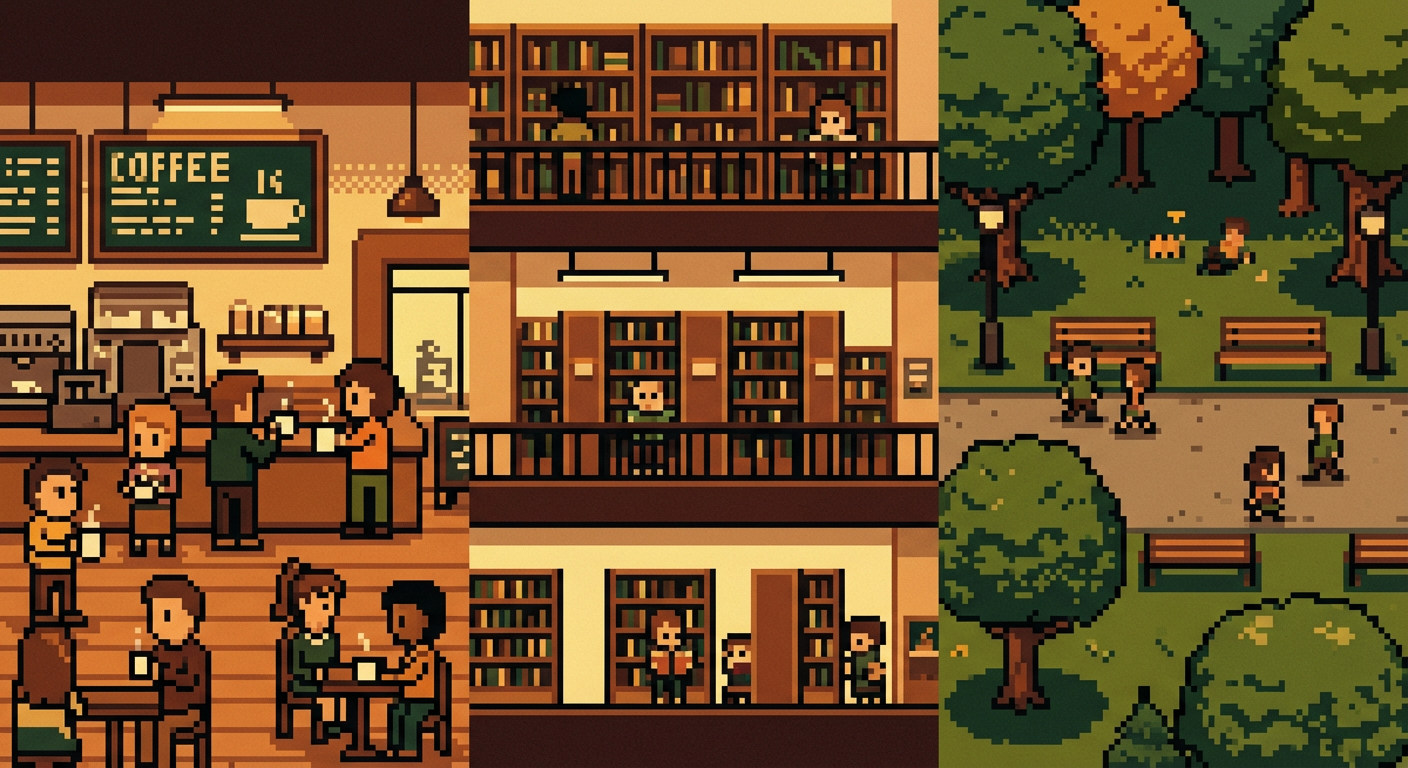
The concept of “third places” has gained new urgency in post-pandemic urban planning. These spaces, neither home nor work, provide the neutral ground where urban culture develops. Libraries, parks, and coffee shops work as the social infrastructure that makes city life meaningful.
Investment in these spaces reflects a growing understanding of their role in urban health. Parks provide recreation and environmental benefits, but they also create opportunities for casual interaction across demographic lines. Libraries offer more than books; they provide internet access, meeting spaces, and programming that brings communities together.
Coffee shops occupy a unique position in this ecosystem. They work as informal coworking spaces, meeting places, and cultural touchstones. Their success or failure often reflects broader neighborhood trends. Curbed urban design analysis shows how the design and programming of these spaces can either reinforce social divisions or break them down.
The challenge for cities is making sure that third places remain accessible and welcoming to diverse populations. Gentrification can transform neighborhood coffee shops into exclusive spaces that serve narrow demographics. Successful cities actively build inclusive third places that reflect and serve their full populations.
Information Deserts and Urban Identity
The collapse of local journalism creates a particular challenge for urban culture. When news outlets close, cities lose more than information sources. They lose shared narratives, common reference points, and ways for public conversation to happen. More than 200 counties across the United States now lack local news coverage entirely.
This information vacuum affects urban identity in serious ways. Without local reporting, residents lose touch with municipal politics, community events, and neighborhood changes. The shared stories that bind communities together become harder to create and maintain.
Cities are trying new models to fill this gap. Some fund nonprofit news organizations directly. Others support community media initiatives that combine journalism with cultural programming. The most innovative approaches recognize that local media works both as information and culture, helping cities maintain their sense of coherence and purpose.
The future of urban culture depends on cities’ ability to adapt their social infrastructure to new realities while keeping the authentic character that makes each place unique. This ongoing experiment in urban identity deserves our close attention and active participation as it plays out in neighborhoods across the country.