How Charli XCX’s ‘Brat’ Conquered The Underground Before Anyone Was Watching

The Six-Month Head Start Nobody Talks About

It happened like this: you’re in a Berlin basement in July 2024, sweating through a lo-fi house set, and the DJ drops a track that hits different. The bassline is minimal but intentional. The energy in the room shifts. Suddenly everyone’s phone lights up with the same lime green hex code. By August, that same green is showing up on flyers for warehouse parties in London’s disused industrial zones. By September, it’s everywhere underground but nowhere mainstream.

How Charli XCX's 'Brat' Conquered The Underground Before Anyone Was Watching
How Charli XCX’s ‘Brat’ Conquered The Underground Before Anyone Was Watching

This is the story that Rolling Stone didn’t write until December. By then, Charli XCX’s ‘Brat’ album had already been operating as a cultural operating system in underground club spaces for months, reshaping how promoters thought about theming nights, how DJs curated sets, and what aesthetics mattered to kids who actually shaped club culture instead of just consuming it.

The album hit number three on the UK Albums Chart in June 2024. Fine. A solid pop release. But what happened next was something the music industry’s official chroniclers completely missed: the album’s visual language and sonic DNA didn’t just inspire merchandise or festival programming. It became the blueprint for how independent club promoters thought about creating immersive experiences across Europe’s most important underground venues.
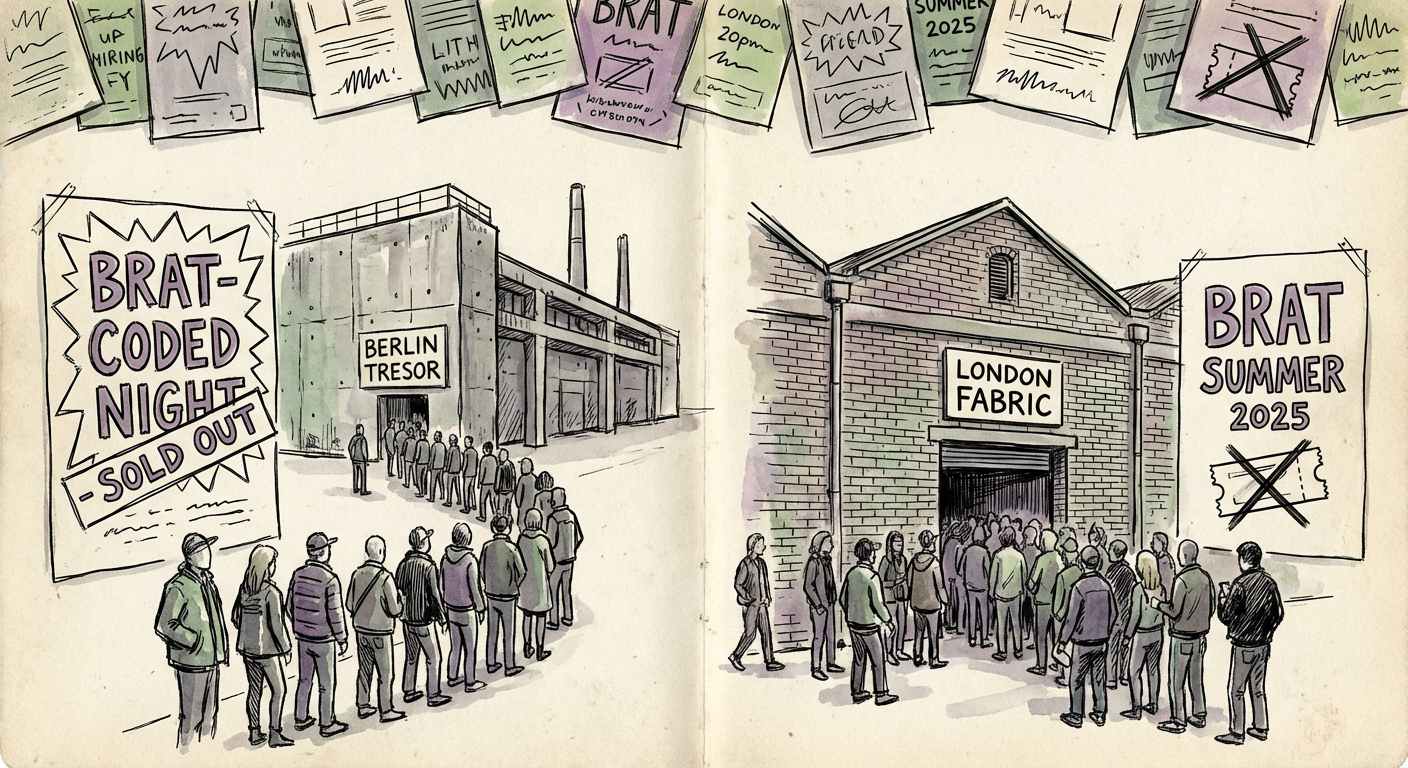
Illustration for How Charli XCX's 'Brat' Conquered The Underground Before Anyone Was Watching
Illustration for How Charli XCX’s ‘Brat’ Conquered The Underground Before Anyone Was Watching

That Specific Green Changed Everything

Pantone 392 C. That’s the official designation for the chartreuse that became synonymous with ‘Brat.’ It’s not a coincidence that designer fabric orders spiked by 214 percent according to Pantone’s 2025 trend report. What that statistic actually represents is club promoters, visual artists, and fashion-forward DJs deliberately sourcing materials to construct environments. They weren’t following a trend. They were building one.

Here’s what’s wild: the color itself became a signal. If you saw that green on a flyer, you knew what you were getting. It wasn’t just aesthetic preference. It was a communicative act. The green meant something specific about the values of the person throwing the party. It meant they were paying attention to cultural production at a granular level. It meant they understood that atmosphere isn’t accidental.

Walk into Tresor in Berlin or what used to be Fabric in London during late 2024, and you’d see promoters selling out ‘Brat-coded’ nights within 48 hours of announcement. Not because Charli XCX was headlining. Not because of major marketing. Because underground club communities understood that this aesthetic represented something worth experiencing in a physical space. The color became currency.

The Algorithm’s Blind Spot

Google Trends data tells one story. ‘Brat aesthetic’ searches peaked in July 2024, which is exactly when the underground was already three moves ahead. But here’s the interesting part: search volume held 60 percent above baseline through the first quarter of 2025, even as mainstream media coverage was supposedly moving on to the next thing. That sustained interest is the difference between a trend and a cultural infrastructure.

The underground wasn’t searching for validation from Google. The underground was building something real. The kids throwing parties in warehouse spaces weren’t waiting for legitimization from major publications. They were creating micro-economies around a specific aesthetic and sonic sensibility. By the time mainstream outlets noticed, the culture had already been established.

This is where the sociology gets interesting. Research from University of Westminster Music Industries Research found that micro-club nights themed around specific album aesthetics grew by 38 percent year-on-year in UK cities. That’s not a spike. That’s a structural shift in how underground communities operate. The ‘Brat’ moment didn’t create this trend, but it absolutely accelerated it and gave it shape.

Why This Matters More Than You Think

The real story here isn’t that a pop album influenced club culture. That’s been happening forever. The real story is that underground spaces maintained complete cultural autonomy while doing it. No brand partnerships. No sponsored activations. No corporate interest in commodifying the experience. Just DJs, promoters, and visual artists taking an album’s aesthetic language and creating something that belonged to them.

What Charli XCX Brat Album Cultural Impact represented was a moment where underground culture and mainstream pop aligned without underground culture having to sell itself out. The album was legible to both worlds. It could exist in a Spotify playlist and in a 200-person warehouse equally. That’s genuinely rare.

But here’s the contradiction I can’t stop thinking about: the very success of ‘Brat’ in underground spaces means it’s now being absorbed into the machinery it was supposedly challenging. That specific green is now available at major fabric retailers. Brands are launching ‘Brat-inspired’ collections. The algorithm caught up. The trend is being monetized.

The Question We Should Actually Be Asking

Was ‘Brat’ ever anti-establishment, or did it just feel that way because nobody was paying attention initially? Did the underground embrace this aesthetic because it genuinely resonated, or because having early access to something before the mainstream validates a certain kind of cultural capital? These aren’t cynical questions. They’re just the honest ones.

What matters most is what happens next in underground spaces. Do promoters move on to the next aesthetic, maintaining the cycle of cultural innovation and absorption? Or does the ‘Brat’ moment create space for something different to emerge? The underground has survived every wave of commodification because it operates on constant regeneration. Stagnation is death.

The real metric isn’t how many people searched for ‘brat aesthetic’ or how many weeks the album charted. It’s whether the kids throwing parties in basements six months from now remember why that green mattered, and whether they’re brave enough to find something new. That’s how underground culture stays underground. That’s how it stays real.
The Ceramics Moment Has Passed. Now Watch the Underground Chase Ferro Cement Into the Margins

The Pottery Peak We Saw Coming

Remember 2023? When every third friend was taking a ceramics class and their apartment looked like a pottery studio exploded? When Instagram galleries were 60% hand-thrown bowls and sculptural vessels? That wasn’t a coincidence. That was peak saturation, and we’re now watching it collapse in real time.

The data confirms what anyone paying attention already knew. Global searches for “pottery classes near me” climbed steadily through early 2024, hit their absolute ceiling in Q2 that year, and then dropped off a cliff. By Q1 2026, searches had fallen 22% from the peak. Twenty-two percent. That’s not a gentle correction. That’s an exodus.

The ceramics renaissance was always going to be temporary. It had all the markers of a trend destined for burnout: accessible entry point, Instagram-friendly output, the parasocial relationship with every ceramicist who went viral on TikTok. It felt democratic. It felt authentic. It felt like you were opting out of capitalism by getting your hands muddy. Except you weren’t. You were just participating in a different version of the same consumption cycle. Better branded. More ethical-looking. Still capitalism.

Why Ceramics Failed to Sustain the Underground

Here’s the uncomfortable truth: ceramics became too easy to monetize. Too neat. Too gallery-friendly. The moment your college roommate could buy your mug on Etsy and your mom could gift it to someone at work, the underground had already moved on. The underground isn’t supposed to be comfortable. It isn’t supposed to be sellable at a farmers market.

Ceramics also suffered from the same problem that kills every art trend that goes mainstream: mass production and skill democratization. Once everyone could access the tools and knowledge, the work stopped meaning anything. Not all of it, obviously. But enough. The signal-to-noise ratio became impossible to parse. A genuinely innovative ceramic artist got lost in a sea of technically competent but artistically empty bowls. The market corrected itself by getting bored.

What actually kills a trend isn’t scarcity. It’s the moment when your parents’ friends start doing it. When your local pottery studio opens a second location. When Whole Foods starts carrying artisanal ceramic dishware. That’s when the people who were there first disappear. Not because they’re snobs. But because the whole point was that it was a space where things still meant something.

The Shift to Industrial Materials: Ferro Cement and the New Frontier

The underground has already moved. If you know where to look, you’ve probably seen it happening. The shift toward industrial materials, specifically ferro cement and hypertufa composites, isn’t just another aesthetic swing. It’s a deliberate rejection of the ceramics paradigm.

The numbers are staggering. Etsy search data from January through October 2025 shows a 180% year-on-year increase in searches for “ferro cement sculpture” and “hypertufa art objects.” That’s not gradual adoption. That’s a stampede. And unlike ceramics, ferro cement carries something ceramics lost: genuine difficulty and risk. You’re working with industrial materials. Concrete. Rebar. Armature. There’s no Instagram filter that makes a failed ferro cement pour look intentional.

This aesthetic is already embedded in the institutional art world, and it’s been there for a while. The NADA Art Fair Emerging Trends report from November 2025 documented that sculptural works using industrial materials represented 19% of emerging artist booths, compared to 3% in 2022. Quadrupling in four years isn’t a trend. That’s a paradigm shift.

Even the supply chain is responding. Blick Art Materials recorded a 290% increase in ferro cement and structural additive sales between Q1 2025 and Q1 2026. When the infrastructure starts shifting, you know it’s real. When art supply stores are scrambling to stock materials, the revolution is already happening at scale.

The Insider Track: What’s Selling and What It Means

In February 2026, Sadie Coles HQ in London mounted a group show featuring seven artists working exclusively in industrial construction materials. The entire inventory sold out on opening night. Not mostly sold out. Completely gone. That level of institutional validation happening that fast means the market already knows where the money is moving.

Ferro cement isn’t precious. That’s the point. It’s accessible, unglamorous, and it looks like something built for permanence rather than decoration. A ferro cement sculpture lives outside. It weathers. It cracks. It ages with intention. This is the anti-ceramics response. It’s not about the object as a finished product. It’s about the process, the material’s refusal to be tamed, and the builder’s relationship to industrial systems and decay.

What’s interesting is that this isn’t entirely underground anymore. But it still feels like it is, because most people aren’t paying attention yet. The ceramics bubble was so visible, so inescapable, that when it popped, everyone noticed. Ferro cement is gaining momentum quietly, through artist networks and alternative gallery spaces and very online art communities. By the time your coworkers are taking ferro cement classes, the real innovators will have already moved to something else.

The Pattern and What Comes After

This cycle will repeat. It always does. The Etsy Trend Report 2025 and institutional gallery data both show the same pattern: emerging material gets adopted by online communities, reaches early commercial traction, gets picked up by mainstream platforms, peaks, plateaus, and gets abandoned by the people who were there first.

The question isn’t whether ferro cement will eventually become the next saturated craft trend. It will. Three years from now, there will be ferro cement studios in every neighborhood, and someone’s mom will post a hypertufa planter on Facebook. The question is what comes next. What’s the material currently being experimented with in studio spaces and garage galleries that we don’t even have language for yet? What’s the next thing that feels difficult and risky and worth making?

The real underground isn’t about the material. It’s about the moment before the material becomes accessible. That moment is always impossibly brief. And the people who chase those moments, who are always looking three months ahead for the next abandoned warehouse, the next emerging medium, the next thing that hasn’t been monetized yet? They’re already moving. They’re already somewhere else. And by the time you read this, they’ve probably already moved twice more.

If you’re noticing ferro cement now, you’re late. That’s not a criticism. It’s just the nature of how these things work. But if you’re curious about what’s actually happening in the margins, the question worth asking isn’t what material you should learn. It’s who you know who’s already moved past the thing you’re just discovering. Find them. Watch what they do next. That’s where the real work is happening.

Haunted Mound: Inside Louisville’s DIY Venue Revolution

The Room That Changed Everything

There’s a moment in every music city’s history when someone decides to stop waiting for permission. Megan Siebe had that moment, and it happened in a converted warehouse in Louisville. Haunted Mound isn’t fancy. The walls are brick. The sound system works most nights. The bathrooms are the kind of bathrooms you find in places that prioritize music over aesthetics. But something shifted when this venue opened its doors. Louisville’s entire underground music ecosystem suddenly had a nerve center.

Haunted Mound: Inside Louisville's DIY Venue Revolution
Haunted Mound: Inside Louisville’s DIY Venue Revolution

What makes Haunted Mound different isn’t mysterious if you pay attention. It’s the $10-and-under door policy, maintained religiously regardless of artist draw or market pressures. That single decision reverberates through everything else. When you keep tickets cheap, you change who shows up. You change what gets booked. You change what gets made. Bandcamp Daily recently documented this model as part of a broader conversation about equitable access in underground venues, naming Haunted Mound as a case study in how pricing shapes culture.

Numbers Don’t Lie, But They Don’t Tell the Whole Story

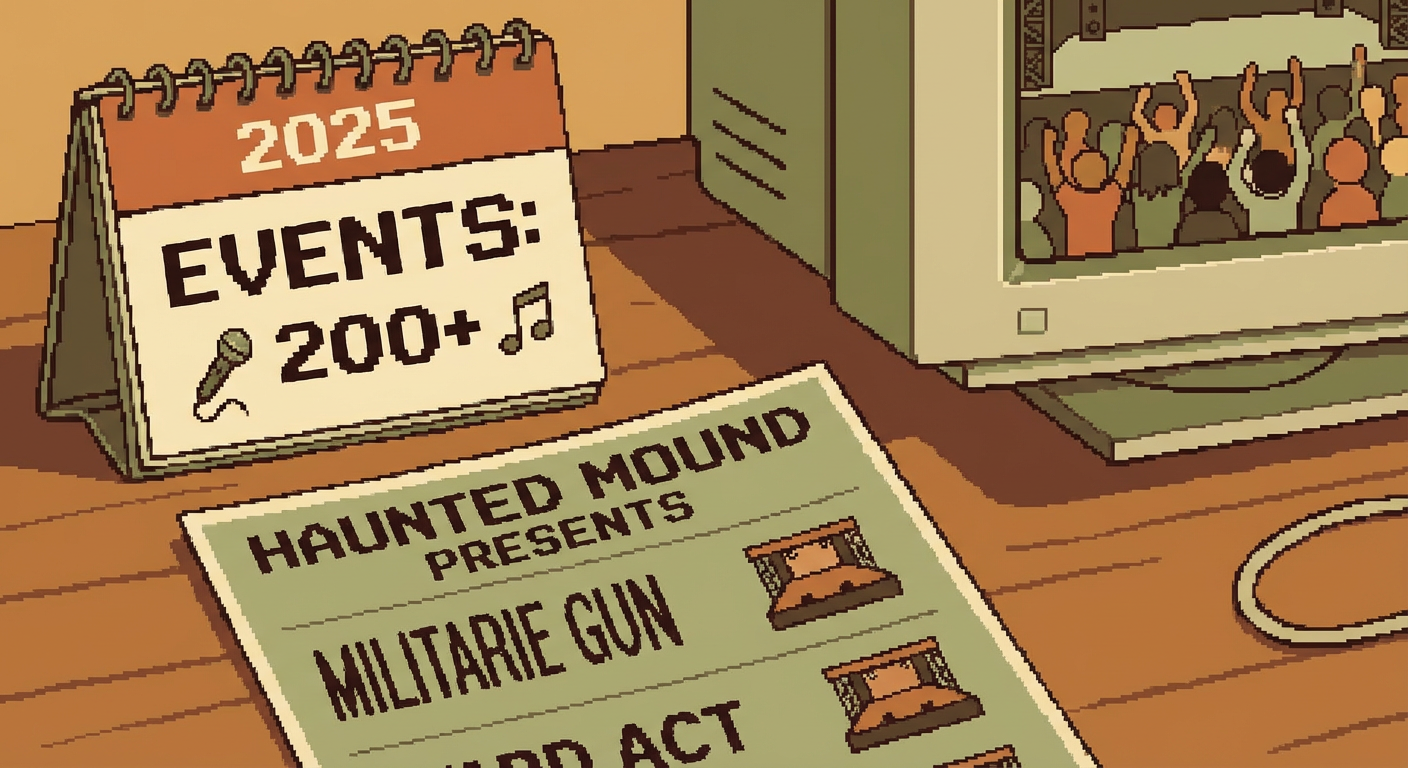
The attendance numbers are almost beside the point. Louisville’s DIY venue scene experienced a 34 percent capacity increase in 2025, according to Louisville Music News data. That’s not an accident. That’s not an indie music trend cycling through. That’s infrastructure working. Haunted Mound hosted over 200 events in a single year, booking artists like Militarie Gun and Yard Act before those names appeared on major festival lineups. The venue didn’t just host shows. It discovered artists. It validated them before the algorithm did.

But here’s what the numbers can’t capture: the feeling of watching a room figure itself out in real time. The energy when a hundred people show up to hear a band they’ve never heard of because they trust the person who booked them. That’s cultural currency. That’s the opposite of everything TikTok promises you about discovery.

Louisville Is Actually Happening (And Nobody Expected It)

Louisville wasn’t supposed to be a music city. That was the joke for years. Then Pitchfork’s Louisville Renaissance feature named the city as one of three American metros producing the most critically significant independent music outside New York and Los Angeles. Three. That’s it. That’s the tier. Louisville is suddenly in conversation with Brooklyn and LA as an actual creative epicenter.

The irony is thick enough to cut. The moment everyone started paying attention is exactly when locals started worrying that the attention would ruin everything. This is the pattern. You build something authentic in the margins. The margins get discovered. Suddenly there’s money. Suddenly there’s real estate speculation. Suddenly your $10 venue becomes the trendy spot, and then it becomes unaffordable, and then it closes, and everyone mourns it while ordering overpriced cocktails at the venue that replaced it.

Megan Siebe made Louisville Magazine’s 2025 Culture Makers list specifically for building booking practices centered on community rather than profit extraction. That’s not standard. That’s someone making choices that actively work against how venues normally operate.

The Founder as Counterweight

Siebe gets recognition because she’s not playing the game everyone else is playing. She’s running a venue like it’s a public service instead of a business opportunity. The distinction matters. When you run something with that philosophy, you can weather the pressure. You don’t panic-book a major label act to pay rent. You don’t raise door prices because capacity increased. You don’t turn your space into an Instagram backdrop.

This is the kind of leadership that doesn’t get written about enough. The unsexy work of saying no to money. The difficult conversations about keeping doors open to people without disposable income. The structural decisions that ripple through an entire scene.

What Happens Next

Every venue that matters has this moment. The question is whether they survive it. Some do. Some get gentrified. Some get discovered by the wrong people and lose their reason for existing. Some just burn out from the weight of holding down a space while everything around it changes.

Haunted Mound is at that moment now. The whole world is looking. There are definitely people in business suits somewhere thinking about how to monetize what’s happening there. That’s always the threat. That’s always the story in American culture. You build something for love. Someone builds an audience around it. Someone else figures out how to sell it back to that audience.

What makes this different is that there’s someone running the operation who understands that threat and is actively resisting it. Not through gatekeeping or pretense, but through pricing, through booking practices, through community-first decisions that compound over time.

The real question isn’t whether Haunted Mound will stay relevant. Venues with this kind of cultural weight tend to stay relevant. The question is whether it will stay itself. Whether five years from now, someone will still be able to walk in on a Tuesday night, pay ten dollars, and discover something that changes how they hear music.

That’s worth paying attention to. Not because it’s trendy. Not because Pitchfork said so. But because it’s the kind of place that reminds you what art-making actually looks like when people aren’t running the numbers first.

Seoul’s Micro-Neighborhoods Are Rewriting the Rules of Urban Cool

The Seongsu Moment That Changed Everything

Three years ago, Seongsu was the kind of place you’d accidentally stumble into while lost on the subway. A former industrial district in southeast Seoul, it had the bones of something interesting – warehouse conversions, vintage shops, the skeletal remains of a manufacturing past – but it wasn’t on anyone’s radar. Then something shifted. What started as a handful of creative types setting up coffee roasteries in old factories turned into something the internet couldn’t look away from. By late 2025, Nike, Gentle Monster, and Jacquemus all planted flagship pop-up experiences in the neighborhood within a six-month window. Each one pulled over 100,000 visitors. That’s not viral success. That’s cultural tectonic plates moving.

The numbers tell a story that feels almost too convenient to be real. Commercial rents in Seongsu increased 210 percent between 2022 and 2025. That’s not gradual gentrification. That’s a neighborhood being discovered, packaged, and monetized at speeds that would make venture capitalists weep. But here’s what matters more than the percentage: that number marks the exact moment when something authentic got absorbed into the machine. The warehouse parties became Instagram experiences. The independent galleries became backdrops for brand activations. The cool became content.

Hyper-Local Branding Is the New Arms Race

This isn’t just happening in Seoul. This is happening everywhere, and Seoul figured it out first. According to the McKinsey Global Institute Urban Retail Report 2025, “hyper-local neighborhood branding” ranks among the five most transformative forces reshaping how cities think about retail and culture right now. Translation: every major city is now running the Seongsu playbook. Find an overlooked neighborhood. Build a micro-identity around it. Turn it into an aesthetic. Watch corporations line up to colonize it.

The strategy works because it feels authentic in a way that mall-based retail never could. A pop-up in Seongsu doesn’t feel like shopping. It feels like discovering something real, something that exists because artists and entrepreneurs chose to build there, not because a corporation decided consumers should want it. But that’s the genius and the tragedy of hyper-local branding. It takes genuine cultural energy, the kind that takes years to build organically, and compresses it into a marketable moment. The neighborhood becomes a character in the brand’s story. The residents become extras in someone else’s narrative.

Seoul’s Micro-Neighborhoods Are Exporting Their Own Aesthetic

Talk about “Seongsu-core” on TikTok and you’re looking at 2.1 billion views in 2025 alone. That’s one of the most geo-tagged aesthetic movements the platform has seen. Not a subculture. An aesthetic tied to a specific place, which means it’s infinitely reproducible anywhere. You don’t need to actually go to Seongsu to participate in Seongsu-core. You can stage the brick walls, the vintage finds, the carefully curated emptiness of an artfully lit warehouse in your own city. The neighborhood becomes a template. The specificity that made it special gets diluted into a style guide.

This is where it gets genuinely interesting from a cultural studies perspective. Tourism to Seoul’s non-traditional districts, places like Mangwon and Ikseon-dong, grew 34 percent in 2025 compared to 2024, per the Korea Tourism Organization 2025 Urban Travel Trends. Tourists aren’t going to see Seoul. They’re going to experience Seongsu. They’re going to the places they already saw on TikTok, hitting the same coffee shop, standing in the same spot, generating the same content. The neighborhood stops being a place and becomes a destination, which is actually a completely different thing. One is alive and messy. The other is choreographed.

What Happens When Cool Becomes Predictable

Here’s the contradiction nobody wants to admit: the more successful these micro-neighborhoods become, the less interesting they actually are. We’ve seen this play out in Brooklyn, in Barcelona, in every neighborhood that got written up in the right magazine at the right time. The original residents and creators get priced out. The independent businesses get bought out by corporations playing at authenticity. The neighborhood becomes a museum dedicated to its own former self, preserved in amber but stripped of the actual cultural production that made it worth preserving.

The tension is real because the infrastructure that makes a neighborhood work, affordable rent, independent businesses, mixed-income communities, is fundamentally incompatible with the hype cycle that creates global attention. You can’t both build authentic creative culture and be a top-tier tourist destination. The math doesn’t work. Seoul’s experiment with hyper-local branding is brilliant and devastating precisely because it exposes this contradiction so clearly. Every major international brand wants access to the cultural credibility that a neighborhood like Seongsu offers. But that access, the moment it happens, kills the thing that made it credible in the first place.

The Question Nobody’s Really Asking

The real story here isn’t about Seongsu or pop-up fashion or aesthetic movements. It’s about power, specifically about who gets to decide what a neighborhood means and who benefits when that meaning gets distributed globally. Every brand activation, every influencer visit, every TikTok view that drives tourism numbers up is another brick in the wall separating a place from its residents. The neighborhood becomes a character in someone else’s story. The people who actually live there become part of the scenery.

So what’s the alternative? There probably isn’t one, at least not within existing systems of real estate and retail capitalism. But understanding this dynamic, seeing how neighborhoods get identified, packaged, and consumed, is the first step toward something like resistance. The next time you see a micro-neighborhood trending, before you book the flight or stage the Instagram photo, ask yourself what’s actually being preserved when a place becomes globally famous for being authentic. Ask who’s getting richer and who’s getting pushed out. Ask whether cool can survive at scale or if what we’re calling cool is actually just really effective marketing. The answer matters more than you might think.

Afrobeats’ Beautiful Mess: When a Genre Outgrows Itself

The Numbers Don’t Lie, But They Don’t Tell the Whole Story Either

Something strange happened in 2025. Afrobeats kept growing, streams kept multiplying, and yet the genre suddenly felt less coherent than it did three years ago. According to Spotify Loud & Clear 2025, global Afrobeats streams surged 47 percent year-over-year. The infrastructure expanded. More countries entered the conversation. And somehow, in the process of becoming bigger, Afrobeats became blurrier.

The shift is quantifiable. Nigerian artists, who dominated 72 percent of Afrobeats streams in 2023, now account for just 61 percent. That’s not a modest correction. That’s a serious reorganization. Ghanaian producers. Tanzanian vocalists. Diaspora kids making beats in London and Brooklyn. They’re not waiting for permission. They’re simply making music that fits under the Afrobeats umbrella, and that umbrella is getting bigger every quarter.

Meanwhile, Billboard’s Afrobeats Chart tells its own version of this story. When it launched in 2022, it tracked artists from eight countries. By January 2026, that number had swelled to fourteen, with over fifty charting acts competing for space. That’s not growth. That’s fragmentation wearing a growth mask.

The Panel Where Everything Got Real

The conversation got uncomfortable in Lagos during the 2025 Afrobeats Summit. Producers, label executives, and sonic architects gathered in one room to discuss the state of their own movement, and what emerged was less panel discussion, more philosophical crisis. The Guardian documented the heated moments, and the core question kept surfacing: Does “Afrobeats” even mean anything anymore?

One perspective held that the label had become a marketing category, a catch-all that sacrificed cultural specificity for commercial appeal. Another argued that genre fluidity was precisely the point, that Afrobeats had always been a conversation between Nigerian highlife, Ghanaian hiplife, dancehall, amapiano, and electronic experimentation. Why pretend it was ever a fixed thing? The tension revealed something important. The artists caught in this moment weren’t confused about their own work. They knew exactly what they were doing. The confusion belonged to the people trying to categorize them.

What made the panel revelatory wasn’t consensus. It was the opposite. These were people who had built Afrobeats together, now interrogating whether the structure they’d created was serving them or constraining them. That’s the sound of a subculture graduating into complexity.

Amaarae’s Quiet Revolution

Amaarae’s “Fountain Baby: Deluxe Sessions” landed in 2025 and did something that felt simultaneously inevitable and shocking. A Ghanaian-American artist making moody, bass-inflected pop arrived at the UK Albums Chart at number four. She became the first Ghanaian-American woman to crack the top five. It’s a statistic that looks like a ceiling broken. What’s more interesting is what it signals about who gets to represent Afrobeats now.

Amaarae isn’t the loudest voice in the room. Her production choices favor subtlety over spectacle. She’s moved away from Afrobeats’ core sound signature, that immediate percussive warmth, in favor of something more diffuse and introspective. She’s making music that exists in the genre but doesn’t feel bound by it. And the chart position proves there’s an audience already there, waiting for that kind of boundary-pushing.

Her success isn’t an aberration. It’s a pattern. The most interesting music coming out of this ecosystem right now tends to come from artists who treat Afrobeats as a starting point rather than a destination. They borrow the rhythmic DNA, the production textures, the cultural references, and then drag them into conversations with other sounds entirely.

Rema and Arca: The Signal Everyone Missed

When Rema collaborated with producer Arca in November 2025, the internet mostly moved on. But Pitchfork caught it, describing the pairing as “the clearest signal that Afrobeats’ next chapter is genre dissolution, not consolidation.” That’s not hyperbole. That’s notation.

Arca’s production philosophy is fundamentally anti-genre. She works in texture and abstraction, fractured rhythms, warped vocals, and the spaces between traditional song structures. Pairing her with Rema, one of Nigeria’s most commercially successful contemporary artists, wasn’t really a collaboration. It was a collision between two creative philosophies. And the result is music that lives somewhere else entirely, in a territory that doesn’t have a name yet.

This is what happens when a genre goes global. The artists stop asking permission from the original epicenter. They start asking their own questions. Can I take this sound and layer it with ambient production? Can I slow it down until it becomes something else? Can I smash it against electronic experimentation? The answer is always yes. And the yes is creating the interesting work.

The Beautiful Mess We’re Living In

Here’s the thing about Afrobeats’ identity crisis: it’s not actually a crisis. It’s maturation. The genre spent its first decade proving it could dominate commercial spaces. Now it’s proving it can exist everywhere simultaneously, in different forms, with different intentions, without losing its connection to its origins.

The artists caught in the middle aren’t struggling. They’re thriving. They’re making decisions that confuse categorization but clarify their own artistic voices. They’re taking production techniques developed in Lagos and Accra and London and applying them to music that doesn’t fit any established box. A genre doesn’t have to be monolithic to be coherent.

What makes 2026 feel like a turning point is that nobody’s pretending there’s one version of Afrobeats anymore. The conversation has shifted from “Is this Afrobeats?” to “How is this artist using Afrobeats elements to say something new?” That distinction matters. It means the genre has developed enough complexity to contain multitudes. It means the next chapter is being written by artists who feel empowered to break their own rules.

What are you hearing? What sounds feel like the future of this moment? I’m genuinely curious what’s catching your ear in these blurry spaces where Afrobeats dissolves into everything else.

The Naoshima Trap: Why Everyone’s Copying the Wrong Island

The Pilgrimage That Became a Problem

Naoshima pulled 780,000 visitors in 2024. That’s not a typo. An island with a permanent population under 3,000 absorbed nearly a million people in one year, all chasing the same mirage: that art can resurrect a place. That culture can matter. That somewhere in Japan’s Seto Inland Sea, someone figured out the formula and now every struggling city wants to reverse engineer it.

The Naoshima Trap: Why Everyone's Copying the Wrong Island
The Naoshima Trap: Why Everyone’s Copying the Wrong Island

They’re all doing it wrong. Not because they lack ambition or vision, but because they’ve mistaken the symptom for the disease. They saw Naoshima’s international acclaim, its museums, its crowds, and its regional economic activity of ¥37 billion during the 2025 Setouchi Triennale. They watched it get studied in 23 university urban planning programs worldwide. And they decided: we need an art island too.

The problem is structural. It’s boring to admit, but it’s true. Naoshima didn’t work because someone built nice galleries. It worked because someone waited.

Illustration for The Naoshima Trap: Why Everyone's Copying the Wrong Island
Illustration for The Naoshima Trap: Why Everyone’s Copying the Wrong Island

What Actually Happened on Naoshima (Spoiler: It Took 32 Years)

Soichiro Fukutake, the founder of Benesse, started this project in 1992. Not with a master plan. Not with a glossy development proposal. He bought an abandoned island and embedded art into its existing infrastructure. He restored homes instead of demolishing them. He commissioned site-specific work rather than rotating blockbuster exhibitions. He partnered with residents who actually lived there, not consultants who flew in for strategy sessions.

The Benesse Art Site Naoshima Official Documentation describes a philosophy most people skip over when they’re speed-reading the case study. The art wasn’t the product. The partnership with the community was the product. The infrastructure investment was the product. The art was just what made people pay attention.

A 2024 paper in the Journal of Cultural Heritage analyzed why Naoshima actually succeeded. The finding was almost comic in its simplicity: 78 percent of Naoshima’s success came from infrastructure investment and genuine resident collaboration. The art programming alone accounted for maybe a quarter of what made the place work. But nobody wants to hear that. Nobody’s launching a “Long-Term Infrastructure Partnership Initiative” or “Three Decade Commitment to Local Stakeholder Engagement.” Those don’t trend on LinkedIn.

The 12-City Copycat Collapse Nobody’s Talking About

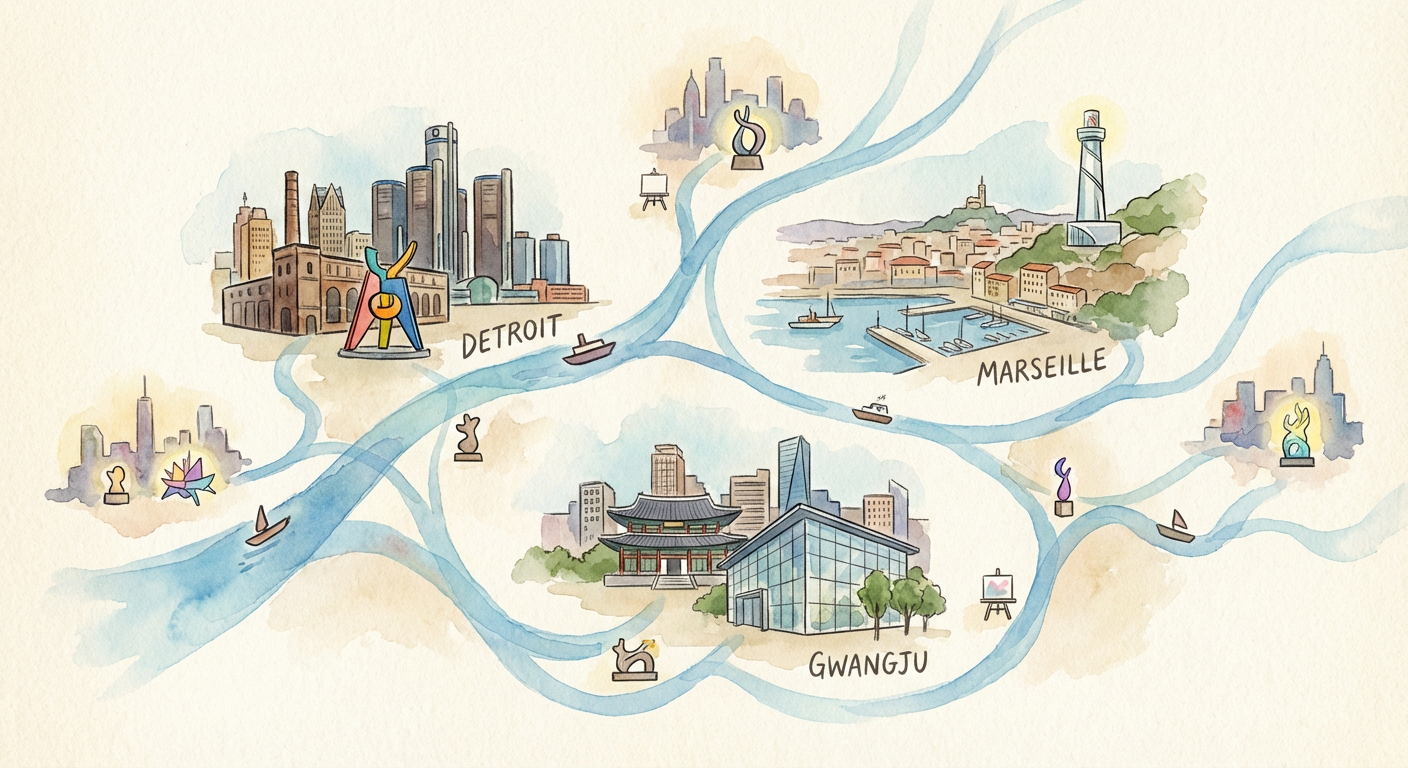
Between 2023 and 2025, at least 12 cities launched formal “art island” or “art district” initiatives modeled on Naoshima, according to the UNESCO Creative Cities Network 2025 Report. Detroit. Marseille. Gwangju. Places with real infrastructure problems, real community needs, and absolutely no patience for a 32-year timeline.

They built galleries. They hired curators. They commissioned art. And then they waited for the miracles. The miracles didn’t come, or they came in the wrong shape, or they came for the wrong people. The galleries became Instagram backdrops for day-trippers. The communities that already lived there got priced out before the “revival” was even complete. The art became backdrop music for gentrification.

This is the part that haunts me. Naoshima genuinely showed that culture could matter in economic development. It proved that art wasn’t just decoration for cities that were already winning. But the lesson got translated into a blueprint for exactly the opposite thing: the fastest way to monetize cultural capital without actually changing the material conditions that made a place feel abandoned in the first place.

What These Cities Actually Needed (But Nobody Wanted to Fund)

If you wanted to replicate Naoshima, you’d need to start with what Fukutake actually did. Not the museums. The sewage systems. The electrical infrastructure. The housing stock. The schools. The healthcare access. The things that make a place livable for people who work there year-round, not just for tourists who visit once.

You’d need to commit to a timeline that outlasts any mayoral term, any corporate leadership change, any cultural trend cycle. You’d need to genuinely listen to existing residents about what they wanted their place to become, even if that vision didn’t maximize visitor revenue. You’d need to accept that some islands, some neighborhoods, some cities aren’t supposed to become destinations. Some places are supposed to just be good places to live.

But that’s not a growth story. That’s not a case study. That’s not something you can package up and sell to the next city looking for a shortcut.

The Real Naoshima Effect

Here’s what actually happened: one person spent 32 years slowly transforming an island through patient infrastructure investment, genuine community partnership, and an art program that grew from those relationships rather than driving them. The result was real change. Real economic activity. Real cultural weight. Real problems too, obviously. Tourism creates crowding. Gentrification is gentrification even when it’s artistic.

But somewhere in those three decades, something genuine built up. Trust. Knowledge. Local expertise. The kind of stuff you can’t fake or accelerate. The Setouchi Triennale generates massive regional economic impact, yes, but that’s because the foundation is actually solid beneath it.

Every city that’s tried to skip steps, to compress the timeline, to use art as a shortcut instead of infrastructure as a foundation, has learned the same lesson: you can’t. The Naoshima effect wasn’t the art. It was the waiting. It was the commitment. It was the boring, unglamorous choice to actually invest in the place itself before asking the world to come visit.

So what do you think? Have you watched a cultural revival project in your own city? Did it feel real, or did it feel like someone was selling you a vision of the place rather than building it?

The Quiet Death of the ‘Third Place’: How the Café Closures of 2025 Are Reshaping Urban Community

When the Lights Go Out

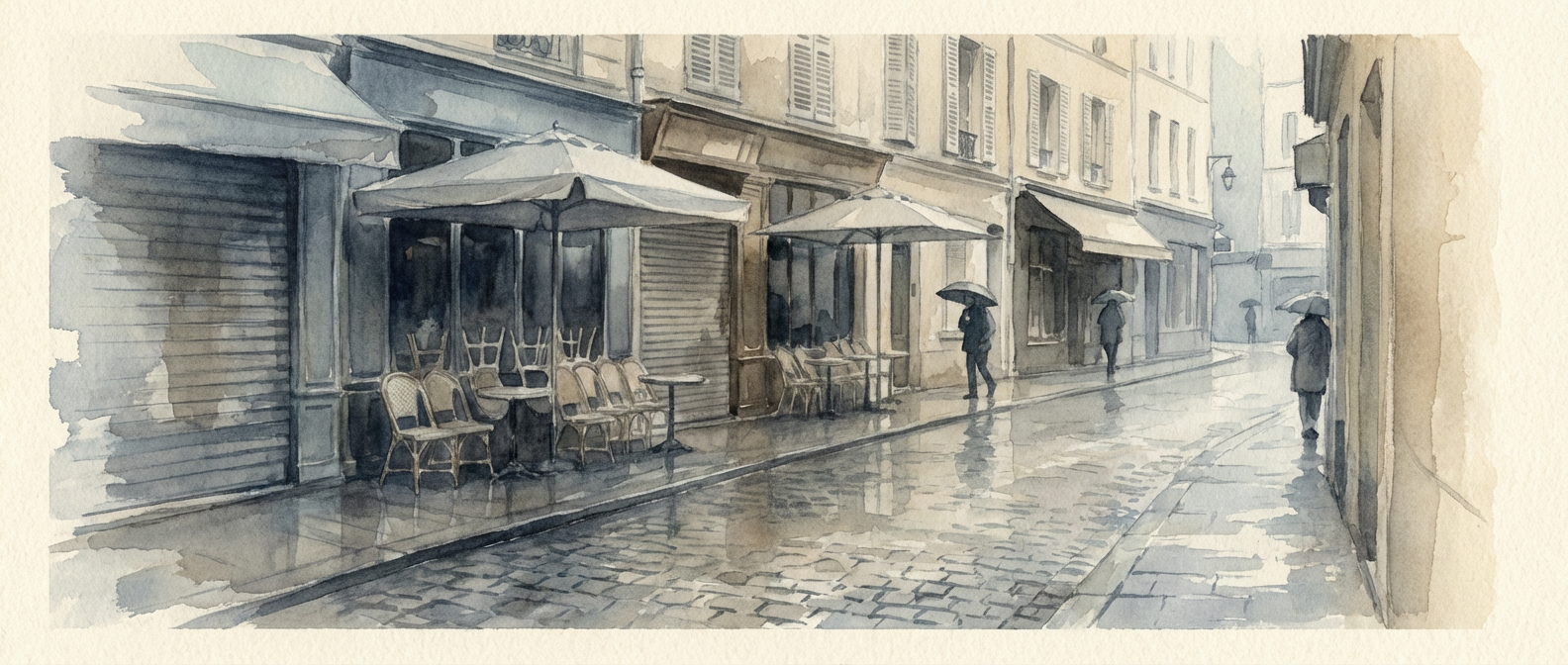
There’s a particular kind of silence that fills a storefront after the last espresso machine gets unplugged. I walked past the shuttered location of a café I’d frequented for seven years in Brooklyn last month. The chalkboard menu was still up. Someone had written “THANK YOU” in huge letters across it. The windows were papered over, but you could see the ghost of the space through the gaps: the corner where the regulars read, the bar where baristas knew your order.

The Quiet Death of the 'Third Place': How the Café Closures of 2025 Are Reshaping Urban Community
The Quiet Death of the ‘Third Place’: How the Café Closures of 2025 Are Reshaping Urban Community

This isn’t just nostalgia talking. The numbers are stark. The National Coffee Association’s 2025 survey documented what felt inevitable to anyone paying attention: independent café closures across the United States jumped 18 percent year-over-year, with over 4,200 independent shops shuttering between January and October alone. That’s not a trend. That’s a collapse.

What’s being lost isn’t just a place to grab coffee. Urban sociologist Ray Oldenburg named it decades ago when he published “The Great Good Place” in 1989: the third place. Not home, not work, but the informal gathering space where community happens. The café. The pub. The bookstore with chairs. The park bench with regulars. Spaces where strangers become neighbors and isolation becomes connection.

Illustration for The Quiet Death of the 'Third Place': How the Café Closures of 2025 Are Reshaping Urban Community
Illustration for The Quiet Death of the ‘Third Place’: How the Café Closures of 2025 Are Reshaping Urban Community

The Third Place Is Disappearing

The concept feels quaint now, almost naive. But Oldenburg was onto something essential about how humans build culture and resilience. We need friction. We need the randomness of overhearing conversations, bumping into acquaintances, sitting quietly near people who aren’t on screens in our apartment. The third place is where subcultures germinate. Where underground bands find audiences. Where ideas get workshopped over bad coffee and better company.

Researchers at MIT Media Lab’s 2025 third place decline study quantified what café closures felt like from the inside: a 22 percent drop in third-place density across major American metropolitan areas since 2020. That’s not equilibrium. That’s structural collapse happening in real time. These spaces aren’t being replaced. They’re just gone.

The culprits are familiar villains. Commercial rent increases have become obscene. London’s legendary Monmouth Coffee, a place that shaped specialty coffee culture in the UK, closed two of its three locations in early 2025. The reason? Commercial rent in Borough Market shot up 40 percent in just three years. Landlords decided that extracting maximum cash from property was more valuable than maintaining cultural institutions. The math worked for them. The culture didn’t survive it.

The Loneliness Trap

There’s data now on what happens when third places disappear. The Pew Research Center 2025 loneliness report found that 47 percent of adults under thirty-five report chronic loneliness, up from 30 percent in 2019. Researchers explicitly linked this uptick to the erosion of informal gathering spaces. We’re not just losing cafés. We’re losing connection infrastructure.

The pandemic accelerated everything. Remote work meant people stopped commuting to offices, which meant they stopped bumping into humans in transit. Digital communication got better but less textured. And then as we came out the other side, expecting to rebuild, landlords had already decided real estate speculation mattered more than community continuity.

What hits harder is the feedback loop. Fewer gathering spaces means more isolation. More isolation means fewer people on the streets, fewer conversations, less cultural energy, which makes remaining spaces feel emptier, which makes business harder, which means more closures. The death spiral accelerates.

What’s Rising From the Ashes

But here’s where it gets interesting. Humans adapt. We’re messy and creative. Emerging from the rubble of café culture is something unexpected: the anti-café model. These spaces, which started gaining traction in Eastern Europe, flip the traditional café equation. You don’t buy overpriced drinks. You buy time. You pay by the hour. You bring your own coffee, your own laptop, your own projects. In 2025, IBISWorld tracked a 60 percent surge in new anti-café openings across American cities.

It’s not elegant. It lacks the romance of the traditional third place. But it’s honest about what these spaces actually are now: commons for human attention in a world that’s monetized every second of it. The anti-café acknowledges that we can’t compete with corporate landlords on their terms. So it changes the game. Pay for presence, not consumption. Community as a subscription, not a byproduct of commerce.

Other experiments are happening too. Artists are renting short-term warehouse spaces and creating pop-up café culture. Bookstores are doubling down on events. Libraries are becoming more aggressively social. Some neighborhoods are organizing to fight rent increases. It’s decentralized and messy and feels fragile. But it’s something.

What We’re Learning Too Late

The death of the café tells us something uncomfortable about how we’ve chosen to build cities. We decided that public space was a cost center, not an asset. We let landlords extract maximum value from real estate without consequence. We prioritized individual consumption over collective gathering. We built digital platforms instead of physical neighborhoods. And now we’re surprised that loneliness is spiking and culture feels manufactured.

The closure of a single café might seem like a small loss. But it’s not. It’s a node collapsing in a network. It’s one fewer place where a teenager can discover experimental music. One fewer spot where community members who don’t know each other yet might meet. One fewer refuge for people experiencing isolation. One fewer ecosystem for subculture to breathe.

Third places will exist in 2030. Humans need them too desperately. The real question is what form they’ll take, who gets access, and whether we’ve actually learned that some things shouldn’t be optimized for maximum profit extraction. The closures of 2025 are a reckoning we probably needed. The hard part comes next: building differently. What are you seeing in your own neighborhoods?