
The New Geography of Belonging: How Cities Are Rebuilding Their Cultural DNA

Empty Towers, Shifting Centers

The glass towers that once pulsed with morning commuters now stand half-empty, their lobbies echoing with a new kind of quiet. Remote work has completely changed how downtown areas work, leaving behind more than vacant office space. It has created a void in urban identity itself.
The New Geography of Belonging: How Cities Are Rebuilding Their Cultural DNA

Cities across America are wrestling with a basic question: what happens to urban culture when the daily migration to central business districts becomes optional? The answer is popping up in surprising places. Neighborhood coffee shops have turned into impromptu coworking hubs. Residential areas are developing their own rhythms of commerce and creativity. The rigid business district model is splitting apart into something more spread out and flexible.

This shift isn’t just about real estate. It’s about rethinking what makes a city feel alive. The concentration of workers, shoppers, and cultural consumers in downtown areas created a particular kind of energy. Now cities have to build that energy in new ways, spreading it across neighborhoods that used to be considered the outskirts.

The Arts Ecosystem Under Pressure

Mid-size cities face a particularly brutal challenge as cultural institutions close or cut back operations. Regional theaters, independent galleries, and community art centers that survived on a fragile mix of subscriptions, grants, and foot traffic find themselves squeezed between rising costs and shrinking audiences.

When these institutions close, they create cultural deserts that reach far beyond their immediate neighborhoods. A shuttered community theater doesn’t just eliminate shows. It removes a gathering place, a training ground for emerging artists, and a shared reference point for local identity. The ripple effects touch everything from property values to social connections.

But this crisis has also pushed innovation. Pop-up galleries take over vacant storefronts. Artists work directly with neighborhoods rather than waiting for institutional support. The formal arts establishment is being added to, and sometimes replaced by, more grassroots approaches to cultural production. These new models respond faster to community needs, even though they lack the stability and resources of traditional institutions.

The Creative Class Displacement Paradox

The arrival of artists, designers, and other creative professionals in working-class neighborhoods has always been complicated. These residents bring energy, innovation, and often better amenities. They also bring rising rents and the eventual displacement of longtime communities.

The pandemic has made these dynamics worse as remote workers hunt for affordable alternatives to expensive city centers. Neighborhoods that offered real character and reasonable rents suddenly face rapid demographic shifts. The very qualities that attracted new residents start to disappear under the pressure of their arrival.

Cities are trying new approaches to manage this tension. Some have inclusionary zoning policies that require affordable housing in gentrifying areas. Others support community land trusts that keep properties under local control. The goal is to capture the benefits of creative investment while protecting existing communities from displacement.

This challenge reveals a deeper question about urban identity. Should neighborhoods change rapidly to attract new investment and residents? Or should they focus on continuity and affordability for existing communities? The most successful cities find ways to balance both needs, creating space for innovation while keeping cultural roots intact.

Reclaiming the Night

Urban planners are paying more attention than ever to the night-time economy as a key piece of city identity. The pandemic’s impact on restaurants, bars, and entertainment venues showed how important these businesses are to urban energy. Cities from Austin to Portland are developing comprehensive strategies to support and regulate nightlife.

These policies go beyond simple economic development. They recognize that night-time culture shapes how residents and visitors experience a city’s personality. A thriving music scene, diverse restaurant options, and safe late-night transportation create the conditions for random encounters and cultural mixing that define urban life.

The challenge is managing competing interests. Residents want quiet nights. Business owners need customers. Musicians need venues. Young people need places to gather. CityLab urban culture coverage shows how cities are experimenting with sound rules, business districts with extended hours, and transportation policies that support night-time activity while respecting neighborhood character.

The Social Infrastructure Renaissance

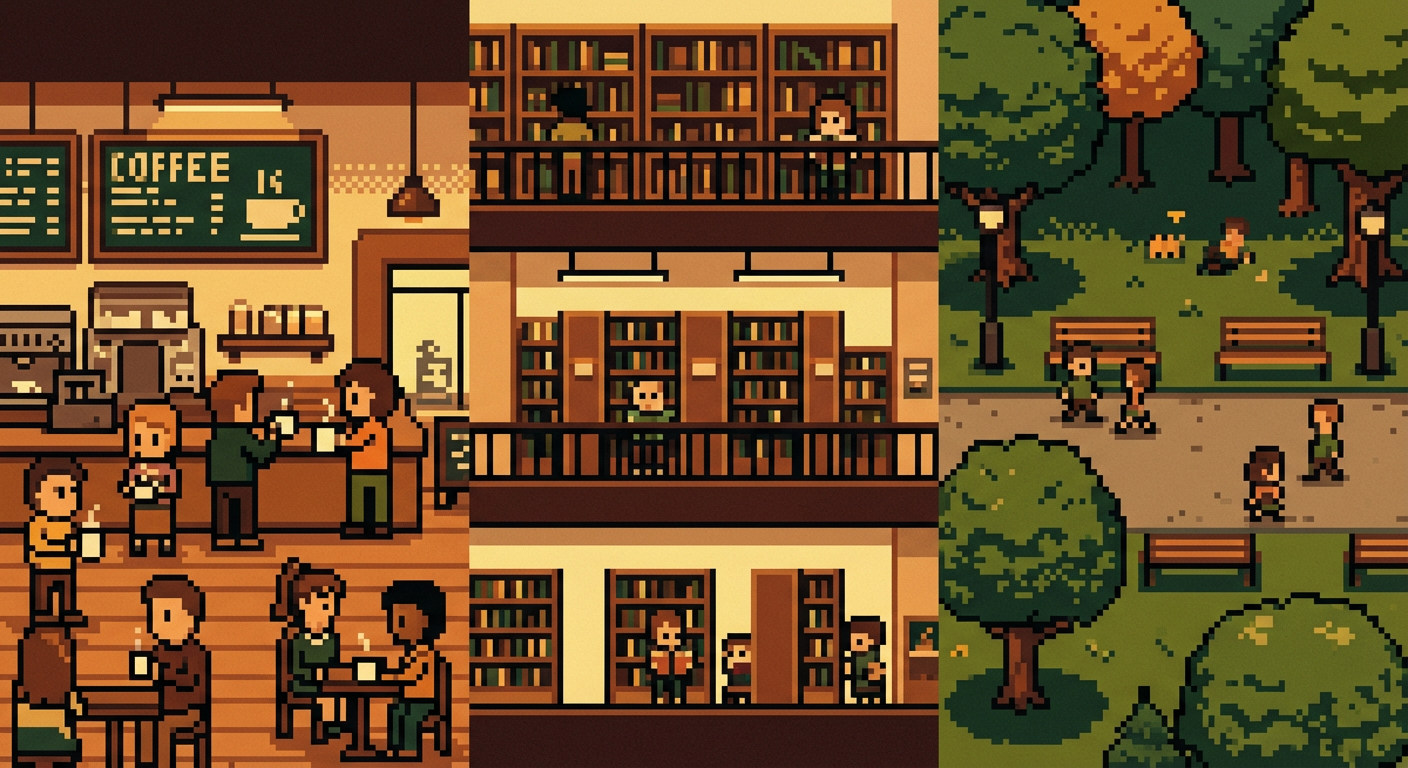
The concept of “third places” has gained new urgency in post-pandemic urban planning. These spaces, neither home nor work, provide the neutral ground where urban culture develops. Libraries, parks, and coffee shops work as the social infrastructure that makes city life meaningful.

Investment in these spaces reflects a growing understanding of their role in urban health. Parks provide recreation and environmental benefits, but they also create opportunities for casual interaction across demographic lines. Libraries offer more than books; they provide internet access, meeting spaces, and programming that brings communities together.

Coffee shops occupy a unique position in this ecosystem. They work as informal coworking spaces, meeting places, and cultural touchstones. Their success or failure often reflects broader neighborhood trends. Curbed urban design analysis shows how the design and programming of these spaces can either reinforce social divisions or break them down.

The challenge for cities is making sure that third places remain accessible and welcoming to diverse populations. Gentrification can transform neighborhood coffee shops into exclusive spaces that serve narrow demographics. Successful cities actively build inclusive third places that reflect and serve their full populations.

Information Deserts and Urban Identity

The collapse of local journalism creates a particular challenge for urban culture. When news outlets close, cities lose more than information sources. They lose shared narratives, common reference points, and ways for public conversation to happen. More than 200 counties across the United States now lack local news coverage entirely.

This information vacuum affects urban identity in serious ways. Without local reporting, residents lose touch with municipal politics, community events, and neighborhood changes. The shared stories that bind communities together become harder to create and maintain.

Cities are trying new models to fill this gap. Some fund nonprofit news organizations directly. Others support community media initiatives that combine journalism with cultural programming. The most innovative approaches recognize that local media works both as information and culture, helping cities maintain their sense of coherence and purpose.

The future of urban culture depends on cities’ ability to adapt their social infrastructure to new realities while keeping the authentic character that makes each place unique. This ongoing experiment in urban identity deserves our close attention and active participation as it plays out in neighborhoods across the country.

The Hollowed Cities: How Post-Pandemic Urbanism Reveals Who We Really Are

Empty Towers, Transformed Streets

The pandemic didn’t just change how we work. It exposed the fundamental fiction of downtown cores built around daily commuter rituals. Remote work has permanently slashed office occupancy rates in city centers, leaving gleaming towers half-empty and revealing the shallow foundations of urban identity we’d built around the nine-to-five grind.

The Hollowed Cities: How Post-Pandemic Urbanism Reveals Who We Really Are

What we’re seeing isn’t temporary disruption. It’s the unmasking of cities that prioritized corporate real estate over genuine community life. The sterile office districts that once defined metropolitan success now stand as monuments to a particular vision of urbanism that prioritized capital flows over cultural depth. When the workers stopped coming, what remained wasn’t city life but expensive infrastructure serving phantom populations.

This shift forces uncomfortable questions about what our cities actually are when stripped of their economic theater. Are we left with authentic urban culture, or does the emperor have no clothes?

Illustration for The Hollowed Cities: How Post-Pandemic Urbanism Reveals Who We Really Are

The Cultural Casualties We Don’t Discuss

While major metropolitan areas dominate urban planning discourse, mid-sized cities face a quieter crisis. Cultural institutions that anchored local identity have shuttered permanently, leaving creative communities adrift. Independent theaters, community art centers, and local music venues couldn’t weather extended closures, creating cultural voids that won’t be easily filled.

These losses represent more than entertainment options disappearing. They signal the fragility of cultural ecosystems that took decades to develop. When a city loses its historic theater or longstanding gallery, it doesn’t just lose programming. It loses gathering spaces where local identity gets negotiated and renewed. The ripple effects extend beyond artists to anyone who found community through shared cultural experiences.

Cities now confront the reality that cultural infrastructure requires intentional support, not just market-driven development. Yet many local governments lack both the resources and frameworks to rebuild what’s been lost. The result is cultural deserts in places that once had thriving arts scenes, leaving residents to seek meaning elsewhere or abandon their communities entirely.

Gentrification’s Pandemic Acceleration

The pandemic accelerated displacement patterns that were already reshaping urban neighborhoods. As remote work freed the creative class from geographic constraints, they scattered into previously affordable communities, driving up housing costs and completely altering local character. What’s particularly galling is how this process gets framed as urban revitalization rather than displacement.

Working-class communities that maintained cultural traditions and social networks suddenly find themselves priced out by newcomers who value “authentic” neighborhood character while accidentally destroying it. The incoming residents often have genuine appreciation for local culture, but their purchasing power transforms the economic landscape that sustained that culture.

This isn’t simply about housing costs. It’s about the erasure of informal social infrastructure that working communities depend on. Corner stores become artisanal coffee shops. Community centers get converted to co-working spaces. The changes might improve certain quality-of-life metrics, but they systematically dismantle the social fabric that made these neighborhoods appealing in the first place.

Urban planners and policymakers struggle with this dynamic because addressing it requires acknowledging that market-driven development often destroys the very qualities it claims to enhance. Curbed urban design coverage consistently highlights these tensions between development and preservation of community character.

Rethinking City Rhythms

Cities are finally recognizing that urban life extends beyond business hours. Night-time economy policies are emerging as serious urban planning considerations, acknowledging that after-dark activities shape city identity as much as daytime commerce. This represents a significant shift from viewing nightlife as something to be managed rather than nurtured.

The focus on night-time economics reveals how narrow our conception of productive urban activity has been. Cities that embrace diverse after-hours programming create opportunities for cultural expression and social connection that pure commercial districts can’t provide. Late-night food scenes, evening markets, and extended library hours all contribute to urban vitality in ways that traditional economic metrics miss.

At the same time, there’s renewed attention to third places beyond home and work. Coffee shops, libraries, and parks are gaining recognition as essential urban infrastructure rather than amenities. These spaces provide the social glue that makes cities more than collections of isolated individuals. Policy makers are beginning to understand that investing in these informal gathering spaces yields returns in community cohesion and mental health.

CityLab urban culture analysis consistently demonstrates how successful cities prioritize these seemingly mundane social spaces that enable daily community interaction.

The Information Vacuum

Perhaps most troubling is the collapse of local media coverage that once helped communities understand themselves. Over 200 counties across the United States now lack any local news coverage, creating information deserts that undermine civic engagement and community identity. Without local journalism, residents lose shared narratives about their places and common frames of reference for local challenges.

This media collapse coincides with urban transformation in ways that amplify displacement and cultural loss. When communities lack local news coverage, they can’t effectively organize around shared concerns or hold local officials accountable for development decisions. The result is urban change that happens to communities rather than with them.

Cities that maintain strong local media ecosystems show markedly different patterns of community engagement and cultural preservation. Local coverage creates feedback loops between residents and decision-makers that pure social media can’t replicate. Without professional local journalism, cities lose institutional memory and the capacity for informed public discourse about their own development.

The path forward requires honest reckoning with what we value in urban life beyond economic productivity. Cities that emerge from this transition successfully will be those that prioritize authentic community development over superficial revitalization, that support cultural infrastructure as seriously as physical infrastructure, and that create space for genuine civic engagement rather than performative consultation. The question isn’t whether cities will change, but whether that change helps existing communities or displaces them in service of abstract urban ideals.

The Empty Stages: How Cities Lost Their Cultural Heartbeat

The Silence After Last Call

Walk through downtown Portland on a Tuesday night. Count the darkened storefronts where venues once hummed. The Crystal Ballroom still stands, but half the clubs that fed its ecosystem vanished between 2020 and 2023. This isn’t just about entertainment. When cultural venues die, cities lose their capacity to generate the unexpected encounters that define urban life.

Mid-size cities got hit the hardest. Theaters that survived the Great Depression couldn’t weather eighteen months of closure. Gallery districts that took decades to establish crumbled in seasons. Cultural venues run on razor-thin margins and need years to build audiences. You can’t just flip a switch when restrictions lift and expect everything to bounce back.

Remote work made everything worse by emptying downtown cores for good. Office workers who used to grab drinks after presentations or catch lunch-hour exhibitions? They’re not there anymore. The foot traffic that kept cultural institutions alive disappeared, and honestly, it’s not coming back to pre-pandemic levels.

When the Creative Class Becomes the Displacement Engine

Here’s the brutal irony. Artists and cultural workers, themselves often priced out by rising rents, have become agents of further displacement. The neighborhoods that offered cheap studio space during the pandemic now attract developers marketing “authentic” creative communities to tech workers who want urban credibility.

Detroit’s Eastern Market district shows how this plays out. Muralists and maker spaces that moved in during the lean years now watch their success draw investment that prices out the very communities they wanted to serve. Cultural workers who survived venue closures face a second wave of economic pressure as their presence drives up property values.

Gentrification debates have gotten nastier because the pandemic reset everything. Empty commercial space gave experimental venues and artist collectives temporary opportunities. But as Curbed urban design coverage shows, these pop-up uses often just become marketing tools for developers rather than lasting cultural infrastructure.

Designing Night in the 24-Hour City

City planners are finally catching on to what urbanists have been saying for decades: night-time economies need real policy support. Venues that create after-dark culture can’t survive residential noise complaints and licensing bureaucracy without city backing.

Amsterdam has its Night Mayor program. London funds cultural programming through late-night levies. But American cities are way behind on comprehensive approaches to night-time economic development. Most still treat bars and clubs like necessary evils rather than essential urban infrastructure.

The pandemic showed how fast night-time culture can vanish and how slowly it rebuilds. Cities that invested in evening programming during recovery saw their downtowns bounce back faster. Those that relied on market forces alone watched their after-dark economies break apart into scattered venues that couldn’t sustain real cultural scenes.

The Democracy of Third Places

Libraries stayed open when concert halls closed. Coffee shops adapted faster than theaters. Parks hosted programming that museums couldn’t manage. The pandemic reminded cities which spaces actually serve all residents rather than cultural tourists and wealthy subscribers.

Policy wonks have started paying attention to these “third places” between home and work. Urban planning documents now include language about social infrastructure that would have seemed obvious to Jane Jacobs but radical to zoning boards five years ago. This matters because these spaces need different kinds of investment and protection than big cultural institutions.

Independent bookstores and neighborhood cafes create the daily interactions that keep urban culture alive between major events. They provide the social foundation that lets larger cultural institutions work. When cities lose these informal gathering places, they lose what makes bigger cultural programming possible.

Information Deserts in the Urban Landscape

Over 200 American counties now have zero local news coverage. Urban areas face a different crisis: cultural coverage vanishing from local media as arts writers get laid off and entertainment sections shrink to syndicated content.

Without cultural criticism and event coverage, cities lose the shared conversation that turns individual experiences into collective cultural memory. Small venues and experimental artists rebuilding urban culture after crisis need media attention to find audiences and build reputations. When that coverage disappears, cultural scenes turn inward and fragment.

Digital platforms promised to democratize cultural coverage, but algorithm-driven feeds favor established venues and mainstream events over emerging artists and experimental programming. Losing dedicated cultural journalism means cities can’t document or understand their own cultural development, as CityLab urban culture analysts have reported.

Building Memory, Not Just Recovery

Cities that thrive post-pandemic won’t just rebuild what existed before. They’ll recognize that urban culture needs intentional work across multiple scales, from neighborhood coffee shops to major institutions. The venues we lost won’t return, but the communities that supported them are still here.

Cities will develop new cultural scenes. That’s going to happen. The real question is whether those scenes will serve residents or tourists, emerging artists or established institutions, diverse communities or the same old demographics. The choices cities make about zoning, funding, and programming over the next five years will decide.

What cultural spaces defined your neighborhood before the pandemic? Which ones survived, and what took their place? Share your observations about how cultural infrastructure is changing in your city.

The Hollow City: How Pandemic Urbanism Stripped Away Our Cultural Illusions

The Great Downtown Exodus

Office towers stand half-empty across American downtowns. Remote work has permanently altered the urban equation, with many companies maintaining occupancy rates below 60% in their central business districts. This isn’t temporary pandemic disruption. This is structural change.

The Hollow City: How Pandemic Urbanism Stripped Away Our Cultural Illusions

What happens next reaches far beyond real estate values. When knowledge workers abandon downtown cores, they take with them the economic foundation that supported countless cultural venues, restaurants, and community spaces. The lunch crowd that kept independent bookstores alive? Gone. The after-work drinks crowd that packed gallery openings? They exist only in memory.

Cities are scrambling to reimagine these hollowed-out centers. Some propose residential conversions. Others push for mixed-use developments. But few want to acknowledge the deeper cultural loss happening here. Downtown wasn’t just an office destination. It was where different social classes actually bumped into each other, where random encounters sparked innovation, where urban energy concentrated into something electric and genuinely unpredictable.

Illustration for The Hollow City: How Pandemic Urbanism Stripped Away Our Cultural Illusions

Cultural Institutions in Crisis

Mid-size cities face a particularly brutal reckoning. Their cultural institutions, already running on paper-thin margins, couldn’t weather extended closures and reduced capacity. Theaters, museums, and music venues that anchored local arts scenes have shuttered permanently. Cultural infrastructure that took decades to build crumbled in months.

What emerges in place of these institutions tells us everything about post-pandemic urban priorities. Strip malls replace repertory theaters. Chain restaurants move into former indie music venues. The CityLab urban culture conversation increasingly focuses on economic recovery rather than cultural preservation.

This cultural flattening accelerates in cities that lack strong arts advocacy. Without institutional anchors, local creative scenes fragment into private networks and exclusive circles. The democratizing force of public cultural space disappears, replaced by invitation-only gatherings and subscriber-only events.

The loss compounds over time. Emerging artists who might have cut their teeth in now-defunct venues migrate to coastal cities or abandon their creative pursuits entirely. You can’t rebuild cultural ecosystems that took generations to develop with pop-up markets and food truck festivals.

The Gentrification Acceleration

Pandemic migration patterns have intensified displacement pressures in ways that make previous gentrification debates seem quaint. The creative class, armed with remote work flexibility and inflated housing budgets, can now colonize previously inaccessible neighborhoods and entire cities.

Working-class communities that survived decades of economic decline suddenly face an invasion of laptop-wielding newcomers seeking “authentic” urban experiences. These digital nomads bring capital but little commitment to existing social networks or community institutions. They transform neighborhoods into curated lifestyle brands while longtime residents get priced out of their own zip codes.

The speed of this transformation leaves little time for the gradual cultural exchange that characterized earlier waves of urban change. Instead, established communities watch their corner stores become artisanal coffee shops, their community centers become co-working spaces, their affordable housing become luxury lofts. I’ve watched this happen in real time. It’s brutal.

City governments, desperate for tax revenue, enable this process through zoning changes and development incentives. They celebrate the arrival of creative entrepreneurs while ignoring the exodus of families who built these neighborhoods over generations. The Curbed urban design aesthetic becomes more important than housing affordability or community continuity.

After Dark: Reconstructing Urban Nightlife

Cities are discovering that vibrant night-time economies require intentional policy intervention. The assumption that bars and clubs would naturally return after pandemic restrictions proved naive. Many establishments closed permanently. Others reopened to changed demographics and consumption patterns that barely resemble the before times.

Forward-thinking municipalities now treat nightlife as essential urban infrastructure rather than a regulatory afterthought. They’re appointing night mayors, relaxing noise ordinances, and coordinating late-night transit options. These policies recognize that urban vitality depends on activity cycles that extend beyond business hours.

But policy innovation can’t solve deeper cultural shifts. Young adults, saddled with student debt and housing costs, have less disposable income for nightlife experimentation. Social media has replaced chance encounters as the primary mode of urban discovery. Dating apps have eliminated much of the social motivation that previously drove bar culture.

The night-time economy that emerges looks different from its predecessor. More controlled, more predictable, more expensive. The spontaneous energy that once defined urban nightlife gets packaged into managed experiences and themed events.

The Third Place Revival

Urban planners suddenly speak reverently about third places. Coffee shops, libraries, and parks receive unprecedented policy attention as cities recognize their role in social cohesion and community building. The pandemic revealed how much urban life depended on these informal gathering spaces.

Yet the third place revival often misses its own contradictions. The coffee shops that planners celebrate as community anchors exclude anyone who can’t afford five-dollar lattes. The libraries they promote as democratic spaces operate with reduced hours and increased security. The parks they highlight as social infrastructure remain segregated by race and class.

Meanwhile, information deserts spread across the urban landscape. Over 200 counties lack any local news coverage, leaving communities without shared sources of information or civic engagement. Social media algorithms replace local journalism as residents’ primary source of neighborhood news, fragmenting public discourse into isolated echo chambers.

Cities invest millions in placemaking initiatives while ignoring the communication infrastructure that actually builds community. They fund public art installations while local newspapers die. They create Instagram-worthy gathering spaces while residents lose access to information about their own neighborhoods.

What you get is a hollow simulation of community life. Third places that look great in urban planning presentations but lack the genuine social connections that make cities more than mere collections of buildings and amenities.

These contradictions demand honest examination rather than optimistic spin. Urban culture can’t be manufactured through policy initiatives or design interventions. It emerges from the messy, unpredictable interactions between different people sharing the same space over time. Post-pandemic cities need fewer branded experiences and more genuine opportunities for human connection across lines of difference.

What Honest cultural criticism Reveals About Urban culture and city identity in post-pandemic cities

The standard take is missing the more important signal underneath. The topic of urban culture and city identity in post-pandemic cities rewards more careful attention than the typical coverage provides, and the reason is not complicated once you know where to look.

What makes this genuinely different from previous cycles — viewed through the lens of honest cultural criticism — is cultural institution closures reshaping urban arts scenes in mid-size cities. The willing to be uncomfortable for accuracy; not contrarian for its own sake read of the situation is also the more accurate one once you examine what the evidence actually shows.

The Criticism: Setting the Terms

Remote work permanently reducing office occupancy in downtown cores isn’t just a data point in the story of urban culture and city identity in post-pandemic cities. It’s the structural condition that makes everything else in this analysis make sense. Context like this doesn’t age quickly. The conditions that produced it have been building for years, and the convergence is what makes the current moment distinct from previous moments that looked similar from a distance.

Cultural institution closures are reshaping urban arts scenes in mid-size cities.

Gentrification debates are intensifying as the creative class displaces working communities. CityLab urban culture has been tracking this dimension consistently.

What makes this moment worth examining carefully isn’t the novelty but the confirmation. The underlying dynamics have been visible for some time. What’s new is that they’ve reached a threshold where ignoring them requires active effort rather than simple inattention. That threshold crossing is the event, not the underlying movement that produced it.

And night-time economy policies emerging as urban planning focus is part of that same picture. These elements don’t exist in separate silos. They’re reinforcing conditions in the same structural shift.

The Uncomfortable Take: The Analysis

Night-time economy policies emerging as urban planning focus is where the analysis gets more specific. The surface reading is accessible and not wrong, but it misses the mechanism. The mechanism is where the practical insight lives. What makes this genuinely different from previous cycles is third places like coffee shops, libraries, and parks gaining renewed policy attention. Understanding this changes what you do with the information.

Local media deserts are leaving 200 US counties with no news coverage.

The skeptical counterargument deserves honest engagement: prior moments with similar surface characteristics didn’t produce the outcomes that seemed logical at the time. That history is real. What’s different now is local media deserts leaving 200 US counties with no news coverage, which isn’t a minor variable. It’s the infrastructure condition that previous cycles lacked. Infrastructure changes tend to be persistent in ways that sentiment-driven changes are not. Curbed urban design is one source tracking this dimension with the rigor it requires.

There’s also a distributional question that often goes unaddressed in coverage of urban culture and city identity in post-pandemic cities: who captures the value created by these shifts, and who absorbs the disruption costs? The aggregate picture can be positive while the distribution is uneven in ways that matter enormously to specific participants. Keeping that distributional lens in view is part of reading the situation clearly rather than simply optimistically.

Implications: What This Means If You Care About Cultural Dynamics

The implications of urban culture and city identity in post-pandemic cities extend beyond the immediate context. Remote work permanently reducing office occupancy in downtown cores combined with the structural conditions described above creates a situation where adjacent fields, decisions, and communities are affected in ways that aren’t always visible from inside the primary story. The second-order effects are frequently more important than the first-order ones, and they’re where careful attention pays the highest returns.

Culturally plugged-in, opinionated, moves fast and thinks slower.

The practical question isn’t whether to engage with these dynamics but how. The answer depends on context — on what role you occupy relative to urban culture and city identity in post-pandemic cities and what your actual decision horizon is. But the first step is the same regardless: accurate understanding of what’s actually happening rather than what the most available narrative says is happening.

A few concrete observations are worth separating out from the broader analysis. First: cultural institution closures reshaping urban arts scenes in mid-size cities isn’t a temporary condition. It’s a new baseline. Second: third places like coffee shops, libraries, and parks gaining renewed policy attention suggests that the adjustment period isn’t over. Third, and most important: the organizations and individuals who are treating the current moment as a new steady state rather than a transition are making a categorization error that will be costly to unwind later.

The Case Against: What the Critics Get Right

Intellectual honesty requires acknowledging the strongest counterarguments, not just the weakest ones. The case against the optimistic reading of urban culture and city identity in post-pandemic cities isn’t trivial. There are structural vulnerabilities in the current picture that deserve direct engagement rather than dismissal.

The most serious objection is the one about sustainability. Gentrification debates intensifying as the creative class displaces working communities can be read not as a foundation but as a ceiling — a point beyond which growth becomes self-limiting because of the very dynamics that produced it. If the current state has already incorporated most of the available supply of early-adopting participants, the remaining growth curve may be structurally shallower than the recent trajectory implies.

Local media deserts are leaving 200 US counties with no news coverage.

Looking Forward

The trajectory here is clearer than the pace. Making predictions about when specific thresholds will be crossed is genuinely difficult, and anyone claiming precision about timelines should be treated with skepticism. But the direction — toward remote work permanently reducing office occupancy in downtown cores and continued development of the conditions described above — is supported by the evidence in a way that isn’t contingent on a single variable going right.

Local media deserts leaving 200 US counties with no news coverage is the variable to watch as the leading indicator. Historical patterns suggest it moves first, with broader metrics following with some lag. This doesn’t make the outcome certain, but it makes it legible. And legibility is the precondition for good decisions.

Three questions are worth holding as the story develops. First: are the structural conditions that enabled the current state durable, or are they cyclical? Second: who is positioned to benefit from the next phase, and does that differ materially from who benefited in the current phase? Third: what would a clean falsification of the optimistic thesis look like, and is there any evidence of that signal emerging? These questions don’t need answers today, but having asked them changes what you notice in the months ahead.

The direction here is clear even when the pace isn’t.

Where does this argument break down? I want the strongest pushback.

Urban culture and city identity in post-pandemic cities — An Honest Cultural

The standard take is missing the more important signal underneath. Urban culture and city identity in post-pandemic cities deserves more careful attention than the typical coverage provides, and the reason isn’t complicated once you know where to look.

What makes this genuinely different from previous cycles is cultural institution closures reshaping urban arts scenes in mid-size cities. The precise read of the situation is also the more accurate one once you examine what the evidence actually shows. And honestly? It’s messier than most people want to admit.

Urban culture and city identity in post-pandemic cities — An Honest Cultural

The Analysis: Setting the Terms

Remote work permanently reducing office occupancy in downtown cores isn’t just a data point in the story of urban culture and city identity in post-pandemic cities. It’s the structural condition that makes everything else in this analysis make sense. Context like this doesn’t age quickly. The conditions that produced it have been building for years, and the convergence is what makes the current moment distinct from previous moments that looked similar from a distance.

Cultural institution closures are reshaping urban arts scenes in mid-size cities.

Gentrification debates are intensifying as creative class displaces working communities. CityLab urban culture has been tracking this dimension consistently.

What makes this moment worth examining carefully isn’t the novelty but the confirmation. The underlying dynamics have been visible for some time. What’s new is that they’ve reached a threshold where ignoring them requires active effort rather than simple inattention. That threshold crossing is the event, not the underlying movement that produced it.

Night-time economy policies emerging as urban planning focus is part of that same picture. These elements don’t exist in separate silos. They’re reinforcing conditions in the same structural shift.

The Moment That Landed: The Analysis

Night-time economy policies emerging as urban planning focus is where the analysis gets more specific. The surface reading is accessible and not wrong, but it misses the mechanism. The mechanism is where the practical insight lives. What makes this genuinely different from previous cycles is third places like coffee shops, libraries, and parks gaining renewed policy attention. Understanding it changes what you do with the information.

Local media deserts are leaving 200 US counties with no news coverage.

The skeptical counterargument deserves honest engagement. Prior moments with similar surface characteristics didn’t produce the outcomes that seemed logical at the time. That history is real. What’s different now is local media deserts leaving 200 US counties with no news coverage, which isn’t a minor variable. It’s the infrastructure condition that previous cycles lacked. Infrastructure changes tend to be persistent in ways that sentiment-driven changes aren’t. Curbed urban design is one source tracking this dimension with the rigor it requires.

There’s also a distributional question that often goes unaddressed in coverage of urban culture and city identity in post-pandemic cities: who captures the value created by these shifts, and who absorbs the disruption costs? The aggregate picture can be positive while the distribution is uneven in ways that matter enormously to specific participants. Keeping that distributional lens in view is part of reading the situation clearly rather than simply optimistically.

Implications: What This Means If You Care About Peak albums or films

The implications of urban culture and city identity in post-pandemic cities extend beyond the immediate context. Remote work permanently reducing office occupancy in downtown cores combined with the structural conditions described above creates a situation where adjacent fields, decisions, and communities are affected in ways that aren’t always visible from inside the primary story. The second-order effects are frequently more important than the first-order ones, and they’re where careful attention pays the highest returns.

Culturally plugged-in, opinionated, moves fast and thinks slower.

The practical question isn’t whether to engage with these dynamics but how. The answer depends on context — on what role you occupy relative to urban culture and city identity in post-pandemic cities and what your actual decision horizon is. But the first step is the same regardless: accurate understanding of what’s actually happening rather than what the most available narrative says is happening.

A few concrete observations are worth separating out from the broader analysis. First: cultural institution closures reshaping urban arts scenes in mid-size cities isn’t a temporary condition. It’s a new baseline. Second: third places like coffee shops, libraries, and parks gaining renewed policy attention suggests that the adjustment period isn’t over. Third, and most important: the organizations and individuals who are treating the current moment as a new steady state rather than a transition are making a categorization error that will be costly to unwind later.

The Case Against: What the Critics Get Right

Intellectual honesty requires acknowledging the strongest counterarguments, not just the weakest ones. The case against the optimistic reading of urban culture and city identity in post-pandemic cities isn’t trivial. There are structural vulnerabilities in the current picture that deserve direct engagement rather than dismissal.

The most serious objection is the one about sustainability. Gentrification debates intensifying as creative class displaces working communities can be read not as a foundation but as a ceiling — a point beyond which growth becomes self-limiting because of the very dynamics that produced it. If the current state has already incorporated most of the available supply of early-adopting participants, the remaining growth curve may be structurally shallower than the recent trajectory implies.

Local media deserts are leaving 200 US counties with no news coverage.

Looking Forward

The trajectory here is clearer than the pace. Making predictions about when specific thresholds will be crossed is genuinely difficult, and anyone claiming precision about timelines should be treated with skepticism. But the direction — toward remote work permanently reducing office occupancy in downtown cores and continued development of the conditions described above — is supported by the evidence in a way that isn’t contingent on a single variable going right.

Local media deserts leaving 200 US counties with no news coverage is the variable to watch as the leading indicator. Historical patterns suggest it moves first, with broader metrics following with some lag. This doesn’t make the outcome certain, but it makes it legible. And legibility is the precondition for good decisions.

Three questions are worth holding as the story develops. First: are the structural conditions that enabled the current state durable, or are they cyclical? Second: who’s positioned to benefit from the next phase, and does that differ materially from who benefited in the current phase? Third: what would a clean falsification of the optimistic thesis look like, and is there any evidence of that signal emerging? These questions don’t need answers today, but having asked them changes what you notice in the months ahead.

The direction here is clear even when the pace isn’t.

What moment had this effect on you, and can you explain why it worked?

Zhivoderam

Zhivoderam

Where culture gets examined, not just consumed.

Culture moves faster than most publications can keep up with. We hit the brakes and take a closer look at the trends, subcultures, and ideas that influence how we live, dress, talk, and connect with each other. This isn’t about chasing every viral moment or hot take. We’re more interested in understanding what sticks around and why it matters.

Topics we cover: Trends · Subcultures · Identity · Fashion · Language · Digital Life