
The Moment a Spirit Nobody Asked For Became Impossible to Ignore
Three years ago, orujo was the thing your Spanish friend’s grandmother kept in an unmarked bottle under the sink, the one she’d force into your hand at 11pm insisting it would “fix your stomach.” It tasted like turpentine mixed with regret. It was not fashionable. It was barely acknowledged outside of Galicia, much less celebrated.
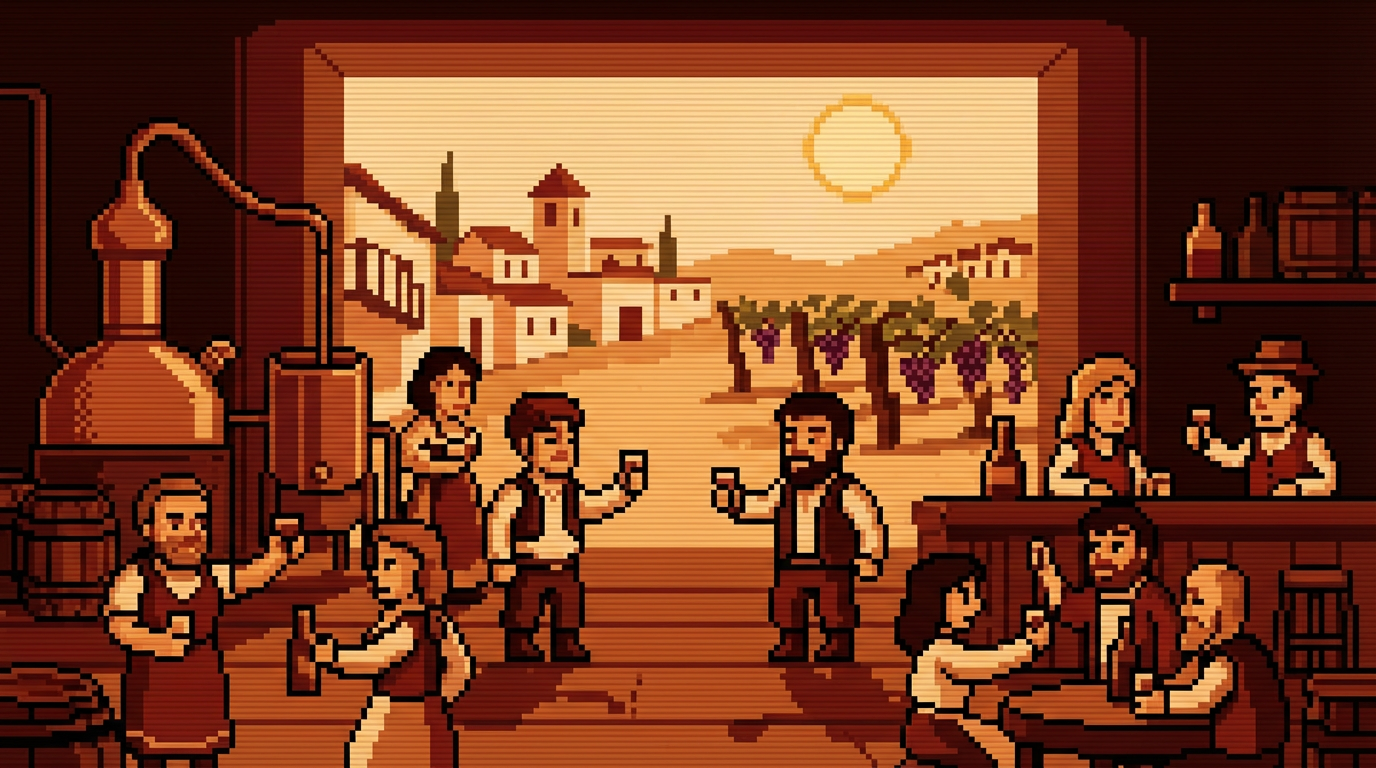
Now it’s everywhere. Export volumes have jumped 34 percent between 2023 and 2025 alone. Brooklyn cocktail bars are building entire menu sections around it. Craft producers are registering at rates unseen in the spirit’s documented history, with twelve new artisanal orujo makers coming online in 2024 alone. The spirit that spent decades as a rural footnote has entered what we might call its peak moment, that crystallized point where a thing stops being obscure and becomes inevitable.
What’s interesting isn’t just that orujo is having a moment. It’s that the moment happened at exactly the right cultural juncture, when the conditions for its discovery aligned perfectly. Understanding those conditions tells you something about how taste is actually constructed in 2025.

What Orujo Actually Is (And Why Most People Get It Wrong)
Let’s establish the basics, because the mythology around orujo matters more than you’d think. It’s a pomace brandy from Galicia, made from the grape solids left over after wine production: skins, seeds, stems, all the stuff normally thrown away. In that respect it shares DNA with Italian grappa and French marc. But orujo has its own regulatory framework, its own character, its own stubbornness.
The DO Augardente de Galicia designation, established in 1989, recognizes three distinct styles: blanco (clear, unaged, brutal), herbal (infused with botanicals), and aged (typically in oak, softer). Most drinkers don’t know this distinction exists. Most drinkers think orujo is just “that harsh Galician thing.” That gap between what orujo is and what people assume it is has become part of its appeal, a space where discovery happens.
Traditionally it was peasant fuel, the kind of spirit you drank after hard labor or didn’t drink at all. It had zero marketing infrastructure. There was no narrative. It simply existed in rural Spanish life as an economic reality: turn the agricultural byproducts into something potable and profitable. That stripped-down utilitarianism, that refusal to perform, is exactly what makes it legible to contemporary drinkers tired of spirits designed by committee to be “approachable.”
The Machinery Behind the Moment: How Orujo Actually Got Here
The broader pomace spirit category grew 18 percent globally between 2024 and 2025, according to IWSR Drinks Market Analysis. That’s not nothing. But orujo’s growth is outpacing the category. There’s a specific gravity to its ascent, a sense that this particular spirit is pulling harder than its cousins.
Part of that pull comes from infrastructure investment. The spike in craft producers registering with Consello Regulador do Augardente de Galicia in 2024 wasn’t random. These weren’t hobby distillers deciding on a whim. They were investors and makers responding to visible demand, reading market signals, understanding that the moment was opening. Twelve new registrations in a single year is the highest single-year increase in the regulatory body’s records. That’s a structural shift, not a blip.
Then there’s the bartender component. New York’s Existing Conditions added an entire orujo-forward cocktail menu section in late 2024, responding to guest requests rather than chasing an idea. That matters because it suggests demand is pulling supply rather than the other way around. The cocktail world could have invented orujo. Instead, orujo invented itself through the people who wanted to drink it.
Why Now? Three Very Specific Trends Colliding at Once
Orujo’s moment coincides with three cultural movements that couldn’t have existed simultaneously five years ago. First, there’s the exhaustion with “clean” spirits designed for approachability. Orujo tastes like what it is: fermented grape refuse. It doesn’t apologize. It doesn’t market itself as “smooth” or “mixable.” That radical transparency is appalling and refreshing in equal measure.
Second, there’s the neo-regionalism running through food and drink culture right now. We’re watching a systematic rehabilitation of supposedly “peasant” foodways, a recognition that working-class traditions often encode sophistication and knowledge that gets lost when capitalist branding takes over. Orujo benefits from this reevaluation. Its lack of marketing history becomes an asset, proof that it was never designed for you, which makes it more desirable.
Third, and most cynical, there’s the capitalist machinery that absorbs any authentic thing and sells it back to you with a different label. Once orujo became legible as a trend, the marketing infrastructure built itself. Instagram accounts. Craft distillery origin stories. Artisanal labels. Heritage narratives. The very thing that made orujo interesting, its resistance to commodification, gets commodified in the process of its discovery. This is not a bug. It’s structural.
The Uncomfortable Truth About Discovery
Here’s where I have to be honest about what we’re witnessing. Orujo isn’t becoming fashionable because Galician farmers suddenly figured out how to communicate with Brooklyn bartenders. It’s fashionable because discovery has become a commodity itself, and orujo is the current product. The moment you can identify a trend, the trend is already being absorbed into the machine that manufactures taste.
That doesn’t make orujo less interesting to drink. A good aged orujo is genuinely complex, genuinely rewarding. The blanco versions still hit like a small explosion, which has its own appeal. The herbal variants work in ways that other spirits don’t. These are real qualities in a glass. But the story we’re telling about orujo, the narrative of discovery and authenticity, is being written by the same infrastructure that turned natural wine into a status symbol and sourdough into a lifestyle brand.
The question isn’t whether orujo deserves its moment. It probably does. The question is what happens after the moment passes. What remains when the Instagram aesthetic moves on to the next forgotten spirit, the next peasant tradition waiting to be rescued and repackaged? Does orujo go back to obscurity, or does something actually change about how we value the things that don’t need our validation to exist?
For now, it’s worth drinking orujo exactly as it wants to be drunk: straight, cold, without apology. Sit with the roughness. Let it say what it has to say. And if you end up part of the trend, at least you’ll know you were paying attention when it mattered.