Why Your Favorite Underground Venue Just Became a WeWork

The $20 Cover Charge That Changed Everything

Three months ago, Basement was charging five bucks and had a sound system held together with electrical tape. Last weekend, they installed a $40,000 Pioneer setup and started requiring advance tickets through some app that harvests your phone contacts. The transformation took exactly one TikTok video going viral.

This is how venues die in 2024. Not through raids or noise complaints, but through their own success. The economics are brutal and simple: every underground space exists in a constant state of gentrification limbo, waiting for the moment when discovery tips into destruction.

The Landlord Math That Kills Culture

Here’s what actually happened to Basement, and dozens of venues like it across every major city. The landlord noticed lines around the block and did some quick calculations. If 200 people are willing to pay $5 to stand in a concrete box, imagine what businesses might pay for that same space during daylight hours.

Venue owners know this calculus intimately. Every successful night brings them closer to pricing themselves out of existence. The smart ones start looking for their next spot after six months of good crowds. The naive ones think they can negotiate their way out of a 300% rent increase.

Meanwhile, the city planning office celebrates another “activated” neighborhood while completely missing how their zoning laws make sustainable cultural spaces nearly impossible. Mixed-use developments sound progressive until you realize they’re designed for businesses that close at 9pm, not communities that come alive after midnight.

The Venture Capital Vultures Circling

Here’s the part that really pisses me off: there’s now venture capital specifically targeting nightlife. Companies like Tao Group and LiveStyle buy successful independent venues, strip out everything that made them special, then franchise the “experience” across multiple cities.

I watched this happen to Monarch in real time. It started as an artist collective, became a neighborhood institution, got acquired, and now it’s basically a themed restaurant that happens to stay open late. They kept the original murals but fired all the bookers who actually understood the local scene.

The VC playbook is predictable: identify venues with strong communities, acquire them during a cash crunch (there’s always a cash crunch), then optimize for maximum revenue per square foot. Culture becomes content, and community becomes customer base.

The Algorithmic Flattening of Underground

Social media destroyed the natural ecosystem that used to protect underground spaces. Before Instagram, you had to know someone who knew someone to find the good parties. That friction was a feature, not a bug. It kept crowds manageable and attracted people who were actually invested in the scene.

Now every warehouse rave gets geo-tagged by someone desperate for likes, and suddenly you’ve got finance bros showing up expecting bottle service in a space that doesn’t even have running water. The venues either adapt to this new audience or die from the chaos that follows.

Algorithms reward engagement over authenticity, so the venues that survive are often the ones willing to manufacture moments designed for social sharing. Real culture gets flattened into aesthetic performance, and anyone pointing this out gets labeled a gatekeeper.

What Actual Resistance Looks Like

Some venues are fighting back intelligently. Red Light in Amsterdam operates as a cooperative, meaning the community owns the space collectively. No single landlord can kill it, and profits get reinvested into booking more experimental acts instead of padding some investor’s portfolio.

In Detroit, Movement organizers deliberately work with venues that prioritize artist development over profit maximization. They’ve created a network of spaces that support each other rather than competing for the same limited pool of commercial opportunities.

The most promising experiments involve direct community funding. When people who actually attend events own stake in keeping venues alive, you get sustainability that doesn’t depend on constant growth or corporate acquisition. It requires more work from everyone involved, but the alternative is watching everything cool get turned into another branch of Entertainment Incorporated.

The question isn’t whether underground culture can survive capitalism. It’s whether we’re willing to build economic models that support culture for its own sake, rather than just as another asset class to be optimized and extracted from.

The Streaming Vultures Are Circling Sundance (And Everyone’s Pretending It’s Fine)

The Death Rattle Starts at Park City

January 2024: I’m watching a bidding war unfold in real time at a Sundance afterparty, except instead of studio executives in suits, it’s Netflix algorithms and Apple’s content procurement team dissecting audience engagement metrics like they’re reading tea leaves. The film that sparked this feeding frenzy? A $200,000 micro-budget thriller about surveillance capitalism. The irony writes itself, but nobody in that room seemed to notice.

This scene isn’t an anomaly anymore. It’s the new normal. The festival circuit that once was indie cinema’s sacred breeding ground has morphed into a high-stakes auction house where streaming platforms hoover up content to feed their endless scroll machines. What we’re witnessing isn’t just market evolution. It’s cultural strip mining.

From Gatekeepers to Gate Crashers

The math used to be simple. Festivals like Cannes, Venice, and TIFF worked as cultural validators, offering filmmakers prestige and distribution pathways that took months or years to materialize. A Palme d’Or or Golden Bear meant something because scarcity created value. Now? Amazon Prime acquired three Cannes titles in 2023 before the festival even ended, turning the selection process into a glorified shopping spree.

Take “The Power of the Dog” trajectory. Jane Campion’s return to filmmaking should have been a theatrical event, something you experienced in a darkened cinema with strangers. Instead, Netflix grabbed it, gave it a token theatrical run, then buried it in their interface between “Squid Game” and whatever algorithm-generated rom-com they’re pushing that week. Sure, it won Oscars, but how many people actually watched it the way Campion intended?

The festival programmers aren’t innocent bystanders here. They’ve become complicit in their own irrelevance, chasing streaming money while pretending they’re still cultural arbiters. When Sundance started accepting films that premiered on streaming platforms, they weren’t adapting to change. They were surrendering to it.

The Algorithmic Flattening of Everything

Here’s what’s really insidious about this shift: streaming platforms don’t just acquire films, they reshape them. The creative decisions that define independent cinema, the willingness to be difficult or challenging or genuinely weird, get sandpapered away by platforms obsessed with completion rates and user retention.

Look at A24’s evolution. They started as the studio willing to distribute “Under the Skin” and “The VVitch,” films that demanded patience and rewarded attention. Now they’re cranking out Instagram-friendly horror like “Bodies Bodies Bodies” because social media virality drives acquisition costs down. The aesthetic remains, but the soul got focus-grouped out of existence.

The festival circuit used to be where filmmakers could take risks, where a three-hour meditation on grief could find its audience. Now every selection committee is asking the same question: will this play well on a laptop screen at 1.5x speed? The medium shapes the message, and the message is getting very, very small.

What Dies When Everything Lives Forever

The cruelest trick streaming pulled on cinema culture was convincing us that infinite accessibility equals preservation. Every film ever made, available instantly, forever. Except that’s not how culture actually works. Scarcity creates urgency. Limited runs create community. The knowledge that you might miss something makes you pay attention.

I remember catching “Burning” during its brief theatrical run in 2018, Lee Chang-dong’s slow-burn masterpiece that Netflix later acquired. The version I saw in a packed theater, with an audience collectively holding its breath for 148 minutes, was fundamentally different from the version you can stream while folding laundry. The film didn’t change. The context did.

This isn’t nostalgic gatekeeping. It’s basic media literacy. Context shapes meaning, and when everything exists in the same contextless digital space, everything starts to feel the same. A Chloé Zhao meditation on American loneliness carries the same cultural weight as a Marvel movie because they both live in your Netflix queue.

The Underground Always Finds a Way

But here’s the thing about cultural ecosystems: they adapt. While the mainstream festival circuit gets absorbed into the streaming matrix, something more interesting is happening in the margins. Micro-festivals in cities like Columbus, Ohio and Richmond, Virginia are programming films that would never survive the Netflix content committee. Artist-run spaces are hosting screenings that feel more like séances than entertainment.

The real independent cinema is going deeper underground, which is exactly where it belongs. When I caught a 16mm screening of “Memoria” in a warehouse in Queens last month, projected exactly as Apichatpong Weerasethakul intended, I realized that the future of film culture isn’t about fighting the streaming behemoths. It’s about ignoring them entirely.

The festival circuit will continue its slow transformation into content acquisition infrastructure. That’s fine. Let Netflix and Apple turn Sundance into their personal shopping mall. The filmmakers who actually have something to say will find other ways to say it. They always do.

The question isn’t whether independent cinema will survive the streaming apocalypse. It’s whether you’ll know where to find it when it does.

Why Your Discord Server Isn’t a Community (And What Actually Is)

The Basement Show That Never Happened

Last month I watched 847 people RSVP “going” to a basement show that had a capacity of maybe 30. The Discord channel buzzed for weeks with logistics talk, gear lists, and inside jokes that felt performatively intimate. When the night came, 12 people showed up. The host had to explain three times that yes, this was actually happening in their literal basement.

This isn’t about flaky millennials or the death of IRL culture. It’s about something weirder: we’ve gotten really good at building the aesthetic of community while systematically destroying the conditions that make communities possible. And nowhere is this more obvious than in how digital spaces have changed from actual gathering places into performance venues for belonging.

The Groupchat Versus The Group

Walk into any venue that’s been running underground shows for more than five years and you’ll notice something. The same 40-60 people show up to everything. They know each other’s weird work schedules, dating drama, and which bodega has the good beer. That’s not a scene, that’s an ecosystem with interdependencies, conflicts, and shared stakes in keeping the thing alive.

Compare that to most Discord servers, which operate more like interest-based chat rooms where everyone’s performing their personality for an audience that refreshes every few months. The #general channel becomes a content feed. The voice channels become podcasts with rotating hosts. People join, perform enthusiasm for a few weeks, then ghost when they realize nobody actually needs them there.

Real community formation requires friction, commitment, and the possibility of genuine conflict. Digital platforms profit from exactly the opposite: frictionless engagement, easy exit ramps, and algorithmic smoothing of rough edges. This isn’t an accident.

Platform Capitalism’s Community Theater

Every social platform now sells itself as a “community builder,” which should immediately make you suspicious. Twitter Spaces, Clubhouse rooms, Facebook Groups, Reddit communities, they’re all designed to extract value from human connection while preventing the kinds of bonds that might threaten platform loyalty.

Consider how Twitch streamers talk about their “community.” What they actually have is an audience that’s been gamified into feeling participatory. Subscribers get emotes, followers get acknowledged, regulars get inside jokes. But when the stream ends, what remains? A Discord server where the same dozen people talk while hundreds lurk, trying to recreate a parasocial experience that only existed in the first place because one person was performing for money.

The most insidious part is how this model has leaked into actually community-oriented spaces. Local music venues start Discord servers that become promotional channels. Art collectives build followings instead of scenes. The logic of audience-building creeps into spaces that used to operate on reciprocity and shared investment.

Where Digital Community Actually Works

This doesn’t mean digital community formation is impossible, just that it requires deliberately working against platform incentives. The spaces that feel most like actual communities tend to be smaller, weirder, and harder to find.

Look at niche forums that have been running for 10+ years with the same moderators and core users. Check out invite-only group chats where people share actual vulnerabilities alongside memes. Pay attention to Discord servers that split off from larger communities specifically to escape growth pressure and maintain intimacy.

What these spaces share is scarcity. Limited membership, higher barriers to entry, and social consequences for being a dick. They also share stakes. People have something to lose if the community fails, whether that’s access to information, social connections, or collaborative projects that matter to them.

The most vital digital communities I know are built around shared practice rather than shared interest. Online mutual aid networks. Collaborative art projects. Study groups. Tool libraries. Places where people need each other for specific, material reasons rather than just vibes.

The Loneliness Laundering Machine

What’s really being sold as “community” on most platforms is community-flavored content consumption. You follow people who share your aesthetic preferences, join servers based on your favorite media, participate in spaces organized around your consumer identity. The social interaction becomes a value-add to your media diet rather than a genuine encounter with other people’s full, complicated humanity.

This is why so many digital spaces feel hollow despite high engagement metrics. Everyone’s optimizing for the same platform-approved version of personality. The algorithm rewards predictable content, which trains people to be predictable in their social interactions too. Genuine surprise, conflict, or growth becomes impossible.

Meanwhile, actual community formation (the slow, messy, nonmonetizable work of building relationships that can handle disagreement and change) gets pushed to the margins or relegated to “IRL” spaces that fewer and fewer people know how to navigate.

What We’re Actually Missing

The next time you’re in a digital space that calls itself a community, ask yourself: what would happen if this platform disappeared tomorrow? If the answer is “nothing much” or “we’d just move to another platform,” you’re probably in an audience, not a community.

Real communities create dependencies that transcend their communication medium. People develop relationships that matter beyond the shared interest that brought them together. They build practices and traditions that require ongoing collective effort. They generate conflict that has to be worked through rather than ignored or banned.

This isn’t nostalgia for some golden age of community that never existed. It’s recognizing that the tools that promise to connect us are often designed to prevent the kinds of connections that might pose a threat to continuous consumption. Understanding that difference is the first step toward building something real.

Why Your Favorite Dive Bar Is Now Selling $18 Cocktails (And What Replaces It)

The Algorithm of Cool Destruction

Last Tuesday I walked past what used to be Baby’s All Right in Williamsburg and found a WeWork. Not a WeWork-style coworking space. An actual WeWork, complete with the serif font logo and everything. The venue where I saw Mitski play to maybe forty people in 2014 is now full of marketing consultants pretending to network over oat milk lattes.

This isn’t just another “Brooklyn got expensive” story. It’s about the specific timeline of how cultural spaces die and what economic forces drive that death. Because if you know the pattern, you can spot where the next wave of displacement is headed. Right now, it’s moving through Ridgewood, Sunset Park, and parts of the Bronx with surgical precision.

The Three-Act Gentrification Play

Act One happens quietly. Artists and musicians move into neglected neighborhoods because the rent is cheap and landlords are desperate. They create scenes around existing infrastructure. Bodegas become informal community centers, warehouses become venues, corner bars become cultural hubs. Think Bushwick circa 2010, or what’s happening right now in Cypress Hills.

Act Two is the Instagram phase. Food bloggers discover the taco spot that’s been there for twenty years. Real estate agents start using words like “up-and-coming” in listings. The neighborhood gets a Yelp presence. Suddenly there’s a boutique hotel where the auto shop used to be. This is when longtime residents start seeing their rent go up 30% in one renewal cycle.

Act Three is the sterilization. Corporate chains move in because the neighborhood is now “proven.” The venues that created the scene get priced out first because their leases were always precarious. What’s left is a sanitized version that looks like culture but functions like a mall. Williamsburg today isn’t a music scene, it’s a theme park version of what a music scene looks like.

Follow the Infrastructure Money

The real tell isn’t when hip venues open. It’s when the city starts “improving” infrastructure in ways that benefit car owners and chain stores over pedestrians and small businesses. When they widen sidewalks for outdoor dining, it usually means they’re preparing for restaurants that can afford $15,000 monthly rent, not the Dominican place that’s been there since the 90s.

Watch the bike lanes too. I’m not anti-bike lane, I bike everywhere, but when protected bike lanes suddenly appear in neighborhoods that have been asking for basic services for decades, it means someone with influence wants those neighborhoods to be attractive to people who bike to work in Manhattan. The Citi Bike expansion into Bed-Stuy wasn’t about serving residents. It was about serving future residents.

The BQE reconstruction project is doing this in real time along the Gowanus corridor. Property values have jumped 40% since the city announced plans to cap portions of the highway. Developers knew this was coming years before residents did, which is why there are suddenly luxury towers going up next to auto repair shops that have operated there for thirty years.

Where Culture Goes to Hide

Here’s what the cultural preservation nonprofits won’t tell you: the scenes don’t really die, they just move further out and get smaller. The crew that used to throw warehouse parties in Bushwick is now doing the same thing in Maspeth and Fresh Pond. Same DJs, same energy, different zip code. The difference is you need to actually know someone to find out about it.

DIY culture is adapting by going deeper underground and becoming more insular. The house show scene in Crown Heights is more vibrant than anything happening in Manhattan right now, but good luck finding it unless you’re already plugged in. This isn’t necessarily bad, exclusivity can protect scenes from being commodified immediately, but it does mean cultural access becomes more stratified.

Some of the most interesting stuff is happening in residential spaces now because commercial rent is impossible. Living rooms in Elmhurst are hosting better experimental music than most proper venues. But this creates its own problems when neighbors who aren’t part of the scene start complaining to 311 about noise.

The Next Wave Is Already Moving

If you want to see gentrification in motion, look at the L train corridor in Canarsie. Property speculators have been quietly buying up buildings since the L train shutdown was announced and then cancelled. The demographic shift is happening so fast that longtime Caribbean businesses are already being replaced by coffee shops with names like “Canarsie Coffee Co.” The kind of aggressively local branding that signals incoming cultural erasure.

The South Bronx is seeing the same pattern around the new Metro-North stations. Mott Haven went from having zero artisanal anything to having three different boutiques selling $400 vintage band tees in about eighteen months. When you see that speed of retail turnover, you know the residential displacement is right behind it.

But here’s the thing: knowing this pattern also reveals opportunities. The scenes that survive are the ones that plan for displacement from day one. They build networks that can move, create funding mechanisms that aren’t tied to specific locations, and develop relationships with community members who have long-term stakes in neighborhoods rather than extractive ones.

The question isn’t whether your neighborhood will change, everywhere changes. The question is whether that change serves the people who are already there or just the people moving in. And whether the cultural spaces that emerge from that change will be worth defending when the next wave comes for them.

When Minecraft Hit Different: The Moment Virtual Worlds Stopped Being Games

The Alpha Underground

Before the billion-dollar Microsoft acquisition, before the YouTuber empires, before every elementary school kid knew what a creeper was, there was a moment in 2010 when Minecraft existed in this perfect liminal space. Not quite finished, not quite broken, definitely not marketed to death. The alpha build cost ten euros if you knew where to look, and the community felt like finding a legendary warehouse rave through a friend of a friend’s Signal thread.

When Minecraft Hit Different: The Moment Virtual Worlds Stopped Being Games

Notch was still posting development updates on his blog like some indie bedroom producer dropping rough cuts on SoundCloud. The game had this raw, unpolished energy that corporate focus groups would later sand away completely. Players were beta testing a digital fever dream while paying for the privilege, and somehow this felt revolutionary rather than exploitative. The difference? Intent. This wasn’t venture capital manipulation disguised as early access. This was genuine creative experimentation happening in real time.

What made the alpha period special wasn’t just the mechanics, though placing and breaking blocks did hit some primal human satisfaction node we didn’t know existed. It was the community’s collective realization that they were witnessing the birth of something unprecedented. A virtual world without predetermined narrative. Without victory conditions. Without the capitalist dopamine optimization that would later define the gaming industry.

Illustration for When Minecraft Hit Different: The Moment Virtual Worlds Stopped Being Games

The Conditions Were Perfect

Timing in cultural moments isn’t accidental. Minecraft’s alpha period landed precisely when several trends converged like tectonic plates shifting. YouTube was hitting its stride as a platform for longform content, but hadn’t yet been completely colonized by algorithm-optimized content farms. Early adopters like SeaNanners and Captain Sparklez were creating genuine documentation of discovery. Not manufactured hype content designed to maximize watch time metrics.

The broader gaming landscape was also primed for disruption. AAA studios were locked in this endless arms race of photorealistic graphics and scripted cinematic experiences that cost hundreds of millions to produce. Meanwhile, indie development was having its first major moment. Games like Super Meat Boy and Braid were proving that small teams could create culturally significant work. Minecraft existed in this sweet spot where it looked deliberately primitive but offered infinite complexity.

Social media algorithms weren’t yet sophisticated enough to weaponize viral content, so Minecraft’s spread felt organic. People shared screenshots and videos because they were genuinely excited about what they’d built. Not because they were optimizing for engagement metrics that didn’t exist yet. The game’s aesthetic simplicity made it perfect for this pre-algorithmic sharing economy where authenticity still mattered more than optimization.

When Virtual Became Real

The cultural peak moment came around late 2010 when players started creating monuments that transcended the game itself. Not just impressive builds, but works that made people who had never touched Minecraft stop scrolling and stare. The scale replica of the USS Enterprise. The functioning computer built entirely with redstone circuits. The collaborative recreation of King’s Landing that required months of coordination between dozens of players across multiple time zones.

These weren’t just impressive technical achievements. They represented something I’d never seen before in digital culture. Genuine collective creation without institutional oversight. No creative directors, no marketing departments, no monetization strategies. Just humans using digital tools to build impossible things together, creating shared virtual experiences that felt more meaningful than most offline community activities.

The moment crystallized when traditional media started covering Minecraft builds with the same serious attention usually reserved for architectural projects or art installations. The New York Times piece on virtual architecture. The museum exhibitions with Minecraft recreations of historical sites. Suddenly, playing a video game had become a legitimate cultural practice, not just escapist entertainment.

The Commodification Machine Arrives

Of course, capitalism found a way to monetize collective creativity. It always does. Microsoft’s acquisition in 2014 marked the beginning of the end for Minecraft as an unmediated creative platform. The game didn’t get worse, exactly. But it became something fundamentally different. A product rather than a phenomenon.

The education edition, the marketplace for user-generated content, the integration with Xbox services, the branded tie-ins with major franchises. Each addition made business sense while slowly strangling the anarchic energy that made the original experience special. The community was still creative, still passionate, but now they were creating within a corporate framework designed to extract value from their labor.

What really killed the magic wasn’t any single decision. It was the shift from exploration to optimization. The game became about efficiency, about maximizing resource gathering, about following guides to build the most effective farms. The wonder of stumbling across a perfect mountain lake while wandering aimlessly was replaced by map seeds optimized for speedrun potential.

Legacy of the Peak

The Minecraft moment established the template for how virtual world building would evolve throughout the 2010s. Every attempt since then to capture that lightning has failed precisely because it’s tried to manufacture the conditions that made Minecraft special rather than allowing them to emerge organically. Fortnite Creative mode, Dreams, even newer games like Valheim all contain echoes of that original magic. But they’re designed from the ground up as commercial enterprises rather than creative accidents.

The real legacy isn’t in the millions of copies sold or the educational initiatives or the Hollywood movie deals. It’s in the proof of concept that virtual spaces can be genuinely meaningful. That digital creation can feel as satisfying as physical craft. That online communities can produce culture rather than just consuming it. The alpha period proved that given the right tools and the right context, humans will instinctively start building worlds together.

Understanding how these moments happen and why they matter isn’t just cultural archaeology. It’s essential intelligence for recognizing the next authentic creative breakthrough before venture capital discovers it and optimizes it to death. The conditions that created Minecraft’s peak moment are replicating themselves right now in spaces most people haven’t discovered yet. The question isn’t whether lightning will strike again, but whether we’ll recognize it when it does.

Why Your Protest Tee Won’t Save Democracy

The Dead Kennedys Patch at Whole Foods

Last week at Whole Foods, I watched a guy in a pristine Dead Kennedys shirt pay $18 for organic kale while Jello Biafra’s anti-corporate screeds played through his AirPods. He was wearing the band that literally wrote “California Über Alles” about fascist consumerism, in a temple to exactly that. The irony was so thick you could package it and sell it at Urban Outfitters.

This is fashion as political expression in 2024. Not the calculated rebellion of punk’s heyday, but the hollow echo of resistance commodified and resold to people who think buying the right t-shirt counts as praxis. We’ve reached peak aesthetic activism, where the symbols of dissent have become lifestyle brands.

When Rebellion Becomes Brand Identity

The transformation happens faster now than ever. Remember when wearing a keffiyeh actually meant something? Palestinian solidarity scarves became a campus statement piece in the early 2000s, then migrated to fashion runways where they shed all political context to become “desert chic.” Balenciaga sold $1,790 versions stripped of their cultural significance, turning symbols of resistance into accessories for people who pronounce it “Pal-eh-stine.”

The same cycle devoured Black Lives Matter merchandise, Che Guevara imagery, and even the safety pin’s brief moment as an anti-Trump symbol. Each time, the marketplace absorbs the aesthetic while neutralizing the politics. Hot Topic sells anarchy symbols to suburban teens whose biggest act of rebellion is staying up past curfew. The revolution will not be merchandised, Gil Scott-Heron said. He was wrong. It absolutely will be, and it’ll cost $29.99 plus shipping.

This isn’t new, but the speed is terrifying. What used to take decades now happens in months. TikTok turns political symbols into trends before the movements they represent can solidify their messaging. The algorithm doesn’t care about context. It only recognizes engagement.

The Algorithm Ate Authenticity

Fashion has always been political, but social media accelerated the feedback loop until it broke. In the 1960s, wearing bell-bottoms was a statement about conformity that developed over years. Now we get “revolutionary” fashion cycles every few weeks, each one more hollow than the last.

Watch how “dark academia” consumed leftist aesthetics last year. The look started with actual graduate students posting photos of their research setups, complete with vintage books and worn leather jackets. Within months, Shein was selling “academic revolutionary” starter packs to high schoolers who thought Hannah Arendt was a jewelry brand. The aesthetic divorced itself from any actual engagement with political theory.

The kids buying these clothes aren’t stupid. They’re responding to a system that offers them consumer choices instead of political agency. When voting feels meaningless and organizing requires more effort than most people can sustain, shopping becomes the easiest form of identity expression available. I get it. I really do.

Where Real Fashion Politics Still Lives

But dismissing all fashion-as-politics misses where genuine subversion still happens. Real political fashion exists in spaces the algorithm can’t fully colonize yet. It lives in the Detroit ballroom scene, where performers use fashion to literally construct new identities outside cisnormative expectations. It shows up in Indigenous designers like Bethany Yellowtail, who uses traditional beadwork techniques on contemporary silhouettes to assert cultural sovereignty.

The most interesting political fashion right now happens at the margins. Trans designers creating clothes that work with transitioning bodies. Muslim women designing hijabs that double as protection against surveillance technology. Queer Black designers making armor disguised as streetwear for people who need both style and safety.

These designers aren’t making statements about politics. They’re making politics wearable for people whose existence is already political. There’s a difference between wearing rebellion and needing clothes that help you survive in a hostile world. That difference matters more than we want to acknowledge.

The Uncomfortable Truth About Your Wardrobe

Here’s what nobody wants to admit: most political fashion is performance for other people who already agree with you. That “Nevertheless, She Persisted” shirt signals your values to your social circle, but it doesn’t change any minds or challenge any systems. It’s political theatre for an audience of fellow performers.

The real work of politics happens in organizing, voting, mutual aid, and community building. None of that requires the right aesthetic. Some of the most effective organizers I know dress like they shop exclusively at Target. They understand that politics is about power, not style. It’s a hard pill to swallow.

This doesn’t mean fashion can’t be politically meaningful. But it means being honest about what that meaning actually accomplishes. Wearing a Black Lives Matter shirt to your mostly white workplace might start conversations. It might also be an easy substitute for harder actions like examining your own complicity in racist systems. Both things can be true.

The question isn’t whether fashion can be political. The question is whether we’re using political fashion to avoid doing actual political work. When the revolution comes, it won’t check your outfit first. But it might ask what you actually did.

The Festival Underground: How Real Independent Cinema Survives in the Shadows

Beyond the Red Carpet Circus

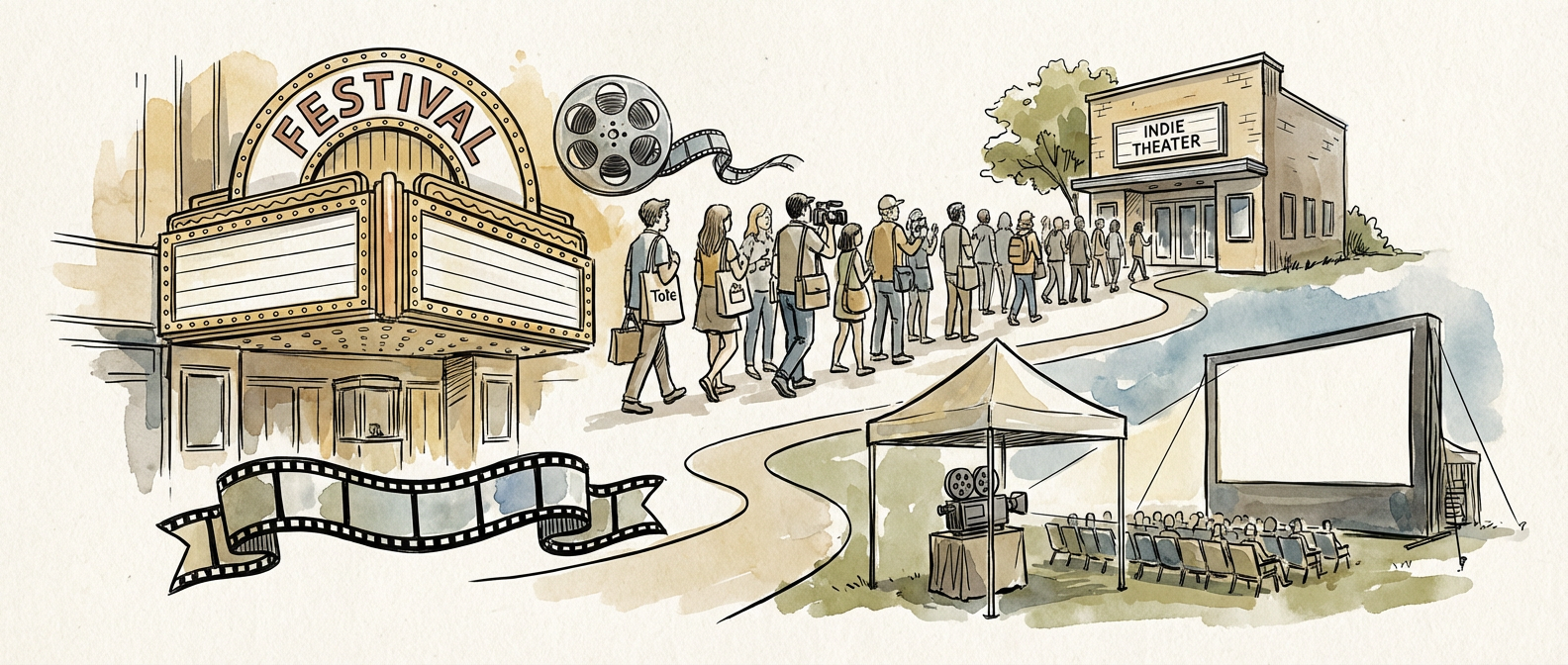
While Cannes drowns in brand partnerships and Sundance becomes a glorified Netflix shopping mall, the actual pulse of independent cinema beats in basement screening rooms and repurposed warehouses. The major festivals matter for industry handshakes and distribution deals, sure. But if you want to witness cinema that hasn’t been focus-grouped into submission, you need to dig deeper into the festival ecosystem.

The Festival Underground: How Real Independent Cinema Survives in the Shadows

The underground circuit operates like any other subculture. Word spreads through encrypted group chats and hastily printed zines. Programmers source films from Vimeo rabbit holes and film school dropouts working day jobs. These festivals exist in the margins because that’s where uncompromising art actually lives. No corporate sponsors means no corporate sensibilities.

Take the Spectacle Theater in Brooklyn or the now-dead Reel Film Festival circuit. These venues program what major distributors won’t touch. Experimental narratives that clock in at seventeen minutes. Political documentaries that name names. Horror films that actually disturb rather than provide sanitized thrills for date night.

Illustration for The Festival Underground: How Real Independent Cinema Survives in the Shadows

The Economics of True Independence

Here’s what most people don’t understand about independent film. True independence costs everything and pays nothing. The filmmakers sleeping on couches at SXSW aren’t there for the free drinks. They’re there because streaming platforms have turned content into a commodity where artistic risk equals financial suicide.

When Netflix algorithms determine what gets made, we get endless variations on proven formulas. The underground festival circuit represents the last refuge for filmmakers who refuse to pitch “It’s like Stranger Things but with vampires” to development executives who peaked in business school.

The economics are brutal. Micro-budget features shot for five thousand dollars compete for screening slots alongside passion projects funded by family inheritance. Success means selling fifty tickets to a converted garage in Oakland. Failure means the same thing, except with worse lighting.

But this scarcity breeds innovation. When you can’t afford Hollywood production values, you better have something genuine to say. The result is a parallel cinema ecosystem that operates independently of market forces, at least for now.

The Curatorial Underground

Festival programmers in the underground circuit work more like gallery curators than entertainment executives. They’re building coherent artistic statements rather than filling time slots. A single evening might juxtapose a Romanian minimalist drama with local skateboarding footage and an experimental sound piece projected onto bedsheets.

This approach treats audiences like collaborators rather than consumers. The assumption is that viewers arrive hungry for challenge rather than comfort. Programming becomes an art form itself, creating conversations between works that would never share screen space in commercial theaters.

Programmers like Metrograph’s programming team or the collective behind Lightbox Film Center understand that context matters. A film’s meaning changes depending on what surrounds it. They’re not just showing movies, they’re constructing experiences.

The best underground programmers have encyclopedic knowledge paired with impeccable intuition. They source films through personal relationships built over decades. A single programmer might track promising filmmakers from student work through their first features, nurturing careers that major industry players wouldn’t notice for years.

Community as Resistance

The underground festival scene survives because it builds actual community rather than consumer experiences. Regular attendees know each other. Filmmakers stick around for other people’s screenings. Post-screening discussions happen in dive bars rather than sponsored lounges.

This intimacy creates accountability. Bad films get honest feedback. Good films find their audiences through word-of-mouth rather than marketing budgets. The feedback loop remains direct and immediate, uncorrupted by commercial considerations.

But community also means fragility. These festivals depend on volunteer labor and donated venues. When gentrification prices out warehouse spaces, entire scenes disappear overnight. The pandemic eliminated years of relationship-building when venues closed permanently.

What survives adapts. Drive-in screenings in empty parking lots. Outdoor projections onto building walls. Pop-up theaters in abandoned strip malls. The underground persists through constant reinvention, always one step ahead of official recognition that would kill its essential spirit.

The Digital Divide

Streaming platforms promised democratization but delivered homogenization instead. Anyone can upload content, but discoverability depends on algorithmic optimization rather than artistic merit. The underground festival circuit works as a crucial filter, identifying work worth preserving before it disappears into the digital void.

Physical screenings matter precisely because they can’t be skipped, paused, or background-watched. The theatrical experience demands attention in ways that streaming never will. Underground festivals preserve this focused engagement when multiplexes increasingly resemble glorified living rooms.

The tension between digital accessibility and physical community defines contemporary independent cinema. Online platforms enable global distribution but eliminate local context. Underground festivals provide the opposite trade-off: limited reach but maximum impact.

Smart programmers navigate both worlds, using digital tools to build physical communities. Social media announces screenings while preserving the exclusive feel that makes underground culture compelling. The challenge lies in maintaining authenticity while achieving sustainability.

The underground festival circuit represents more than alternative entertainment. It’s cultural preservation disguised as late-night screenings. Every independently programmed festival that survives another year maintains space for uncompromising artistic expression. If you’re serious about supporting actual independent cinema, skip the major festivals making headlines this year. Find the warehouse screening in your city instead. The films might change your perspective on what cinema can accomplish.