The Myth of Apolitical Dressing
Every morning, you make dozens of micro-political decisions before your first cup of coffee. That vintage band tee? You’re signaling cultural capital and nostalgic authenticity. Those designer sneakers? Economic privilege wrapped in streetwear credibility. The choice to wear all black? Either genuine aesthetic preference or performative minimalism, depending on your zip code.
Fashion has never been neutral, despite what the “I just throw on whatever” crowd wants you to believe. The idea that clothing exists outside political frameworks is itself a political position—one that only people with enough privilege can afford to maintain. When you can walk through any neighborhood without your appearance marking you as other, different, or threatening, congratulations. You’ve unlocked the luxury of “apolitical” dressing.
But here’s what makes me uncomfortable: most people participating in fashion’s political theater don’t even realize they’re on stage. They think they’re just getting dressed. Meanwhile, every purchase, every styling choice, every brand allegiance feeds into systems of labor exploitation, cultural appropriation, and class divisions that would make a Victorian industrialist blush.
When Resistance Gets Commodified
Remember when ripped jeans meant something? Not the $300 pre-distressed ones at Nordstrom—I’m talking about the ones that got torn from actual movement, actual rebellion, actual wear from bodies that couldn’t afford to replace them. Now you can buy “authentic vintage-inspired distressing” that mimics poverty aesthetics for people who’ve never experienced actual financial precarity.
This is fashion’s most sly trick: taking symbols of resistance and selling them back to us as consumer choices. Che Guevara t-shirts mass-produced in sweatshops. Punk aesthetics repackaged as “edgy” collections by the same corporations punk explicitly rejected. Black power symbols stripped of context and sprinkled across mood boards for “urban-inspired” campaigns.
The underground scenes I frequent—the ones that won’t exist next year because gentrification follows cool like a heat-seeking missile—understand this intimately. Real countercultural fashion isn’t about buying rebellion. It’s about DIY modification, clothes swaps, stealing corporate logos and turning them into something unrecognizable. It’s about making the system’s symbols say things the system never intended.
But even these spaces aren’t immune. Watch how quickly authentic subcultural style gets photographed, catalogued, and reproduced for mass consumption. The cycle speeds up every year. What used to take decades now happens in months, thanks to social media’s endless hunger for “discovering” authenticity and feeding it to the content machine.
The Labor Hidden in Your Closet
Let’s talk about what nobody wants to discuss at the sustainable fashion panel: your clothes are probably made by people whose working conditions would horrify you if you had to witness them firsthand. Fast fashion’s true innovation isn’t speed—it’s the perfection of moral distance between consumer and consequence.
Every time someone posts about “ethical consumption under capitalism” being impossible, they’re not wrong, but they’re also not absolved. Yes, the system is broken. Yes, individual consumer choice can’t fix structural problems. But that doesn’t mean all choices are equal. Some brands are actively worse than others. Some practices cause more harm. Some alternatives exist, even if they’re imperfect.
The real discomfort comes from admitting that ethical fashion requires sacrifice. Not just paying more—though yes, living wages cost money—but giving up the dopamine hit of constant newness. Giving up the social signaling that comes from wearing the latest thing. Giving up the fantasy that you can participate in global capitalism without getting blood on your hands.
Identity Performance in the Algorithm Age
Social media turned everyone into a personal brand, and personal brands need consistent visual messaging. Your outfit posts aren’t just sharing what you wore—they’re broadcasting who you are, who you aspire to be, and which cultural tribes you’re auditioning to join. The algorithm rewards consistency, so people develop signature aesthetics and stick to them like corporate logos.
This has huge political implications. When identity expression becomes content, it also becomes commodified. Your personal style gets reduced to purchasable components that others can replicate. Authenticity becomes a performance metric. Uniqueness becomes a brand differentiation strategy.
Watch how certain aesthetics get associated with political positions without anyone explicitly stating the connection. Minimalism codes as liberal elite. Maximalist vintage suggests leftist politics. Athleisure implies apolitical mainstream consumption. These associations aren’t accidental—they’re the result of countless micro-decisions by influencers, brands, and algorithm-driven recommendation systems.
The most troubling part? People start dressing for the algorithm instead of for themselves or their communities. They choose outfits based on what will photograph well, what fits their established aesthetic brand, what will generate engagement. Political expression becomes secondary to platform optimization.
Beyond Performance: What Actually Matters
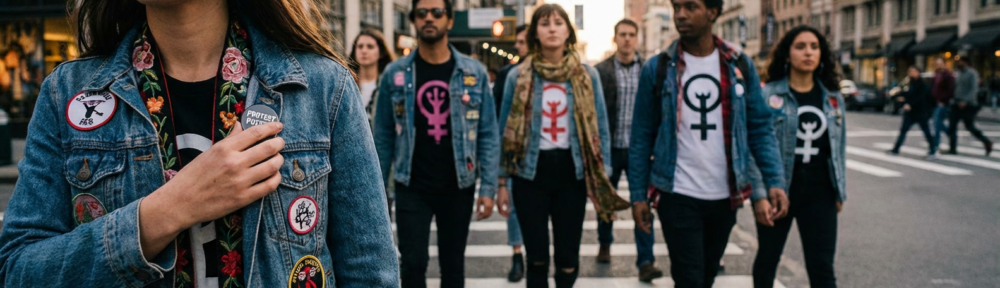
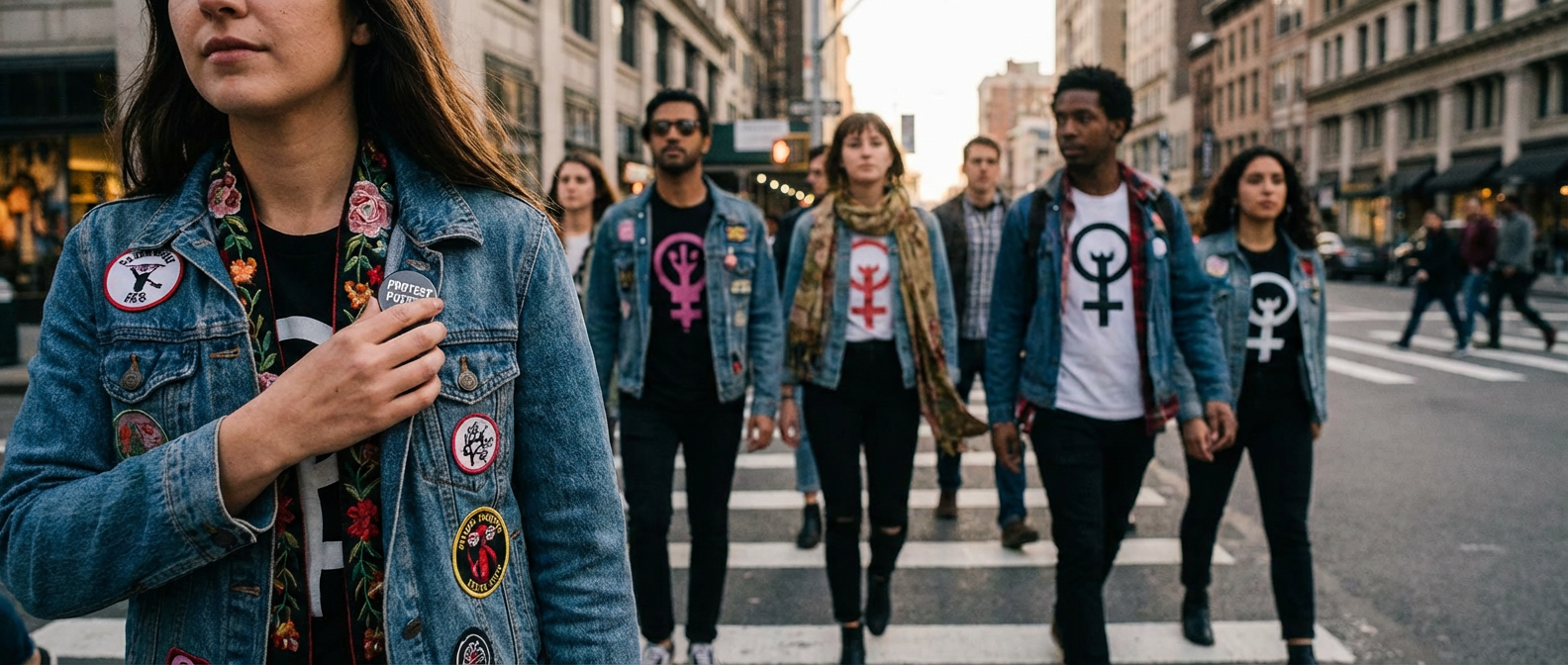
Here’s what I’ve learned from years of watching scenes rise and fall, trends cycle and recycle: the most powerful fashion statements aren’t about individual expression—they’re about collective action. When groups of people dress in ways that challenge dominant aesthetics, when they create new visual languages that can’t be easily co-opted, when they use clothing to build community rather than broadcast identity.
The AIDS activists who turned clinical aesthetics into protest art. The Black Panthers who weaponized respectability politics through impeccable tailoring. The punks who turned consumer refuse into armor against conformity. These weren’t individual style choices—they were coordinated political strategies that used fashion as a tool for larger goals.
Real political fashion requires commitment beyond the photoshoot. It means supporting independent designers from marginalized communities, not just wearing their work but advocating for their economic sustainability. It means understanding the supply chains behind your purchases and making decisions based on worker conditions, not just aesthetic appeal. It means recognizing that your individual choices, while limited in scope, still have consequences for real people in real places.
The uncomfortable truth is that there’s no ethical consumption under capitalism, but there are degrees of harm reduction. There’s no pure political expression through commercial fashion, but there are ways to participate that align more closely with your stated values. The key is abandoning the fantasy of perfect choices and instead making better ones within imperfect systems.
What political statements are you making through your closet? More importantly, are they intentional, or are you just following scripts written by people who profit from your participation? The warehouse party might be over, but the conversation about fashion’s political power is just beginning. Let’s make it count.