The Vanishing Point Where Culture Dies
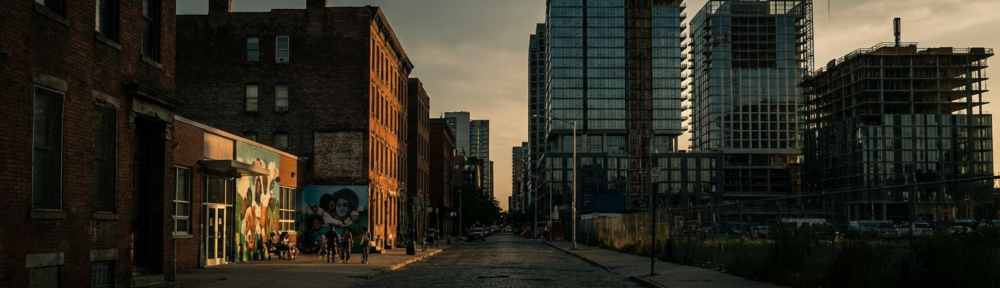
Last month, I watched a developer tear down the warehouse where Patti Smith recorded her first demos. The building had housed three different underground venues over four decades. Each closure happened quietly, without fanfare or protest. By the time anyone noticed, the wrecking ball was already swinging.
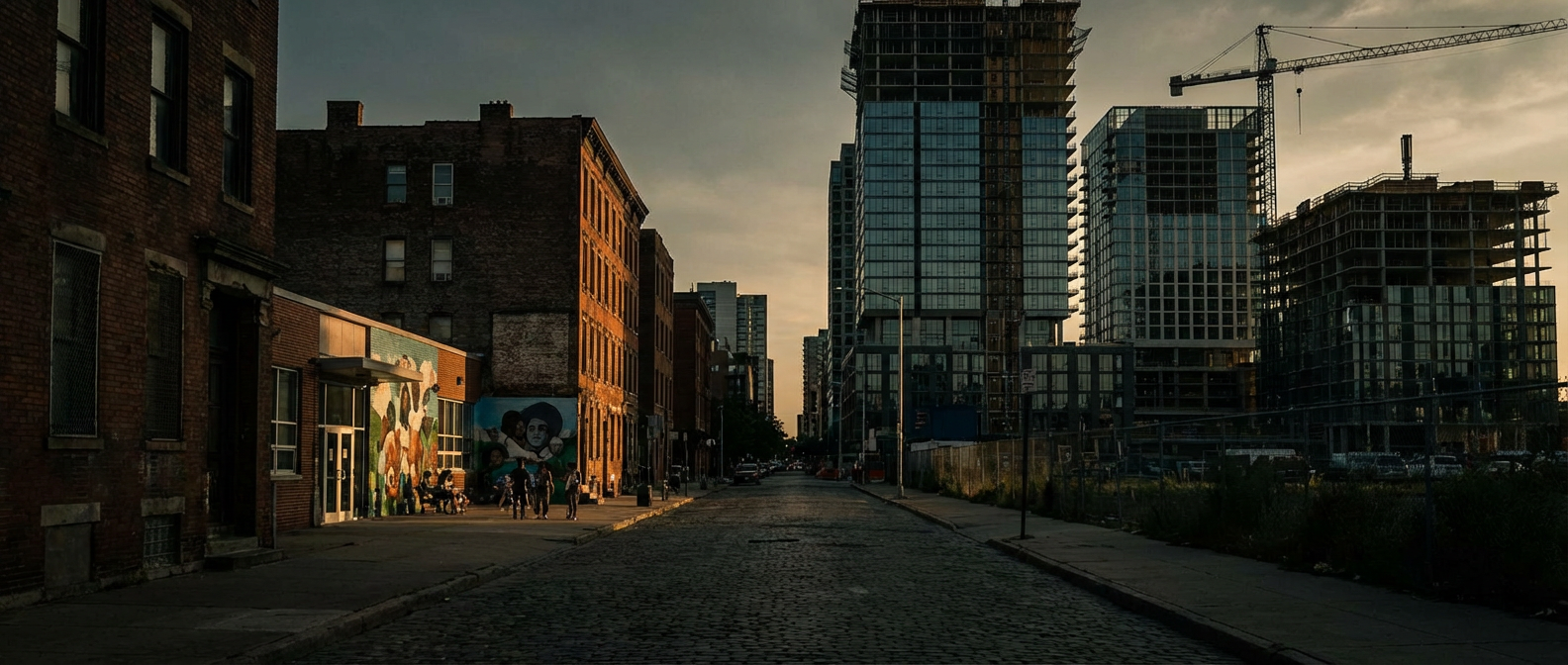
This is how cultural displacement actually works. Not with dramatic evictions or headline-grabbing protests, but through a thousand small deaths. Rent increases that push out the sound engineer who ran DIY shows in his basement. Noise ordinances that shut down the late-night spots where scenes crystallize. Zoning changes that turn artist studios into luxury condos before anyone realizes what’s happening.
The real tragedy isn’t just losing venues. It’s losing the invisible infrastructure that makes culture possible. The networks of people who book shows, design flyers, run sound, and create the social fabric that allows artistic communities to exist. When these networks break apart, they don’t just relocate. They dissolve.
Following the Underground Railroad of Displaced Scenes
Every city has its migration patterns. In Brooklyn, the path runs from Williamsburg to Bushwick to Ridgewood to God knows where next. In Oakland, it flows from the Mission through West Oakland toward Richmond and beyond. Artists and musicians don’t choose these moves strategically. They follow affordability like water finding the lowest ground.
I’ve been tracking these movements for years, watching scenes splinter and reconstitute in new neighborhoods. The metal heads who got priced out of Oakland’s Ghost Ship warehouse district didn’t just find another Oakland venue. They scattered across the Bay Area, some landing in house shows in Antioch, others joining established scenes in San Francisco, many just giving up entirely.
What emerges in these new locations often looks nothing like what was lost. The intimacy of a 50-person basement show can’t be replicated in a suburban garage. The spontaneous collaborations that happened when everyone lived within walking distance don’t survive hour-long commutes between scattered apartments.
The most successful transplants happen when entire communities move together, but that’s increasingly rare. More often, displacement breaks apart the social connections that made scenes vital in the first place.
The Economics of Cool and Its Inevitable Collapse
Here’s the cruel irony: the same cultural energy that makes neighborhoods attractive to artists also makes them attractive to developers. The murals, the coffee shops with good wifi, the sense that something interesting is happening. All become selling points for luxury housing marketed to people who want to live somewhere “authentic.”
I’ve watched this cycle repeat in dozens of cities. Artists move into post-industrial spaces because they’re cheap and spacious. Their presence signals to early gentrifiers that the neighborhood is “up and coming.” Property values rise. Landlords realize they can charge more. The original artists get priced out just as mainstream culture discovers their work.
The tech workers and finance bros who move in aren’t intentionally destroying anything. They’re just buying what the market offers. But their arrival changes everything. When a two-bedroom apartment costs $4,000, you can’t sustain a music scene built on bartenders and freelance graphic designers.
The venues that survive this transition usually do so by catering to their new audience. Cover charges increase. Programming becomes safer. The experimental edge gets smoothed away in favor of acts that appeal to people with disposable income and conservative tastes.
What Actually Gets Lost in Translation
Cultural displacement isn’t just about venues closing or artists moving. It’s about the destruction of cultural memory and the severing of generational knowledge transfer. When a neighborhood’s artistic ecosystem gets dismantled, you lose more than current creativity. You lose the accumulated wisdom of how to make things happen with limited resources.
The old-timers who knew how to navigate city permits, who had relationships with sympathetic bar owners, who understood the unwritten rules of local music scenes. Those people often don’t make the jump to new neighborhoods. Their knowledge walks out the door with them.
I think about the venue booker who spent twenty years building relationships with touring bands, knowing exactly which acts would work for which crowds. When his space got demolished, he didn’t just lose a job. An entire network of cultural connections evaporated. The bands he worked with had to start over, building new relationships in new cities.
This knowledge can’t be replaced by apps or websites. It’s the product of years of experimentation, failure, and gradual optimization. When it’s lost, new scenes have to reinvent everything from scratch, often making the same mistakes their predecessors already solved.
Mapping What Comes Next
Culture persists anyway. It adapts, mutates, and finds new forms of expression. The question isn’t whether artistic communities will survive displacement, but what shape they’ll take and who gets to participate.
Some scenes go fully nomadic, organizing pop-up events that move constantly to avoid detection and rent increases. Others try hybrid models, combining online organizing with occasional physical gatherings. The most innovative responses often come from communities that were already marginalized, who’ve had to develop survival strategies that don’t depend on permanent spaces.
I’m seeing interesting experiments in collective ownership, where communities pool resources to buy buildings outright. Artist cooperatives that function as both creative spaces and affordable housing. Community land trusts that remove property from speculative markets entirely.
The solutions won’t come from policy makers or urban planners, though supportive policies help. They’ll emerge from the communities themselves, developed through the same trial-and-error process that creates culture in the first place. The key is documenting these experiments, sharing strategies, and building solidarity between displaced scenes across different cities.
What patterns are you seeing in your own city? What venues have you watched disappear, and where did those communities land? The map of cultural displacement is written collectively, one story at a time.