The Room That Changed Everything
There’s a moment in every music city’s history when someone decides to stop waiting for permission. Megan Siebe had that moment, and it happened in a converted warehouse in Louisville. Haunted Mound isn’t fancy. The walls are brick. The sound system works most nights. The bathrooms are the kind of bathrooms you find in places that prioritize music over aesthetics. But something shifted when this venue opened its doors. Louisville’s entire underground music ecosystem suddenly had a nerve center.
What makes Haunted Mound different isn’t mysterious if you pay attention. It’s the $10-and-under door policy, maintained religiously regardless of artist draw or market pressures. That single decision reverberates through everything else. When you keep tickets cheap, you change who shows up. You change what gets booked. You change what gets made. Bandcamp Daily recently documented this model as part of a broader conversation about equitable access in underground venues, naming Haunted Mound as a case study in how pricing shapes culture.
Numbers Don’t Lie, But They Don’t Tell the Whole Story
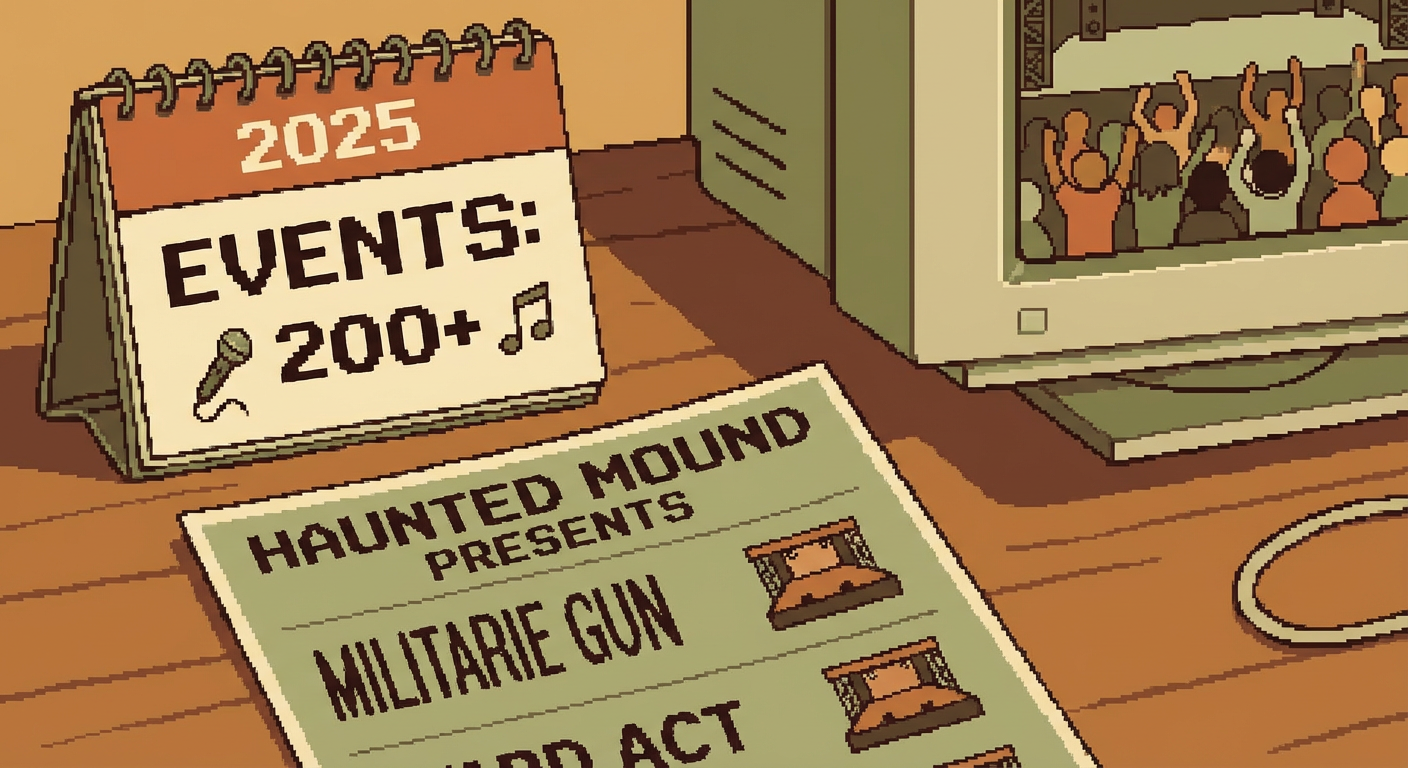
The attendance numbers are almost beside the point. Louisville’s DIY venue scene experienced a 34 percent capacity increase in 2025, according to Louisville Music News data. That’s not an accident. That’s not an indie music trend cycling through. That’s infrastructure working. Haunted Mound hosted over 200 events in a single year, booking artists like Militarie Gun and Yard Act before those names appeared on major festival lineups. The venue didn’t just host shows. It discovered artists. It validated them before the algorithm did.
But here’s what the numbers can’t capture: the feeling of watching a room figure itself out in real time. The energy when a hundred people show up to hear a band they’ve never heard of because they trust the person who booked them. That’s cultural currency. That’s the opposite of everything TikTok promises you about discovery.
Louisville Is Actually Happening (And Nobody Expected It)
Louisville wasn’t supposed to be a music city. That was the joke for years. Then Pitchfork’s Louisville Renaissance feature named the city as one of three American metros producing the most critically significant independent music outside New York and Los Angeles. Three. That’s it. That’s the tier. Louisville is suddenly in conversation with Brooklyn and LA as an actual creative epicenter.
The irony is thick enough to cut. The moment everyone started paying attention is exactly when locals started worrying that the attention would ruin everything. This is the pattern. You build something authentic in the margins. The margins get discovered. Suddenly there’s money. Suddenly there’s real estate speculation. Suddenly your $10 venue becomes the trendy spot, and then it becomes unaffordable, and then it closes, and everyone mourns it while ordering overpriced cocktails at the venue that replaced it.
Megan Siebe made Louisville Magazine’s 2025 Culture Makers list specifically for building booking practices centered on community rather than profit extraction. That’s not standard. That’s someone making choices that actively work against how venues normally operate.
The Founder as Counterweight
Siebe gets recognition because she’s not playing the game everyone else is playing. She’s running a venue like it’s a public service instead of a business opportunity. The distinction matters. When you run something with that philosophy, you can weather the pressure. You don’t panic-book a major label act to pay rent. You don’t raise door prices because capacity increased. You don’t turn your space into an Instagram backdrop.
This is the kind of leadership that doesn’t get written about enough. The unsexy work of saying no to money. The difficult conversations about keeping doors open to people without disposable income. The structural decisions that ripple through an entire scene.
What Happens Next
Every venue that matters has this moment. The question is whether they survive it. Some do. Some get gentrified. Some get discovered by the wrong people and lose their reason for existing. Some just burn out from the weight of holding down a space while everything around it changes.
Haunted Mound is at that moment now. The whole world is looking. There are definitely people in business suits somewhere thinking about how to monetize what’s happening there. That’s always the threat. That’s always the story in American culture. You build something for love. Someone builds an audience around it. Someone else figures out how to sell it back to that audience.
What makes this different is that there’s someone running the operation who understands that threat and is actively resisting it. Not through gatekeeping or pretense, but through pricing, through booking practices, through community-first decisions that compound over time.
The real question isn’t whether Haunted Mound will stay relevant. Venues with this kind of cultural weight tend to stay relevant. The question is whether it will stay itself. Whether five years from now, someone will still be able to walk in on a Tuesday night, pay ten dollars, and discover something that changes how they hear music.
That’s worth paying attention to. Not because it’s trendy. Not because Pitchfork said so. But because it’s the kind of place that reminds you what art-making actually looks like when people aren’t running the numbers first.