Beyond the Red Carpet Circus
While Cannes drowns in brand partnerships and Sundance becomes a glorified Netflix shopping mall, the actual pulse of independent cinema beats in basement screening rooms and repurposed warehouses. The major festivals matter for industry handshakes and distribution deals, sure. But if you want to witness cinema that hasn’t been focus-grouped into submission, you need to dig deeper into the festival ecosystem.
The underground circuit operates like any other subculture. Word spreads through encrypted group chats and hastily printed zines. Programmers source films from Vimeo rabbit holes and film school dropouts working day jobs. These festivals exist in the margins because that’s where uncompromising art actually lives. No corporate sponsors means no corporate sensibilities.
Take the Spectacle Theater in Brooklyn or the now-dead Reel Film Festival circuit. These venues program what major distributors won’t touch. Experimental narratives that clock in at seventeen minutes. Political documentaries that name names. Horror films that actually disturb rather than provide sanitized thrills for date night.

The Economics of True Independence
Here’s what most people don’t understand about independent film. True independence costs everything and pays nothing. The filmmakers sleeping on couches at SXSW aren’t there for the free drinks. They’re there because streaming platforms have turned content into a commodity where artistic risk equals financial suicide.
When Netflix algorithms determine what gets made, we get endless variations on proven formulas. The underground festival circuit represents the last refuge for filmmakers who refuse to pitch “It’s like Stranger Things but with vampires” to development executives who peaked in business school.
The economics are brutal. Micro-budget features shot for five thousand dollars compete for screening slots alongside passion projects funded by family inheritance. Success means selling fifty tickets to a converted garage in Oakland. Failure means the same thing, except with worse lighting.
But this scarcity breeds innovation. When you can’t afford Hollywood production values, you better have something genuine to say. The result is a parallel cinema ecosystem that operates independently of market forces, at least for now.
The Curatorial Underground
Festival programmers in the underground circuit work more like gallery curators than entertainment executives. They’re building coherent artistic statements rather than filling time slots. A single evening might juxtapose a Romanian minimalist drama with local skateboarding footage and an experimental sound piece projected onto bedsheets.
This approach treats audiences like collaborators rather than consumers. The assumption is that viewers arrive hungry for challenge rather than comfort. Programming becomes an art form itself, creating conversations between works that would never share screen space in commercial theaters.
Programmers like Metrograph’s programming team or the collective behind Lightbox Film Center understand that context matters. A film’s meaning changes depending on what surrounds it. They’re not just showing movies, they’re constructing experiences.
The best underground programmers have encyclopedic knowledge paired with impeccable intuition. They source films through personal relationships built over decades. A single programmer might track promising filmmakers from student work through their first features, nurturing careers that major industry players wouldn’t notice for years.
Community as Resistance
The underground festival scene survives because it builds actual community rather than consumer experiences. Regular attendees know each other. Filmmakers stick around for other people’s screenings. Post-screening discussions happen in dive bars rather than sponsored lounges.
This intimacy creates accountability. Bad films get honest feedback. Good films find their audiences through word-of-mouth rather than marketing budgets. The feedback loop remains direct and immediate, uncorrupted by commercial considerations.
But community also means fragility. These festivals depend on volunteer labor and donated venues. When gentrification prices out warehouse spaces, entire scenes disappear overnight. The pandemic eliminated years of relationship-building when venues closed permanently.
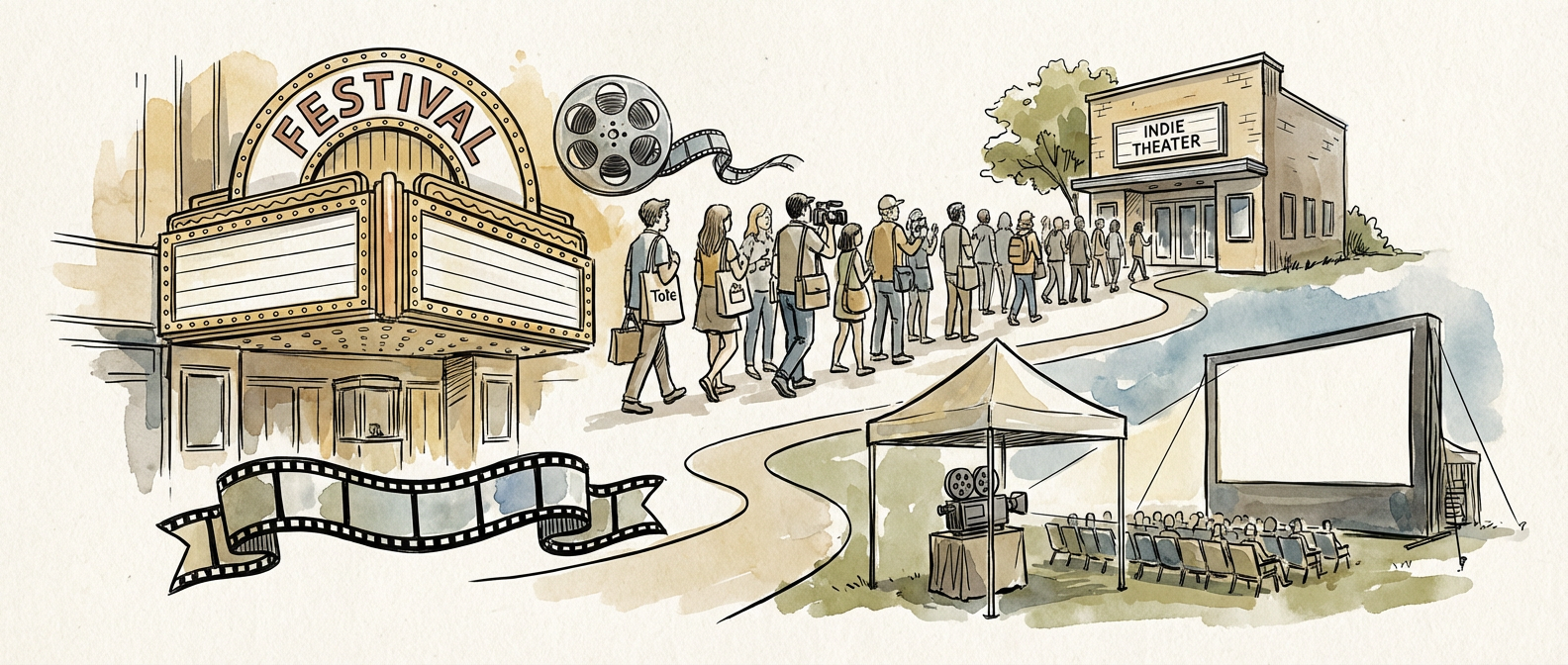
What survives adapts. Drive-in screenings in empty parking lots. Outdoor projections onto building walls. Pop-up theaters in abandoned strip malls. The underground persists through constant reinvention, always one step ahead of official recognition that would kill its essential spirit.
The Digital Divide
Streaming platforms promised democratization but delivered homogenization instead. Anyone can upload content, but discoverability depends on algorithmic optimization rather than artistic merit. The underground festival circuit works as a crucial filter, identifying work worth preserving before it disappears into the digital void.
Physical screenings matter precisely because they can’t be skipped, paused, or background-watched. The theatrical experience demands attention in ways that streaming never will. Underground festivals preserve this focused engagement when multiplexes increasingly resemble glorified living rooms.
The tension between digital accessibility and physical community defines contemporary independent cinema. Online platforms enable global distribution but eliminate local context. Underground festivals provide the opposite trade-off: limited reach but maximum impact.
Smart programmers navigate both worlds, using digital tools to build physical communities. Social media announces screenings while preserving the exclusive feel that makes underground culture compelling. The challenge lies in maintaining authenticity while achieving sustainability.
The underground festival circuit represents more than alternative entertainment. It’s cultural preservation disguised as late-night screenings. Every independently programmed festival that survives another year maintains space for uncompromising artistic expression. If you’re serious about supporting actual independent cinema, skip the major festivals making headlines this year. Find the warehouse screening in your city instead. The films might change your perspective on what cinema can accomplish.